
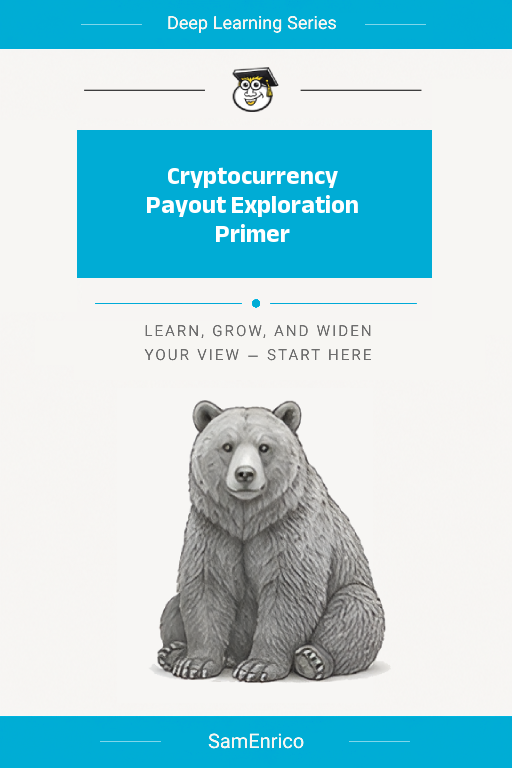
Non-FictionBusiness BriefCrypto Finance
Cryptocurrency Payout Exploration Primer
Receive export payments in USDC, USDT, or DAI via
by Ochoa Tona
Receive export payments in USDC, USDT, or DAI via African crypto exchanges. Manage volatility, liquidity, and conversion to local currency for operational expenses.
Formats
About this book
Free sample
Chapter 1: The Broken Bridge--–- In Lagos, a software exporter named Amara stared at her bank screen in disbelief. Her client in Austin, Texas, had wired $48,000 for a completed project twelve days ago. The money had left the client’s account within hours. Yet Amara’s account in Nigeria still showed nothing. Her payroll was due in three days.
Her landlord had already sent a reminder. And her bank’s customer service line had placed her on hold three times, each time disconnecting after forty-five minutes.When the funds finally arrived on day fourteen, Amara discovered that $3,600 had vanished. Not stolen by hackers. Not lost to fraud. Simply consumed by a series of fees, unfavorable exchange rate spreads, and intermediary bank charges that no one could explain.
Her profit margin on that project was 8 percent. The payment friction alone wiped out nearly half of it.Amara’s story is not unusual. It is not even extreme. Across Africa, exporters, freelancers, and business owners lose a staggering portion of their international revenue to a system that seems designed to frustrate them. The World Bank estimates that Sub-Saharan Africa pays the highest average remittance fees of any region in the world—consistently above 8 percent, and often exceeding 12 percent for business-to-business payments.
But the fees are only the beginning.The Silent Drain The true cost of traditional cross-border payments is far higher than what appears on any invoice. When a client in London or New York or Shanghai sends payment via SWIFT—the global messaging network that connects banks—the money passes through a chain of correspondent banks. Each bank takes a slice. Each bank holds the funds for a day or two, earning interest on your float. Each bank applies its own exchange rate if the currency changes hands.For an African exporter receiving US dollars, the journey might look like this: The client’s bank in the United States sends the funds to a correspondent bank in Europe.
That bank forwards it to a regional African hub bank. That hub bank finally sends it to your local bank. At every step…
This is the end of the free sample. Get the eBook to keep going. Buy now
Contents
- Chapter 1
- Chapter 2
- Chapter 3
- Chapter 4
- Chapter 5
- Chapter 6
- Chapter 7
- Chapter 8
- Chapter 9
- Chapter 10
- Chapter 11
- Chapter 12
Details
- Author
- Ochoa Tona
- Publisher
- SamEnrico
- Language
- English
- Genre
- Non-Fiction, Business Brief, Crypto Finance
- Released
- 2026-05-29
- Pages (approx.)
- 155
- Available as
- eBook, Audiobook

Read better in the ZLOADR app
Your eBooks on your phone or tablet. Sign in with your SamEnrico account and start reading.
More by Ochoa Tona
 Executive Interruption Shield CourseOchoa Tona$11.99
 Focus Block TechniqueOchoa Tona$11.99
 Self Hypnosis for Student AthletesOchoa Tona$11.99
 Digital Work Addiction SolutionsOchoa Tona$11.99
 The Ghosts of the Silk Road: Han Dynasty’s Bloody Conquest of the XiongnuOchoa Tona$11.99
 How to Become a Goat HerderOchoa Tona$11.99
 How to Produce Airbrush AccessoriesOchoa Tona$11.99
 Software Quality Assurance EngineerOchoa Tona$11.99
You may also like
 Hong Kong Handover 1997Dunn Johnnie$11.99
 Zumba For Postnatal Recovery CourseNeal Christian$11.99
 Zumba for BeginnersLadner Nikia$11.99
 YouTube Comment Mining GuideHumes Pandora$12.99
 Worry Box MeditationCarlin Rudy$11.99
 Workplace Stress MeditationNguyen Lynn$11.99
 Workplace Stress and Sleep RepairHawley Ivory$11.99
 Workplace Perfectionism CureDelaney Jeffry$11.99
 Workplace Injustice Anger GuideWallen Isabelle$11.99
 Work Addiction and Burnout LinkGreenwood Ester$11.99
 Women in Yoga and WellnessBeattie Galina$11.99
 Women in Stand Up ComedyChun Evangeline$11.99