
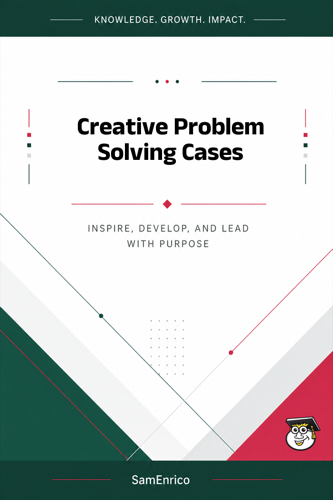
About this book
Free sample
Chapter 1: The Efficiency Trap--–- The year is 1975. Inside a Kodak research laboratory in Rochester, New York, a young engineer named Steven Sasson assembles a contraption that looks nothing like a camera. It has a tangled mess of wires, a bulky lens scavenged from a used movie camera, a digital cassette recorder, and a circuit board with precisely one hundred twelve analog-to-digital converter chips. The device weighs eight pounds. It takes twenty-three seconds to capture a single black-and-white image.
And the resolution is a grainy 0.01 megapixels.Sasson’s boss asks him to demonstrate the invention. Sasson points the device at a lab technician, presses a button, waits, then connects the cassette recorder to a television screen. An image appears. It is blocky, jagged, and utterly unremarkable by today’s standards. But it is the first photograph ever captured without film.The executives who view the demonstration do not applaud.
They do not ask for more funding. They do not schedule a follow-up meeting. According to company lore, one executive looks at Sasson and says, “That’s cute, but don’t tell anyone about it.”Kodak had just invented the digital camera. And they buried it for the next twenty years.This is not a story about technological failure. Kodak’s engineers were brilliant.
They solved every technical problem placed before them. The digital camera worked. The failure was not in the solution. The failure was in the question they were asking.For decades, Kodak had framed their problem as “how do we sell more film?” Every innovation, every marketing campaign, every strategic decision flowed from that frame. When the digital camera appeared, the engineers saw an opportunity.
The executives saw a threat to the film business. Both were right, according to their respective frames. But only one frame led to survival.The executives chose the wrong question. And by the time they realized it, the company that invented digital photography was filing for bankruptcy while Japanese competitors who had never sold a roll of film owned the future of imaging.This book is about that gap—the space between the problem you think…
This is the end of the free sample. Get the eBook to keep going. Buy now
Contents
- Chapter 1
- Chapter 2
- Chapter 3
- Chapter 4
- Chapter 5
- Chapter 6
- Chapter 7
- Chapter 8
- Chapter 9
- Chapter 10
- Chapter 11
- Chapter 12
Details
- Author
- Carrillo Wai
- Publisher
- SamEnrico
- Language
- English
- Genre
- Non-Fiction, Self-Help
- Released
- 2026-06-09
- Pages (approx.)
- 132
- Available as
- eBook, Audiobook

Read better in the ZLOADR app
Your eBooks on your phone or tablet. Sign in with your SamEnrico account and start reading.
More by Carrillo Wai
 Journaling Morning Routine GuideCarrillo Wai$11.99
 Daily Review for HR ProsCarrillo Wai$11.99
 The Winona LaDuke AccountCarrillo Wai$11.99
 Cross Addiction and Alcohol RecoveryCarrillo Wai$11.99
 Self Esteem Therapy GuideCarrillo Wai$11.99
 Meditation for Testicular PainCarrillo Wai$11.99
 Caregiver Anger ManagementCarrillo Wai$11.99
 The Melodic Conquerors: Black Maestros of the Roman Imperial CourtCarrillo Wai$11.99
 Socrates: The Dawn of Western ThoughtCarrillo Wai$11.99
 How to Produce Reel-to-reel Tape Players and RecordersCarrillo Wai$11.99
 How to Produce Extension CordsCarrillo Wai$11.99
 Manama B2B Financial SalesCarrillo Wai$12.99
You may also like
 Workplace Stress MeditationNguyen Lynn$11.99
 Volcano Monitoring ScientistCox Alexis$11.99
 The Tech Professional NetAguiar Nevada$11.99
 The Morning Metta RitualCanales Anya$11.99
 The Chunking Memory TechniqueClanton Hyacinth$11.99
 The Beginner Mistake FixAmmons Cassondra$11.99
 Surrendering to What IsGrimm Reatha$11.99
 Self Hypnosis for Fear of FireBillups Eli$11.99
 Road Rage for Professional DriversBrackett Janise$11.99
 Psychiatric Ward Nurse StressDunning Wyatt$11.99
 Observation vs Evaluation NVCTimmons Alda$11.99
 Networking for Nonprofit ProfessionalsPoole Jesse$11.99