
Non-FictionSelf-HelpCreative Recovery
Creative Industry Work Addiction eBook
Protects artistic passion from burn
by Rogers Vicki
Protects artistic passion from burn
Formats
Free sample
Chapter 1: The Passion Penalty--–- You are reading this because somewhere along the way, loving your work stopped feeling like a gift and started feeling like a trap. Maybe you can’t remember the last time you drew something just for fun, wrote a sentence that wasn’t for a client, or picked up your instrument without a deadline looming. Maybe you are proud of how hard you work—and also exhausted by it. Maybe you have been praised your entire career for your “dedication” and “work ethic,” but lately, those words feel less like compliments and more like diagnoses.This is not your fault.Before we go any further, before we talk about habits or boundaries or recovery, you need to hear that sentence clearly: This is not your fault. The creative industries have built an entire economic model on the back of one dangerous assumption—that because you love what you do, you should be willing to suffer for it.
And if you are not willing to suffer, the logic goes, you must not be a “real” artist. You must lack passion. You must not want it badly enough.That logic is a lie. But it is a lie that has been repeated so often, by so many successful people, that it has become invisible. It is the water you are swimming in.
And you are drowning, not because you are weak, but because no one told you that the water was poison.This chapter is called “The Passion Penalty” because that is exactly what we are dealing with: a hidden tax that creative professionals pay every single day. The more you love your work, the more you are expected to sacrifice for it. The more you sacrifice, the more your identity fuses with your output. The more your identity fuses, the harder it becomes to say no. And the harder it becomes to say no, the closer you drift toward the edge of burnout, resentment, and—eventually—the quiet death of the very passion that brought you here in the first place.This book exists because that cycle is not inevitable.
It is not a law of nature. It is not a requirement of artistic excellence. It is a system, and systems can be understood, dismantled, and rebuilt. But before we can fix anything, we have to name it. We have to see the addiction for what it is: not a badge of honor, but a predictable outcome of an unregulated passion economy.The Only Addiction That Gets You Promoted Let us begin with a strange and uncomfortable truth.
If you were addicted to alcohol, your boss would not give you a raise. If you were addicted to gambling, your colleagues would not applaud you. But if you are addicted to work—if you answer emails at 11 p.m., skip lunch to finish a project, cancel plans with friends to meet an unreasonable deadline—you will be celebrated. You will be called “dedicated.” You will be held up as an example. You will be promoted.Work addiction is the only addiction that gets you ahead.Think about that for a moment.
In what other domain of human life does self-destruction lead to praise? In what other context does the gradual erosion of your health, your relationships, and your sense of self result in a bonus? We have built a culture—particularly in creative fields—where the line between “hardworking” and “self-harming” has not just blurred but disappeared entirely.This is especially true in creative industries because the output is so personal. A factory worker who stays late might be seen as diligent, but they rarely believe that the widgets they produce are extensions of their soul. A creative professional, by contrast, is told constantly that their work is an expression of who they are.
“Put yourself into it.” “Make it personal.” “Your unique voice is what we’re paying for.” These are not merely instructions; they are psychological contracts. And they come with a hidden clause: If your work is you, then any criticism of your work is a criticism of you. Any rejection is personal. Any failure is identity death.That is the Passion Penalty in action. Your love for the work is weaponized against you—not maliciously, not conspiratorially, but structurally.
The system rewards your overwork because your overwork benefits the system. Your exhaustion is someone else’s profit margin. Your burnout is someone else’s completed project.And the cruelest part? When you finally collapse—when the panic attacks start, when the creative well runs dry, when you cannot force yourself to open the software or pick up the pen—you will be told that you just didn’t have what it takes. You will be told that real artists suffer.
You will be told that you should have worked harder.This book is here to tell you the opposite: You have worked hard enough. The system is broken. And there is a way out.The Abuse Continuum: From Healthy Passion to Clinical Burnout Before we can talk about recovery, we need a shared language for what is happening to you. Not every creative professional who works long hours is addicted to work. Not every person who feels tired at the end of the day is burning out.
There is a spectrum here, and understanding where you fall on that spectrum is the first step toward meaningful change.I call this the Abuse Continuum. It has three stages, and they flow into one another like tides—slowly, almost imperceptibly, until you look up one day and realize you cannot remember the last time you felt genuinely excited to create.Stage One: Healthy Passion This is where every creative journey begins. Healthy passion looks like choice: you work because you want to, not because you have to. You set boundaries naturally—when you are tired, you stop. When you are hungry, you eat.
When a friend calls, you answer. Your creative work is an important part of your life, but it is not your entire life. You can imagine yourself doing other things, being other things, loving other things.In healthy passion, work feels like an extension of play. You lose track of time not because you are driven by fear, but because you are genuinely absorbed. And when the absorption ends, you return to yourself—still whole, still present, still you.Here is the key diagnostic question for Stage One: If you stopped working tomorrow, would you know who you were?If the answer is yes, you are likely in healthy passion.
If the answer is a hesitant yes with some caveats, you may be moving toward Stage Two.Stage Two: Compulsive Overwork This is the danger zone—and it is where most creative professionals live without even knowing it. Compulsive overwork feels different from healthy passion in one crucial way: it is driven by anxiety rather than curiosity. You work not because you want to, but because you feel panicked when you are not working.The diagnostic question for Stage Two is different: When you take a day off, do you feel guilty? Restless? Anxious?
Like you are falling behind?If the answer is yes, you have crossed the threshold. Your work has shifted from a…
This is the end of the free sample. Get the eBook to keep going. Buy now
About this book
Details
- Author
- Rogers Vicki
- Publisher
- SamEnrico
- Language
- English
- Genre
- Non-Fiction, Self-Help, Creative Recovery
- Released
- 2026-06-06
- Pages (approx.)
- 145
- Available as
- eBook, Audiobook

Read better in the ZLOADR app
Your eBooks on your phone or tablet. Sign in with your SamEnrico account and start reading.
More by Rogers Vicki
 Flight Nurse Air Medical StressRogers Vicki$11.99
 Saudi Arabian Edge CrossingRogers Vicki$11.99
 Waiting Anger TriggersRogers Vicki$11.99
 Body Scan For Children GuideRogers Vicki$11.99
 Body Image For Hair Loss Acceptance GuideRogers Vicki$11.99
 Creative Exposure TherapyRogers Vicki$11.99
 Big Brother DiaryRogers Vicki$11.99
 The Weeknd: Darkness into PopRogers Vicki$11.99
 Maui’s Fishing Rod and the Birth of IslandsRogers Vicki$11.99
 Baba Yaga's Bone-Legged Waltz: The Witch of the ForestRogers Vicki$11.99
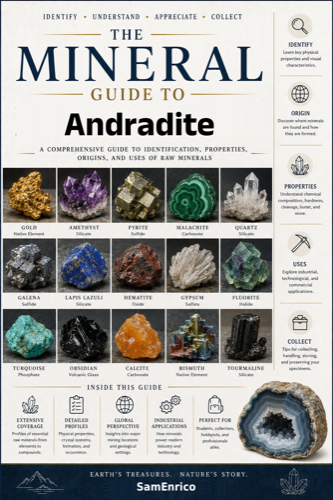 The Mineral Guide to AndraditeRogers Vicki$11.99
 AI Prompts for Scenario SimulationRogers Vicki$11.99
You may also like
 Hong Kong Handover 1997Dunn Johnnie$11.99
 Zumba For Postnatal Recovery CourseNeal Christian$11.99
 Zumba for BeginnersLadner Nikia$11.99
 YouTube Comment Mining GuideHumes Pandora$12.99
 Worry Box MeditationCarlin Rudy$11.99
 Workplace Stress MeditationNguyen Lynn$11.99
 Workplace Stress and Sleep RepairHawley Ivory$11.99
 Workplace Perfectionism CureDelaney Jeffry$11.99
 Workplace Injustice Anger GuideWallen Isabelle$11.99
 Work Addiction and Burnout LinkGreenwood Ester$11.99
 Women in Yoga and WellnessBeattie Galina$11.99
 Women in Stand Up ComedyChun Evangeline$11.99