
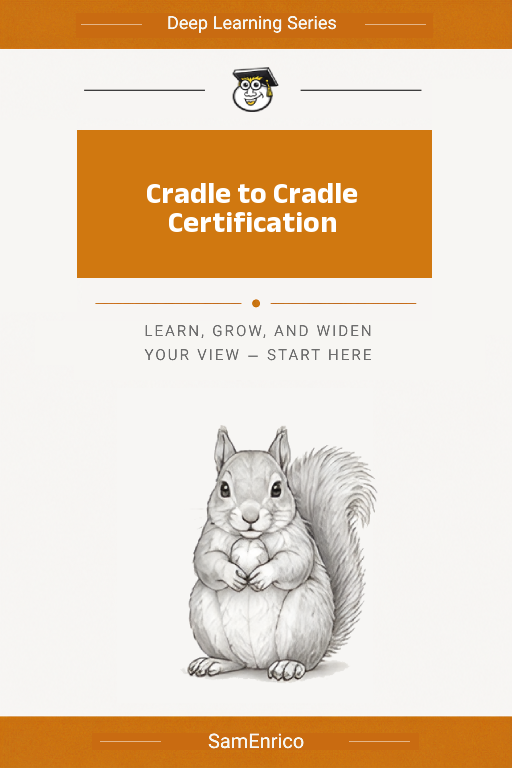
Non-FictionBusiness BriefCircular
Cradle to Cradle Certification
Certify circular economy products for premium EU m
Certify circular economy products for premium EU markets under Cradle to Cradle framework.
Formats
About this book
Free sample
Chapter 1: The Design Flaw--–- On a rainy Tuesday morning in Stockholm, a product manager named Elin sat staring at a spreadsheet that told her everything and nothing at once. Her company's flagship waterproof jacket had just received an "A" rating for energy efficiency in manufacturing. Its packaging had been reduced by twenty-two percent year over year. The logistics team had optimized shipping routes to cut diesel consumption by fourteen percent. By every conventional measure, Elin's product was becoming "greener." And yet, as she scrolled through the life cycle assessment, one stubborn number refused to improve: the jacket's end-of-life fate.
Ninety-four percent of units would end up in a landfill or incinerator within five years of purchase. The jacket was not designed to be recycled, repaired, or returned to anything resembling a natural cycle. It was designed, like almost everything else in the modern economy, for the grave.This chapter introduces the fundamental, fatal design flaw of the Industrial Revolution: the linear "take-make-waste" model that has governed production for more than two centuries. It challenges the reader to move beyond the comfortable language of "eco-efficiency"—doing less harm—and toward a more ambitious goal: designing products that create ecological and social value rather than merely destroying it more slowly. The chapter argues that most sustainability efforts to date have been built on a fundamentally flawed premise, and that a radical redesign is not only possible but increasingly urgent for companies seeking to compete in premium markets, particularly in the European Union, where regulatory tides are turning against linear business models.The Cathedral of Consumption To understand why Elin's jacket faces such a bleak end-of-life fate, we must first understand the architecture of the system that produced it.
The modern industrial economy operates on a linear model so deeply embedded in our infrastructure, tax codes, supply chains, and consumer habits that it has become almost invisible. We extract resources from the earth—oil, gas, metal ores, timber, water. We transform those resources into products using energy, labor, and complex global logistics. We distribute those products to consumers. We use them, often for…
This is the end of the free sample. Get the eBook to keep going. Buy now
Contents
- Chapter 1
- Chapter 2
- Chapter 3
- Chapter 4
- Chapter 5
- Chapter 6
- Chapter 7
- Chapter 8
- Chapter 9
- Chapter 10
- Chapter 11
- Chapter 12
Details
- Author
- Brandon Jonnie
- Publisher
- SamEnrico
- Language
- English
- Genre
- Non-Fiction, Business Brief, Circular
- Released
- 2026-05-30
- Pages (approx.)
- 152
- Available as
- eBook, Audiobook

Read better in the ZLOADR app
Your eBooks on your phone or tablet. Sign in with your SamEnrico account and start reading.
More by Brandon Jonnie
 Self Esteem for Anxious AttachmentBrandon Jonnie$11.99
 Hypothyroidism and FoodBrandon Jonnie$11.99
 ACT for Dysthymia GuideBrandon Jonnie$11.99
 Alcoholism Recovery for PerfectionistsBrandon Jonnie$11.99
 Brainstorming FacilitationBrandon Jonnie$11.99
 Senior Housing ESG GuideBrandon Jonnie$11.99
 Quality Time StressBrandon Jonnie$11.99
 COGS Calculation For StartupsBrandon Jonnie$11.99
 Frostbound: The Troll King's Forbidden LoveBrandon Jonnie$11.99
 The Samurai Strategist: How a Forgotten Warlord Built Japan's First Elite Warrior TeamBrandon Jonnie$11.99
 Disadvantaged Business Enterprise GuideBrandon Jonnie$12.99
 Mastering The Art of German Ju-jutsuBrandon Jonnie$11.99
You may also like
 Hong Kong Handover 1997Dunn Johnnie$11.99
 Zumba For Postnatal Recovery CourseNeal Christian$11.99
 Zumba for BeginnersLadner Nikia$11.99
 YouTube Comment Mining GuideHumes Pandora$12.99
 Worry Box MeditationCarlin Rudy$11.99
 Workplace Stress MeditationNguyen Lynn$11.99
 Workplace Stress and Sleep RepairHawley Ivory$11.99
 Workplace Perfectionism CureDelaney Jeffry$11.99
 Workplace Injustice Anger GuideWallen Isabelle$11.99
 Work Addiction and Burnout LinkGreenwood Ester$11.99
 Women in Yoga and WellnessBeattie Galina$11.99
 Women in Stand Up ComedyChun Evangeline$11.99