
Non-FictionHealth & WellnessWater Safety
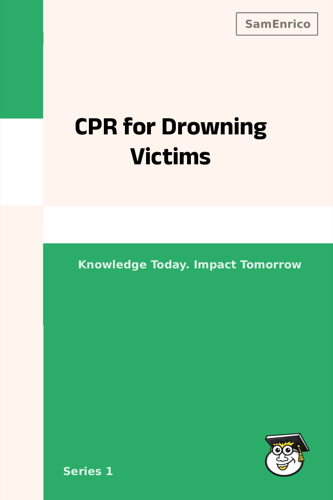
CPR for Drowning Victims
Airway focus and modified compression sequence.
Airway focus and modified compression sequence.
Formats
About this book
Free sample
Chapter 1: The Oxygen Lie--–- The call came in at 2:47 PM on a Tuesday. A four-year-old boy had slipped under the surface of a backyard pool while his mother answered her phone. She was gone for ninety seconds. When she returned, he was floating face-down. She pulled him out, screaming his name.
She had taken a CPR class six months earlier – a good one, certified by the American Heart Association. She remembered the sequence perfectly. Check for responsiveness. Send someone to call 911. Then start compressions.
Thirty compressions, two breaths. Compressions first. That's what they taught her. That's what the mannequin practiced. That's what she did.The boy survived.
But he survived with permanent brain damage. He will never walk independently. He will never speak in full sentences. The doctors said the damage was caused by lack of oxygen – not because he was underwater for too long, but because the first three minutes of resuscitation focused on compressing an empty heart instead of filling empty lungs.The mother did nothing wrong. She followed her training perfectly.
Her training was wrong for the situation.This chapter dismantles the single most dangerous misconception in drowning resuscitation: the belief that a drowning victim's heart stops for the same reason a heart attack victim's heart stops. That belief has killed thousands of people who might have survived. It has filled neurologists' offices with children whose parents did everything right according to standard CPR protocols – protocols designed for heart attacks on dry land, not drownings in water.The problem is simple, devastating, and almost entirely correctable. Standard CPR teaches the C-A-B sequence: Compressions first, then Airway, then Breathing. That sequence works for sudden cardiac arrest, where the heart stops pumping but the blood already contains enough oxygen to sustain the brain for several minutes.
In that scenario, the priority is to restart the pump.Drowning is the opposite. A drowning victim stops breathing before the heart stops. Their blood runs out of oxygen while the heart is still beating. By the time the heart finally stops – usually two to four minutes after breathing stops – the…
This is the end of the free sample. Get the eBook to keep going. Buy now
Contents
- Chapter 1
- Chapter 2
- Chapter 3
- Chapter 4
- Chapter 5
- Chapter 6
- Chapter 7
- Chapter 8
- Chapter 9
- Chapter 10
- Chapter 11
- Chapter 12
Details
- Author
- Mcafee Jamison
- Publisher
- SamEnrico
- Language
- English
- Genre
- Non-Fiction, Health & Wellness, Water Safety
- Released
- 2026-06-05
- Pages (approx.)
- 151
- Available as
- eBook, Audiobook

Read better in the ZLOADR app
Your eBooks on your phone or tablet. Sign in with your SamEnrico account and start reading.
More by Mcafee Jamison
 Call Center Manager Stress GuideMcafee Jamison$11.99
 NEAT Increase GuideMcafee Jamison$11.99
 TM for Heart HealthMcafee Jamison$11.99
 Russian Ivory TraffickingMcafee Jamison$11.99
 Sleep Deprivation Anger GuideMcafee Jamison$11.99
 Failure Resume for EngineersMcafee Jamison$11.99
 Senior Writing MemoirMcafee Jamison$11.99
 The Raven’s Gambit: How Coyote Outwitted the ThunderbirdMcafee Jamison$11.99
 Iron Over the Abyss: The Collapse That Shook the Silk RoadMcafee Jamison$11.99
 Mastering Pecuniary Insurance: Financial Loss ProtectionMcafee Jamison$11.99
 Bankruptcy Diversification MetricsMcafee Jamison$12.99
 Freemium Upgrade Annual Billing PushMcafee Jamison$12.99
You may also like
 Hong Kong Handover 1997Dunn Johnnie$11.99
 Zumba For Postnatal Recovery CourseNeal Christian$11.99
 Zumba for BeginnersLadner Nikia$11.99
 YouTube Comment Mining GuideHumes Pandora$12.99
 Worry Box MeditationCarlin Rudy$11.99
 Workplace Stress MeditationNguyen Lynn$11.99
 Workplace Stress and Sleep RepairHawley Ivory$11.99
 Workplace Perfectionism CureDelaney Jeffry$11.99
 Workplace Injustice Anger GuideWallen Isabelle$11.99
 Work Addiction and Burnout LinkGreenwood Ester$11.99
 Women in Yoga and WellnessBeattie Galina$11.99
 Women in Stand Up ComedyChun Evangeline$11.99