
Non-FictionSelf-HelpReading NookComfort
Cozy Reading Nook Guide eBook
Imagine warm armchair, soft blanket, and crackling
Imagine warm armchair, soft blanket, and crackling fire for ultimate rest.
Formats
Free sample
Chapter 1: The Hidden Sanctuary--–- You already have a nook. You just haven’t named it yet.Before we talk about armchairs, blankets, or fireplaces—before we measure a single square foot or browse a single light bulb—we need to address a quiet truth that most books on cozy spaces skip entirely. The physical nook you are about to build will fail if you do not first recognize the nook you already inhabit.Think about the last time you truly escaped. Not a vacation. Not a weekend away.
A small, unremarkable moment—perhaps twenty minutes on a Tuesday—when the world fell away and you felt something rare: complete permission to stop. Maybe you were curled into the corner of a worn couch while rain hit the window. Maybe you were sitting on a bathroom floor (yes, a bathroom floor) with the door locked, just breathing. Maybe you were in a parked car, engine off, finishing a chapter before walking into your own house.Those were nooks. Not the Pinterest version.
Not the magazine spread. The raw, unpolished, utterly necessary sanctuaries you carved out of whatever space would have you. This book exists because those moments matter more than most of us dare to admit—and because they can be cultivated, not just stumbled upon.The first chapter of Cozy Reading Nook Guide is not about furniture. It is not about lighting or fabric or fire. It is about unlearning the lie that rest must be earned, and learning the truth that rest is a skill—one that begins with a single corner of your home and a single shift in your mind.The Burnout Epidemic No One Is Talking About In the last decade, the global conversation around wellness has exploded.
Meditation apps have become multi-billion-dollar industries. Self-care has shifted from a niche concept to a mainstream mandate. And yet, according to the American Psychological Association’s 2023 Stress in America survey, nearly sixty percent of adults report feeling completely overwhelmed by the demands of daily life—a number that has risen every year since 2018.Something is not working.The problem is not a lack of self-care advice. The problem is that most self-care has been repackaged as another form of productivity. We meditate to perform better at work.
We exercise to be more attractive to employers and partners. We sleep to optimize our cognitive output. Rest has become a means to an end, not an end in itself.Your reading nook is a rebellion against this logic.When you build a space dedicated to nothing but the quiet act of reading—no screens, no goals, no performance—you are not optimizing anything. You are not becoming more efficient. You are not earning the right to relax.
You are simply claiming a few square feet of the earth as a rest zone, and that act, small as it seems, runs counter to nearly every message modern life sends you.The Danish call this hygge—a word that has no perfect English translation but gestures toward a mood of comfortable conviviality, of warmth and presence and the deliberate slowing of time. But hygge is not a product you buy or a trend you follow. It is a practice of attention. And attention, like any muscle, grows stronger with training.Your nook is your training ground.The Three-Part Lie About Cozy Spaces Before we go any further, we need to clear the wreckage of three pervasive myths that have kept countless people from building their own reading sanctuaries.Myth One: You need a spare room.This is the most damaging lie of all. Walk into any home decor store, open any lifestyle magazine, and the message is unmistakable: cozy spaces are for people with extra square footage.
The featured nooks occupy bay windows in homes with high ceilings, or converted studies in houses with room to spare.The truth is the opposite. The smallest spaces often make the coziest nooks because they already provide what your nervous system craves: enclosure. A closet converted into a reading cubby, a landing at the top of the stairs, a corner of a bedroom that barely fits a single chair—these are not compromises. They are advantages. Your brain interprets small, contained spaces as safer than large, open ones.
This is why children build forts. This is why adults close doors. Enclosure is not a limitation; it is a feature.Throughout this book, we will work with spaces as small as fifteen square feet. A bathroom can become a nook. A hallway can become a nook.
A walk-in closet can become the best nook you have ever had. The only requirement is a few square feet and a willingness to see potential where others see nothing.Myth Two: Cozy means expensive.The second lie is equally pervasive. Scroll through any social media platform, and the cozy aesthetic appears to require a significant budget: a new armchair from a designer brand, a hand-woven throw from a boutique, a restored fireplace with custom mantel.None of these things matter. The coziest chair I ever sat in was a broken-down recliner from a church rummage sale, twenty dollars, stained and sagging, covered with a blanket my grandmother had crocheted. The coziest fire I ever sat by was a single candle inside a mason jar, placed on an overturned crate, in a studio apartment that had no fireplace and no hope of one.Cozy is not about the price tag.
Cozy is about the relationship between you and your objects. A blanket from a memorable trip, a mug your best friend gave you, a secondhand lamp with a warm bulb—these things carry meaning that no amount of money can purchase. Throughout this book, every recommendation will include a budget version and a story about why the budget version often works better.Myth Three: You need to finish your nook before you can use it.This is the lie that kills more nooks than any other. The assumption that the space must be complete—the right chair, the perfect lighting, the ideal arrangement—before you are allowed to sit down and rest.Stop.Your nook does not need to be finished. It does not need to be Instagram-worthy.
It does not need to match or coordinate or impress anyone. The only thing it needs is to be used. A single chair dragged into a corner, a single blanket thrown over the arm, a single candle lit on the floor—this is a nook. This is enough. You can sit there tonight, with this book, and begin the practice of rest before you have read Chapter 2.Permission granted.
Use it.The Neuroscience of a Corner: Why Small Spaces Work There is a reason the image of a warm armchair, a soft blanket, and a crackling fire resonates so deeply across cultures and centuries. It is not nostalgia. It is biology.Your nervous system has two primary branches: the sympathetic (often called "fight or flight") and the parasympathetic ("rest and digest"). For most of human history, these systems balanced each other naturally. Periods of danger triggered the sympathetic response; periods of safety triggered the parasympathetic.
But modern life has disrupted this balance. Constant notifications, open-plan offices, 24-hour news cycles, and the endless scroll of social…
This is the end of the free sample. Get the eBook to keep going. Buy now
About this book
Details
- Author
- Dunham Terina
- Publisher
- SamEnrico
- Language
- English
- Genre
- Non-Fiction, Self-Help, Reading Nook, Comfort
- Released
- 2026-06-08
- Pages (approx.)
- 123
- Available as
- eBook, Audiobook

Read better in the ZLOADR app
Your eBooks on your phone or tablet. Sign in with your SamEnrico account and start reading.
More by Dunham Terina
 Meditation For Cervical RadiculopathyDunham Terina$11.99
 Vegan Breakfast Nutrition GuideDunham Terina$11.99
 Multiple Project Prioritization GuideDunham Terina$11.99
 Road Rage and Eyewear SolutionsDunham Terina$11.99
 The Skyway Tycoons: How Pan Am Built the Modern WorldDunham Terina$11.99
 Scholarships for African AthletesDunham Terina$12.99
 AI Financial Statement GenerationDunham Terina$12.99
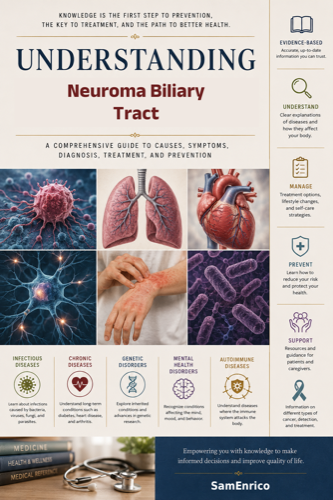 Understanding Neuroma Biliary TractDunham Terina$17.99
 How to Start a Choke and Coil (electronic) Business (Beginners Guide)Dunham Terina$11.99
 Non-destructive Testing (Terahertz Imaging)Dunham Terina$11.99
You may also like
 Hong Kong Handover 1997Dunn Johnnie$11.99
 Zumba For Postnatal Recovery CourseNeal Christian$11.99
 Zumba for BeginnersLadner Nikia$11.99
 YouTube Comment Mining GuideHumes Pandora$12.99
 Worry Box MeditationCarlin Rudy$11.99
 Workplace Stress MeditationNguyen Lynn$11.99
 Workplace Stress and Sleep RepairHawley Ivory$11.99
 Workplace Perfectionism CureDelaney Jeffry$11.99
 Workplace Injustice Anger GuideWallen Isabelle$11.99
 Work Addiction and Burnout LinkGreenwood Ester$11.99
 Women in Yoga and WellnessBeattie Galina$11.99
 Women in Stand Up ComedyChun Evangeline$11.99