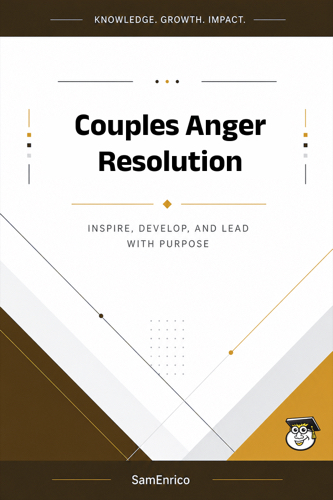
Couples Anger Resolution eBook
Provides step-by-step methods to de-escalate argum
by Clapp Piedad
Provides step-by-step methods to de-escalate arguments and repair after outbursts.
Formats
Free sample
Chapter 1: The Trapdoor Effect...--Every couple knows the moment. It arrives without warning, disguised as a minor irritation. You are discussing something mundane—the dishes left in the sink, a late return from work, a forgotten birthday card. The conversation is ordinary, even boring. Then, in the span of a single sentence, everything changes.
Voices rise. Faces tighten. Suddenly you are not arguing about dishes anymore. You are arguing about respect. About consideration.
About whether your partner has ever truly listened to you in fifteen years of marriage. A ten-minute disagreement has transformed into a three-hour fight that will require days of cold silence to recover from. And neither of you can explain exactly how it happened.This book is about that moment. More specifically, this book is about what happens one second before that moment—the invisible ledge that every couple walks along, and the sudden drop that follows when they fall through it. We call this ledge and its hidden drop The Trapdoor.
Understanding the trapdoor is the single most important skill you will learn in these pages. Because once you can see it, you can stop walking toward it. Once you can feel the floor beginning to give way beneath your feet, you can step back to solid ground before the fall begins.This first chapter lays the foundation for everything that follows. Here, you will learn the physiology of anger—what actually happens inside your brain and body when a disagreement turns dangerous. You will discover why "keeping the peace" is a myth that destroys marriages rather than saving them.
You will understand the toxic habit psychologists call "kitchen sinking" and why it turns minor fights into relationship autopsies. Most importantly, you will complete a radical reframe: anger is not your enemy. Escalation is. By the time you finish this chapter, you will never look at a heated argument the same way again.The Dish That Launched a Thousand Fights Let us begin with a story. It is a Tuesday evening.
A couple we will call Mark and Priya are finishing dinner. Mark has had a long day at work. Priya has been home with their two young children, who are now finally in bed. Exhaustion sits on both of them like wet blankets. Mark carries his plate to the sink, then returns to the table for Priya's.
He loads the dishwasher incorrectly—forks pointing up instead of down, a mixing bowl on the bottom rack taking up space meant for pots. Priya notices this from the couch. She says, gently at first, "You know the forks go down, right? Otherwise they don't get clean." Mark sighs. "I'm doing the dishes.
Does it really matter?" Priya sits up. "It matters because I'm the one who has to re-wash them half the time." Mark says, "That's not true. You just like things your way." Priya says, "I like things functional. There's a difference."Twenty minutes later, they are not talking about forks. They are talking about the time Mark forgot their anniversary dinner reservation.
About the week Priya criticized his driving in front of his parents. About whether Mark's mother has always been intrusive or whether Priya is just too sensitive. About who carries more of the mental load in the household. About respect. About love.
About whether this marriage was a mistake.What happened? How did dishwasher forks become a referendum on the entire relationship?The answer lies in the trapdoor.The Anatomy of the Trapdoor: Your Brain on Anger To understand the trapdoor, you must first understand a basic fact about your brain: it has two distinct operating systems. The first is the prefrontal cortex, located directly behind your forehead. This is the CEO of your brain. It handles logic, reasoning, impulse control, long-term planning, and the ability to see another person's perspective.
When your prefrontal cortex is online, you can have difficult conversations without destroying your relationship. You can say, "I feel frustrated about the forks because I am tired and I need things to be easy right now." The prefrontal cortex is what makes you human.The second system is the amygdala. This is a small, almond-shaped cluster of neurons deep in the brain's temporal lobe. Its job is singular and ancient: survival. The amygdala does not care about your marriage, your feelings, or your long-term happiness.
It cares about one thing only—keeping you alive in the face of a threat. When the amygdala detects danger, it launches a full-body emergency response. It floods your system with cortisol and adrenaline. It shuts down blood flow to the prefrontal cortex (because you do not need logic when a tiger is chasing you). It redirects all energy to your large muscle groups for fighting or running.
Your breathing becomes shallow and rapid. Your heart rate spikes. Your pupils dilate. Your hearing narrows to focus only on potential threats.This is called the fight-or-flight response. It is brilliant for surviving a predator.
It is disastrous for surviving a conversation about dishwasher forks.Here is the crucial insight: your brain cannot tell the difference between a physical threat and an emotional threat. When your partner says something that feels like a criticism, your amygdala does not know the difference between those words and a tiger. It responds the same way. It floods your body with stress hormones. It shuts down your prefrontal cortex.
And suddenly, you are incapable of logical discussion. You are not hearing what your partner is actually saying. You are scanning for attack. You are preparing to defend yourself.This is the trapdoor. The floor of rational conversation gives way, and you fall into a reactive, survival-driven state.
Your partner, seeing your reaction, experiences their own amygdala activation. They fall through their own trapdoor. Now two people who love each other are standing in their living room, adrenaline-drenched, prefrontal cortices offline, treating each other as threats to be neutralized rather than partners to be understood.The Physiology of Flooding Psychologist John Gottman, one of the world's leading researchers on marital stability, coined a term for this state: flooding. When you are flooded, your heart rate exceeds 100 beats per minute. Your body is awash in stress hormones.
You cannot process information. You cannot take in your partner's perspective. You cannot remember the techniques you learned in a book or a therapy session. You are, for all practical purposes, temporarily incapable of being a constructive partner.Here is what the research tells us about flooding, and this is critical: once you are flooded, it takes a minimum of twenty minutes for your body to metabolize the cortisol and adrenaline in your bloodstream. Not five minutes.
Not ten minutes. Twenty minutes. If you try to continue a conversation while flooded, or if you take a five-minute break and return, you will still be flooded. You will simply resume the same fight from the exact same position. Nothing will have changed except that you are now angrier because the break did not help.This twenty-minute rule is non-negotiable in this book.
You will see it again and again. A five-minute break is a placebo. A twenty-minute break is a physiological reset. The difference is the difference between…
This is the end of the free sample. Get the eBook to keep going. Buy now
About this book
Details
- Author
- Clapp Piedad
- Publisher
- SamEnrico
- Language
- English
- Genre
- Non-Fiction, Self-Help / Couples
- Released
- 2026-06-09
- Pages (approx.)
- 144
- Available as
- eBook, Audiobook

Read better in the ZLOADR app
Your eBooks on your phone or tablet. Sign in with your SamEnrico account and start reading.
More by Clapp Piedad
 DBT For Anger RegulationClapp Piedad$11.99
 Assertiveness For NeurodivergenceClapp Piedad$11.99
 Chase Elliott Young GunClapp Piedad$11.99
 The Stress Resilient PartnershipClapp Piedad$11.99
 Herbert Hoover GuideClapp Piedad$11.99
 Community Therapy Worker HandbookClapp Piedad$11.99
 Cialdini Research UpdateClapp Piedad$11.99
 The Forgotten Battle of the Chindits: Jungle War in Burma (1944)Clapp Piedad$11.99
 The Shanghai Opium Heist: The Case That Sank a Cruise Liner (1927)Clapp Piedad$11.99
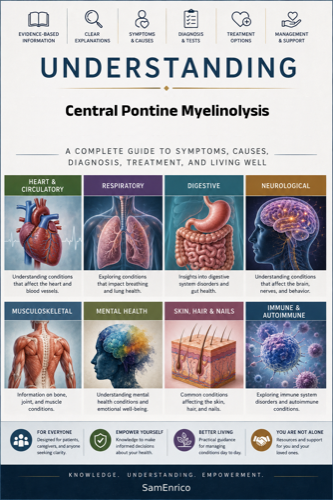 Understanding Central Pontine MyelinolysisClapp Piedad$11.99
 How to Produce Shoes and AccessoriesClapp Piedad$11.99
 A Collector's Handbook to the Borgward Isabella TsClapp Piedad$11.99