
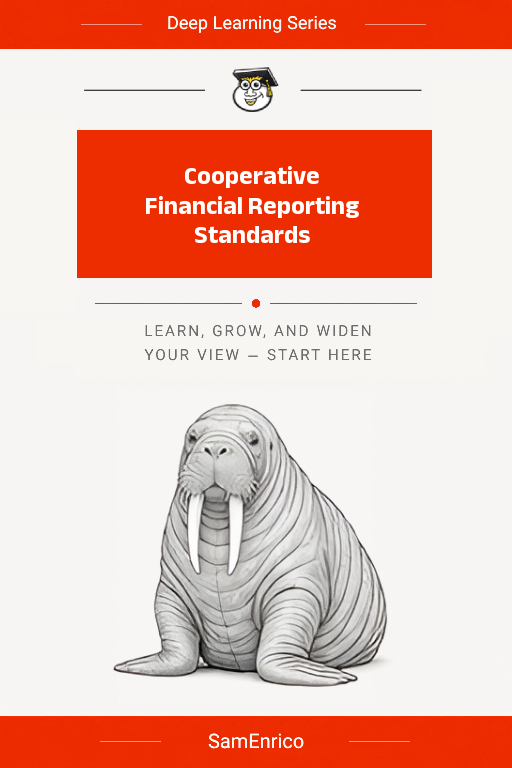
Cooperative Financial Reporting Standards
Prepare cooperative financial statements under IFR
by Downs Gianna
Prepare cooperative financial statements under IFRS for SMEs, meeting lender and donor requirements in East Africa.
Formats
About this book
Free sample
Chapter 1: The Silent Killer--–- In a small office at the back of a bustling maize farmers’ cooperative in Mbeya, Tanzania, the chairman stared at a letter from the bank. The cooperative had recorded a net surplus for three consecutive years. Its members had received patronage refunds. The Reserve Fund was growing. By all appearances, the cooperative was thriving.
Yet the letter said: “Your loan application has been declined due to unacceptable financial reporting risk.” The treasurer had kept handwritten ledgers. There was no statement of cash flows. Grant money from a European donor had been deposited into the same account as member share capital, and no one could trace which funds had been spent on what. The bank’s credit officer later explained privately: “We cannot lend to an organization that cannot tell us where its cash came from and where it went.” That cooperative eventually dissolved. Not because it was unprofitable.
Because it was financially invisible.This story is not rare. Across East Africa—from the coffee cooperatives of Mount Kenya to the SACCOs of Kampala, from the dairy cooperatives of Rwanda to the fishing cooperatives of Lake Victoria—hundreds of viable cooperatives die each year not from competition or bad harvests, but from financial reporting failure. They cannot access loans. They lose donor funding. Lenders and donors alike walk away, not because the cooperative lacks potential, but because the numbers are a mess.
This chapter is about that silent killer: the belief that good intentions and a net surplus are enough. They are not. In the world of cooperative finance, if you cannot report properly, you do not exist.The Weight of Cooperatives in East Africa Before we diagnose the problem, we must understand what is at stake. Cooperatives are not a niche sector in East Africa. They are the backbone of the rural and peri-urban economy.In Kenya, SACCOs (Savings and Credit Cooperative Organizations) control over 600 billion Kenyan shillings in assets and serve more than 6 million members.
Agricultural cooperatives handle over 70% of the country’s marketed coffee, dairy, and pyrethrum. In Tanzania, cooperative unions process the majority…
This is the end of the free sample. Get the eBook to keep going. Buy now
Contents
- Chapter 1
- Chapter 2
- Chapter 3
- Chapter 4
- Chapter 5
- Chapter 6
- Chapter 7
- Chapter 8
- Chapter 9
- Chapter 10
- Chapter 11
- Chapter 12
Details
- Author
- Downs Gianna
- Publisher
- SamEnrico
- Language
- English
- Genre
- Non-Fiction, Business Brief
- Released
- 2026-05-30
- Pages (approx.)
- 134
- Available as
- eBook, Audiobook

Read better in the ZLOADR app
Your eBooks on your phone or tablet. Sign in with your SamEnrico account and start reading.
More by Downs Gianna
 Procrastination Overcoming WorkbookDowns Gianna$11.99
 Research Proposal Pilot Study PlanningDowns Gianna$11.99
 Myanmar Rohingya Family ReunitedDowns Gianna$11.99
 Self Esteem for Aging LGBTQ+ SeniorsDowns Gianna$11.99
 Luxury Goods EconomicsDowns Gianna$11.99
 Gymnastics Routine Lock InDowns Gianna$11.99
 Digital Nomad Visa TrendsDowns Gianna$11.99Digital Nomad Visa TrendsDowns Gianna$11.99
 Everglades Swamp SinkingsDowns Gianna$11.99
 The Great Cookie Heist: How a 1980s Baking Empire Collapsed OvernightDowns Gianna$11.99
 The Magnificent Merchants of the Sahara: The Gold Caravans of the WangaraDowns Gianna$11.99
 Growing DiphylleiaDowns Gianna$11.99
You may also like
 Hong Kong Handover 1997Dunn Johnnie$11.99
 Zumba For Postnatal Recovery CourseNeal Christian$11.99
 Zumba for BeginnersLadner Nikia$11.99
 YouTube Comment Mining GuideHumes Pandora$12.99
 Worry Box MeditationCarlin Rudy$11.99
 Workplace Stress MeditationNguyen Lynn$11.99
 Workplace Stress and Sleep RepairHawley Ivory$11.99
 Workplace Perfectionism CureDelaney Jeffry$11.99
 Workplace Injustice Anger GuideWallen Isabelle$11.99
 Work Addiction and Burnout LinkGreenwood Ester$11.99
 Women in Yoga and WellnessBeattie Galina$11.99
 Women in Stand Up ComedyChun Evangeline$11.99