

Non-FictionSelf-HelpRelationships
Conversation Starters for Couples eBook
Deepens connection with partner beyond daily logis
by Koenig Dacia
Deepens connection with partner beyond daily logistics.
Formats
Free sample
Chapter 1: The Curiosity Reboot...--–- The first time you fell in love, you were a detective. You asked questions not because you had to, but because you couldn't help yourself. What was their favorite childhood meal? What song made them cry in high school? What was the nightmare they still remembered?
You collected these answers like rare coins, turning them over in your mind, feeling richer with each discovery.Then something shifted. Slowly, invisibly, you stopped asking.Not because you stopped caring. Because you fell into the most seductive trap in long-term relationships: the illusion of completion. You began to believe that you already knew everything worth knowing. The person who once fascinated you became familiar.
And familiarity, without deliberate curiosity, is the quietest path to loneliness inside a shared home.This chapter is not about asking better questions. It is about becoming curious again. It is about understanding why couples stop learning about each other, what that costs, and how a three-minute daily habit can reboot the deepest form of intimacy: being truly seen.The Silent Trap of Familiarity Every couple wakes up one day to find that they have become roommates who share a bed. It does not happen because of a fight. It happens because of efficiency.When you are building a life together, logistics take over.
Who picks up the kids? Did we pay the electric bill? What are we having for dinner? These are not bad questions. They are necessary questions.
But when they become the only questions, something vital dies.The trap is this: living together creates the illusion that you already know your partner. You see them every day. You know their habits, their moods, their coffee order. But here is the truth that most couples never realize—knowing someone's routines is not the same as knowing someone's inner world.Your partner changes constantly. Every day, they have new fears, new admirations, new small memories that they have not yet told you.
A passing comment from a coworker that stung. A tiny moment of pride they did not mention. A worry about their aging parent that floated through their mind during a red light.You do not know these things because you have not asked. And you have not asked because you mistakenly believe there is nothing new to discover.John Gottman, one of the world's most respected relationship researchers, calls this the "Love Map" problem. A Love Map is the part of your brain where you store all the relevant information about your partner's life, dreams, fears, and daily world.
When couples first fall in love, their Love Maps are updated constantly. Every date is an expedition into unknown territory.But after a few years, most couples stop updating their maps. They are walking around with outdated information, assuming the terrain has not changed. And then they wonder why they feel lost.The High Cost of Curiosity Collapse You might think that not asking questions is neutral. It is not.
It is active neglect of the relationship's most essential nutrient: attention.When you stop being curious, your partner feels it. Not as a single dramatic moment but as a thousand small absences. You do not notice the new book on their nightstand. You do not ask about the strange interaction they mentioned in passing. You look at your phone while they are talking.
None of these moments alone is a crisis. But together, they form a pattern that says: I already know you. You do not surprise me anymore.And that message is devastating.The cost of curiosity collapse shows up in three specific ways:First, you stop feeling seen. The most profound human need is not to be loved in the abstract but to be seen in the specific. When your partner knows your small, changing details—who annoyed you today, what you secretly hope for tomorrow—you feel like you exist.
When they do not, you feel like furniture.Second, fights become more frequent and more confusing. When your Love Map is outdated, you misinterpret your partner's reactions. You think they are angry about the dishes when they are actually exhausted from a week of invisible stress. You think they are being irrational when they are actually reacting to a history you have forgotten to update.Third, you drift into parallel lives. Two people can live in the same house, share the same bed, raise the same children, and yet inhabit completely different emotional worlds.
They become efficient co-managers of logistics and strangers to each other's inner lives. This is not conflict. It is worse. It is quiet erosion.The research is stark: couples with detailed, updated Love Maps handle stress better, recover from fights faster, and report significantly higher relationship satisfaction. The difference is not that they have fewer problems.
It is that they know each other well enough to navigate problems without guessing.The One Framework You Will Use in Every Chapter This book will teach you many specific conversation starters. But beneath every question in every chapter is a single framework that you must internalize now. Every subsequent chapter will refer back to this idea.Here it is: Every surface statement has a depth need.When your partner says "I'm fine," the surface is a dismissal. The depth is almost always a bid for pursuit. When your partner snaps about the dishes, the surface is irritation about a plate.
The depth is often exhaustion from carrying an invisible mental load. When your partner withdraws, the surface looks like rejection. The depth is usually fear or overwhelm.Your job in every conversation—whether you are talking about chores, sex, money, or memories—is to listen for the depth. Not to fix it. Not to debate it.
Just to hear it.This chapter is about the most basic level of that framework: listening for the small, changing details of your partner's daily inner world. Later chapters will apply the same framework to apology languages, perpetual problems, desire, and legacy.For now, start small. Start with curiosity about the past twenty-four hours.The Most Important Question You Are Not Asking If you want to know whether your curiosity has collapsed, ask yourself this: When was the last time you learned something new about your partner that was not related to logistics?Not their opinion on which streaming service to cancel. Not their preference for chicken or fish for dinner. Something about their inner world.
A memory they had not shared. A person they admire. A fear they have been carrying.If you cannot remember, you are not alone. Most couples cannot. And that is why this chapter exists.The antidote to curiosity collapse is not grand gestures or expensive date nights.
It is small, consistent, low-pressure questions asked with genuine interest and no agenda.Here are three questions that will reboot your curiosity tonight. They are not deep. They are not therapeutic. They are simply the kind of questions you would have asked when you were first falling in love, back when every answer felt like a gift.The Memory Question: "What is a memory from this past year that you haven't had a chance to tell me about yet, but…
This is the end of the free sample. Get the eBook to keep going. Buy now
About this book
Details
- Author
- Koenig Dacia
- Publisher
- SamEnrico
- Language
- English
- Genre
- Non-Fiction, Self-Help, Relationships
- Released
- 2026-06-06
- Pages (approx.)
- 136
- Available as
- eBook, Audiobook

Read better in the ZLOADR app
Your eBooks on your phone or tablet. Sign in with your SamEnrico account and start reading.
More by Koenig Dacia
 Post 9/11 Immigrant ChildhoodKoenig Dacia$11.99
 Morning Routine For RemotesKoenig Dacia$11.99
 Compound Lift GuideKoenig Dacia$11.99
 Design Sprint Collaboration GuideKoenig Dacia$11.99
 Dream Utopia JournalKoenig Dacia$11.99
 Power Posing EffectsKoenig Dacia$11.99
 Toddler Tantrum Parent ControlKoenig Dacia$11.99
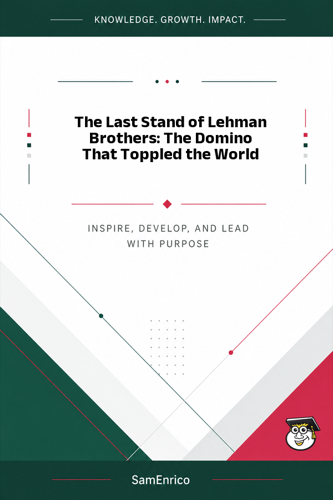 The Last Stand of Lehman Brothers: The Domino That Toppled the WorldKoenig Dacia$11.99
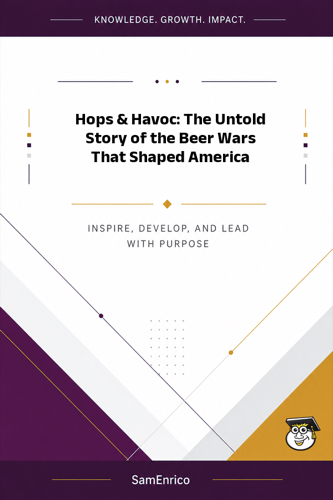 Hops & Havoc: The Untold Story of the Beer Wars That Shaped AmericaKoenig Dacia$11.99
 How to Produce Clubs and BatonsKoenig Dacia$11.99
 Ultra-high Purity Gas System ManagementKoenig Dacia$11.99
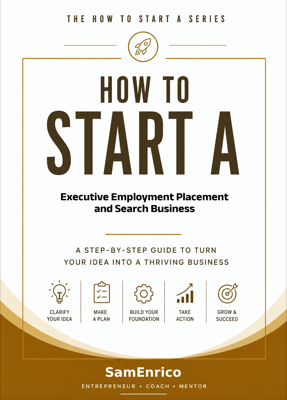 How to Start a Executive Employment Placement and Search Business (Beginners Guide)Koenig Dacia$11.99
You may also like
 Hong Kong Handover 1997Dunn Johnnie$11.99
 Zumba For Postnatal Recovery CourseNeal Christian$11.99
 Zumba for BeginnersLadner Nikia$11.99
 YouTube Comment Mining GuideHumes Pandora$12.99
 Worry Box MeditationCarlin Rudy$11.99
 Workplace Stress MeditationNguyen Lynn$11.99
 Workplace Stress and Sleep RepairHawley Ivory$11.99
 Workplace Perfectionism CureDelaney Jeffry$11.99
 Workplace Injustice Anger GuideWallen Isabelle$11.99
 Work Addiction and Burnout LinkGreenwood Ester$11.99
 Women in Yoga and WellnessBeattie Galina$11.99
 Women in Stand Up ComedyChun Evangeline$11.99