
Non-FictionSelf-HelpRelapse Prevention
Compulsive Spending Relapse Prevention Guide eBook
Creates personalized relapse prevention plans for
Creates personalized relapse prevention plans for after periods of successful spending reduction.
Formats
Free sample
Chapter 1: The Victory Hangover--The most dangerous day of your recovery was the day you succeeded.Let me say that again, because it sounds wrong. It sounds like the opposite of everything you have been told about goals, milestones, and the power of achievement. You have spent weeks, months, or perhaps years fighting to pay off that credit card, to complete that no‑spend month, to finally see a positive number in your savings account. You celebrated. You exhaled.
You told yourself, I did it. I am safe now.That exhale was the moment your guard dropped. And compulsive spending, like every addictive pattern, does not attack when you are armored and vigilant. It waits. It watches.
And it strikes the precise moment you believe the war is over.This chapter is called The Victory Hangover for a reason. A hangover is what you feel after the party ends—the headache, the nausea, the disorientation that follows a high. The victory of successful spending reduction creates its own biochemical and psychological hangover. The dopamine that fueled your discipline crashes. The structure that kept you safe disappears because you no longer think you need it.
And the very relief you feel becomes the opening your compulsion needs to return, often with more force than before.We need to talk about that hangover. Not because you did something wrong, but because no one warned you it was coming.The Myth of the Finish Line Most self‑help and financial recovery literature operates on a hidden assumption: that reaching a goal is the end of the struggle. Pay off debt, and you are free. Complete a 30‑day spending fast, and you have reset your habits. Hit your savings target, and you can finally relax.This is the arrival fallacy—the belief that crossing a finish line means the race is over.But compulsive spending is not a race.
It is not a project with a completion date. It is a pattern, and patterns do not disappear simply because you achieved a single milestone. They evolve. They adapt. And they are remarkably patient.I have sat with hundreds of people who relapsed not during their most desperate moments, but during their proudest ones.
The woman who paid off $47,000 of credit card debt and bought a $900 coat three days later as a "reward." The man who completed a no‑spend January and spent February digging himself back into a hole because he thought he had proven he was "cured." The couple who finally saved a six‑month emergency fund and celebrated by financing a vacation they could not afford.In every case, the relapse did not happen because they lacked willpower or because they secretly wanted to fail. It happened because no one had told them about the victory hangover.They did not know that the moment after success is neurologically, emotionally, and behaviorally the most dangerous moment of all.The Post‑Milestone Crash: What Happens Inside Your Brain To understand the victory hangover, you need to understand what just happened inside your skull during your successful spending reduction.Every time you resisted an urge—every time you closed a browser tab, walked past a store, or deleted a saved credit card number—your brain released a small amount of dopamine. Not the explosive dopamine of a purchase, but a steady, satisfying drip that rewarded you for disciplined behavior. This is the brain's way of saying, Good job. Keep going.
We are moving toward something important.Over weeks or months, that drip became its own reward. You felt a quiet pride in each small victory. You started to identify as someone who does not spend compulsively. The structure of tracking, planning, and checking in with an accountability partner became a comforting rhythm.Then you reached your goal.The moment you achieved your milestone—paid off the last debt, completed the final day of your no‑spend challenge, saw the savings account hit its target—your brain did something that feels like betrayal. It stopped producing that steady drip of dopamine.
The reward system said, We are done here. The goal is achieved. Time to rest.That sudden drop is the post‑milestone crash.Your brain is not trying to sabotage you. It is simply following its evolutionary programming. Dopamine is not designed for permanent happiness; it is designed to motivate you toward future rewards.
Once the reward is obtained, the dopamine system resets. It stops rewarding the behaviors that got you there and starts scanning for the next source of stimulation.That void—the quiet, empty feeling after success—is the hangover. And nature abhors a vacuum. Your brain will try to fill that void with something. If you do not consciously choose what fills it, your limbic system will choose for you.
And the limbic system remembers, very clearly, that spending used to feel really, really good.This is not a moral failure. It is neuroscience.The Abstinence Violation Effect: Why One Slip Feels Like Catastrophe The victory hangover creates a second, equally dangerous phenomenon: the Abstinence Violation Effect, or AVE.Here is how it works. You have been "clean" for weeks or months. You feel proud of your streak. Then something happens—an unexpected stress, a moment of boredom, a targeted ad that seems to read your mind—and you make a small, unplanned purchase.
Maybe it is a $5 coffee. Maybe it is a $20 item from a clearance rack. It does not matter the amount. What matters is what happens next.Your brain, still operating in the vacuum of the post‑milestone crash, seizes on that purchase as evidence. Not evidence that you made a mistake, but evidence that you are a failure.
The thought arrives almost instantly: I already blew it. I might as well buy the $500 handbag. I have no self‑control. Nothing has changed. I am right back where I started.That thought is the Abstinence Violation Effect.
It is a cognitive distortion—a lie your brain tells you—that transforms a single, containable lapse into the justification for a full relapse.The AVE is so dangerous because it feels true. It feels like clarity. It feels like honesty. I am not really recovered, you think. I was kidding myself.
Now I can stop pretending.But the AVE is not truth. It is a predictable neurological and psychological trap. And like any trap, once you know it exists, you can learn to see it coming and step around it.The research on relapse prevention, originally developed for substance use disorders and later adapted for behavioral addictions, is unambiguous: the single strongest predictor of whether a lapse becomes a relapse is not the lapse itself. It is how you interpret the lapse. People who see a lapse as a mistake—a piece of data, a warning sign, a single misstep—almost always recover quickly.
People who see a lapse as proof of their worthlessness or permanent failure almost always spiral into a full relapse.The victory hangover makes you vulnerable to the AVE because you have been doing so well. The contrast between your proud streak and the small slip feels enormous. Your brain magnifies the slip into a catastrophe because it is…
This is the end of the free sample. Get the eBook to keep going. Buy now
About this book
Details
- Author
- Humphries Ozell
- Publisher
- SamEnrico
- Language
- English
- Genre
- Non-Fiction, Self-Help, Relapse Prevention
- Released
- 2026-06-09
- Pages (approx.)
- 133
- Available as
- eBook, Audiobook

Read better in the ZLOADR app
Your eBooks on your phone or tablet. Sign in with your SamEnrico account and start reading.
More by Humphries Ozell
 REM Cycle Dream TimingHumphries Ozell$11.99
 Binge Eating in Pregnancy GuideHumphries Ozell$11.99
 Values And Mission Alignment Merger IntegrationHumphries Ozell$11.99
 The Posture Perfection GuideHumphries Ozell$11.99
 The Last Broadcast of the Titanic’s Wireless RoomHumphries Ozell$11.99
 The Cosmic Leap: How the World United for the Moon LandingHumphries Ozell$11.99
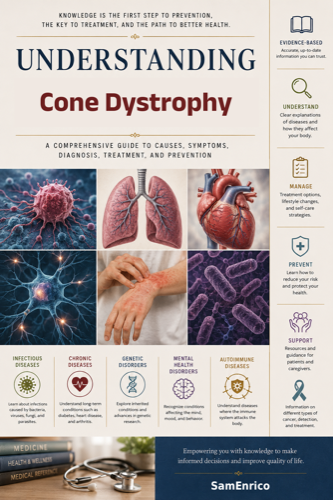 Understanding Cone DystrophyHumphries Ozell$17.99
 Hydraulic Fracturing (Fracking) DesignHumphries Ozell$11.99
 Unit Economics For Low IncomeHumphries Ozell$12.99
 Banking for InternationalsHumphries Ozell$12.99
 How to Start a Moulding Machine for Working Rubber or Plastics Business (Beginners Guide)Humphries Ozell$11.99
You may also like
 Hong Kong Handover 1997Dunn Johnnie$11.99
 Zumba For Postnatal Recovery CourseNeal Christian$11.99
 Zumba for BeginnersLadner Nikia$11.99
 YouTube Comment Mining GuideHumes Pandora$12.99
 Worry Box MeditationCarlin Rudy$11.99
 Workplace Stress MeditationNguyen Lynn$11.99
 Workplace Stress and Sleep RepairHawley Ivory$11.99
 Workplace Perfectionism CureDelaney Jeffry$11.99
 Workplace Injustice Anger GuideWallen Isabelle$11.99
 Work Addiction and Burnout LinkGreenwood Ester$11.99
 Women in Yoga and WellnessBeattie Galina$11.99
 Women in Stand Up ComedyChun Evangeline$11.99