
Non-FictionSelf-HelpSocial Comparison
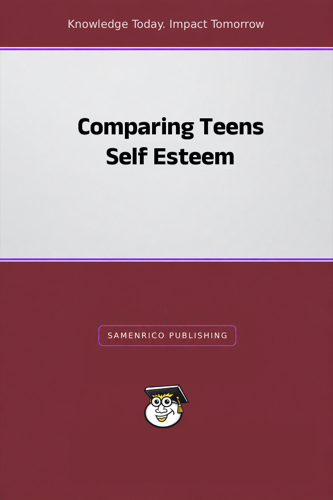
Comparing Teens Self Esteem eBook
Help adolescents stop harmful social comparison an
Help adolescents stop harmful social comparison and focus on their own growth.
Formats
Free sample
Chapter 1: The Comparison Epidemic--If you are a teenager right now, you are living through the most comparison-saturated time in human history. Let that sink in for a moment. Not just the most competitive, not just the most judgmental, but the most comparison-drenched era any young person has ever experienced. Your grandparents compared themselves to the neighbors on their block. Your parents compared themselves to classmates they saw for six hours a day.
You compare yourself to thousands of people every single morning before you even finish breakfast.This is not an exaggeration. The average teenager spends over seven hours per day on screens, and a significant portion of that time involves passive scrolling through the curated highlights of other people's lives. Each scroll is a comparison opportunity. Each image is a measuring stick. Each notification is a tiny data point telling you where you stand in an invisible ranking system that you never agreed to join.The result is a generation of young people who are more anxious, more depressed, and more uncertain about their own worth than any cohort in decades.
And the driving force behind much of this distress is not trauma, not poverty, not family dysfunction—though those matter deeply. The driving force, for millions of teens, is something far more ordinary and far more constant: the relentless, automatic, often unconscious habit of measuring yourself against everyone around you.This book exists because that habit can be changed. Not eliminated—we will be clear about that from the very first chapter. Comparison is not something you can or should delete from your brain entirely. It evolved for a reason, and it serves useful purposes in specific contexts.
But the chronic, compulsive, self-esteem-crushing version of comparison that has become normal for today's teens is not inevitable. It is not a character flaw. It is not a sign that you are weak or vain or broken. It is a learned pattern, and like any learned pattern, it can be unlearned and replaced with something better.This chapter will show you what the comparison epidemic actually looks like, why it has gotten so much worse in the past decade, and why the promise of this book is not to make you stop comparing—but to help you compare less often, recover faster, and redirect your energy toward your own growth. By the end of this chapter, you will have a clear map of the problem and a genuine reason to believe that things can get better.The 10 PM Scroll Let us start with a scene that might feel uncomfortably familiar.It is 10:47 PM on a Sunday night.
You are in bed, phone in hand, thumb moving automatically up the screen. You told yourself you would stop scrolling at 10:00, but one video led to another, and now you are forty-seven minutes into a journey you did not intend to take. On your screen, a girl from the grade above you is posing on a beach in Mexico. Her skin is tan, her smile is wide, and her caption reads something about living your best life. Three posts later, a boy in your math class is showing off a new pair of sneakers that cost more than your weekly allowance.
Two posts after that, a popular influencer is dancing in a kitchen that looks bigger than your entire apartment.You feel something shift in your chest. It is not quite sadness and not quite anger. It is a low, humming feeling of not enough. Not pretty enough, not rich enough, not interesting enough, not enough enough. You close the app, but the feeling stays.
You roll over and try to sleep, but your brain has other plans. It starts generating a highlight reel of your own perceived failures: the grade you should have studied harder for, the friendship that drifted away, the way your hair looked in that photo from last week.This is the 10 PM scroll, and it is happening to millions of teens every single night.But here is what you need to understand: the problem is not that you are weak or vain. The problem is not that you care too much about what other people think. The problem is that your brain is doing exactly what it evolved to do, and the environment you are living in has turned that ancient survival mechanism into a 24/7 torture device.The Ancient Brain in a Modern World To understand why comparison feels so automatic and so painful, you need to go back about 200,000 years. Human beings evolved in small tribes of fifty to one hundred people.
In that environment, knowing where you stood relative to others was not a matter of self-esteem—it was a matter of life and death. If you were weaker than the hunters, you did not volunteer for the dangerous hunt. If you were lower in the social hierarchy, you did not challenge the tribe's leader. If you were falling behind in skills or status, you needed to know so you could adjust your behavior before you were cast out of the group—and being cast out of a tribe in the savanna meant almost certain death.So your brain developed a simple, efficient system: constantly, automatically, unconsciously compare yourself to the people around you. Where do I rank?
Who is ahead of me? Who is behind me? What do I need to do to stay safe and respected? This system ran in the background, using tiny bits of social information to update your mental map of the tribe. You did not have to think about it.
It just happened.Fast forward to today. You are no longer in a tribe of fifty people. You are connected to thousands, even millions, through your phone. The people you compare yourself to are not just the classmates you see in person—they are celebrities, influencers, athletes, and the curated personas of acquaintances from summer camp three years ago. The information you receive about them is not honest or complete—it is filtered, edited, staged, and often completely fake.
And instead of updating your mental map once a day through direct observation, you receive hundreds of comparison opportunities every single hour.Your brain is running ancient software in a modern environment that it was never designed to handle. And that is not your fault.The Data Behind the Epidemic Let us look at what the research says about comparison and teen mental health. While the specific numbers vary by study, the pattern is consistent and alarming.Approximately 85 percent of teenagers report comparing themselves to others on a daily basis. The most common domains of comparison are appearance, academic performance, social success, and material possessions. Girls are more likely to compare on appearance and social media presence; boys are more likely to compare on athletic ability and financial status—but everyone compares, across every demographic.Of those who compare daily, nearly 70 percent say that comparison lowers their mood.
Only about 15 percent say it motivates them in a healthy way. The rest report feeling worse—more anxious, more depressed, more envious, and more dissatisfied with their own lives.Here is where it gets even more concerning. Teens who report high levels of social…
This is the end of the free sample. Get the eBook to keep going. Buy now
About this book
Details
- Author
- Burrows Burton
- Publisher
- SamEnrico
- Language
- English
- Genre
- Non-Fiction, Self-Help, Social Comparison
- Released
- 2026-06-07
- Pages (approx.)
- 139
- Available as
- eBook, Audiobook

Read better in the ZLOADR app
Your eBooks on your phone or tablet. Sign in with your SamEnrico account and start reading.
More by Burrows Burton
 The Body Language for InterviewsBurrows Burton$11.99
 Hanger Management at WorkBurrows Burton$11.99
 Returning to Work After BreakBurrows Burton$11.99
 Call of Duty Gaming Disorder ManualBurrows Burton$11.99
 The Silk Road Gambit: How the Han Dynasty Outmaneuvered the XiongnuBurrows Burton$11.99
 Understanding Microcephaly, Primary Autosomal RecessiveBurrows Burton$17.99
 Six Weeks to German Grammar FundamentalsBurrows Burton$11.99
 Competitive Analysis ContentBurrows Burton$12.99
 Sustainable Packaging Capital GuideBurrows Burton$12.99
 How to Start a Cereal and Dried Vegetable Milling or Working Machinery (wholesale) Business (BeginneBurrows Burton$11.99
You may also like
 Hong Kong Handover 1997Dunn Johnnie$11.99
 Zumba For Postnatal Recovery CourseNeal Christian$11.99
 Zumba for BeginnersLadner Nikia$11.99
 YouTube Comment Mining GuideHumes Pandora$12.99
 Worry Box MeditationCarlin Rudy$11.99
 Workplace Stress MeditationNguyen Lynn$11.99
 Workplace Stress and Sleep RepairHawley Ivory$11.99
 Workplace Perfectionism CureDelaney Jeffry$11.99
 Workplace Injustice Anger GuideWallen Isabelle$11.99
 Work Addiction and Burnout LinkGreenwood Ester$11.99
 Women in Yoga and WellnessBeattie Galina$11.99
 Women in Stand Up ComedyChun Evangeline$11.99