
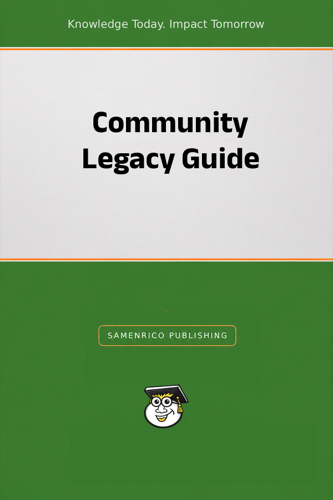
Non-FictionSelf-HelpCommunity Service
Community Legacy Guide eBook
Build lasting impact through volunteerism and serv
by Currie Ray
Build lasting impact through volunteerism and service using this reflective workbook.
Formats
Free sample
Chapter 1: The Saturday Illusion--Every Saturday morning for three years, Mark drove forty-five minutes to a food pantry in a neighboring town. He arrived at 7:00 AM, unpacked boxes of canned goods, sorted produce, and helped clients carry groceries to their cars. By noon, he was exhausted but fulfilled. He took photos occasionally—not for social media, but to remind himself why he served. He told friends, “I’m making a difference.”Then the food pantry closed.Not because of funding.
Not because of a lack of need. The need had actually grown. The pantry closed because the founding director retired, no one had documented the supplier relationships, and the church that hosted the pantry decided to repurpose the space for a youth program. Mark found out via a two-sentence email: “Thanks for your service. The pantry will cease operations at the end of the month.”Three years.
One hundred fifty-six Saturday mornings. Thousands of grocery bags. And within sixty days, no one in that town could remember the pantry existed. The need remained. The hungry were still hungry.
But the system Mark had given himself to had evaporated because no one had asked a single, uncomfortable question: What happens when we leave?Mark is not a failure. He is not a bad person. He is not even an ineffective volunteer. He is something far more common and far more tragic: he is a reactor. He saw a need and showed up.
He did the work. He felt the satisfaction. But he never built anything that outlasted his own two hands. His Saturdays were a gift. But a gift given once, even generously, is not a legacy.
A legacy is a gift that keeps giving after you are gone.This book exists because of Mark. And because of the thousands of volunteers like him who confuse activity with impact, presence with permanence, and good intentions with lasting change. If you picked up this workbook, you are likely one of those people. You care. You show up.
You want your life to mean something beyond your own comfort. But you have a nagging suspicion that your service—for all its sincerity—is not adding up to anything that will survive you.You are right to suspect that.The Reactive Giving Trap Let us name the enemy. It is not apathy. Apathy is easy to spot and easy to condemn. The real enemy is reactive giving—the culturally celebrated, emotionally satisfying, structurally empty pattern of responding to immediate needs without addressing the systems that produce those needs in the first place.Reactive giving looks like this: a disaster strikes, and you donate to a Go Fund Me.
A friend shares a heartbreaking story, and you share it too. A holiday approaches, and you serve a meal at a shelter. A news report shocks you, and you sign a petition. None of these actions are bad. Many of them are good.
But they share a common flaw: they are responses to problems that already exist, rather than architectural choices that prevent those problems from recurring.Think of a river. Reactive giving is pulling drowning people out of the water, one by one. It is heroic, exhausting, and ultimately futile if you never walk upstream to see who is pushing them in. Intentional legacy building is walking upstream. It is less glamorous.
It takes longer. You will not get a photo op on the riverbank. But it is the only way the drowning stops.The top 1 percent of volunteers—the ones whose work outlasts them—operate differently. They do not ask, “What feels urgent today?” They ask, “What problem, if solved, would make urgent needs disappear?” They do not ask, “Where can I help?” They ask, “What specific, measurable change do I want to be true twenty years from now?” They do not serve from guilt or adrenaline. They serve from intention.This chapter is the pivot point between those two ways of being.
By the time you finish these pages, you will have stopped being a reactor and started being an architect.The Problem with “Random Acts of Kindness”The phrase “random acts of kindness” has become a cultural touchstone. It appears on bumper stickers, coffee mugs, and elementary school bulletin boards. The idea is beautiful: kindness does not need to be strategic. It can be spontaneous, small, and still meaningful. And that is true—for the recipient of that single act.
A random act of kindness can change a person’s day.But it cannot change a person’s life. And it certainly cannot change a community.Consider two scenarios. In Scenario A, you see a child without a winter coat. You buy them a coat. That is a kind act.
The child is warmer tomorrow. In Scenario B, you discover that the school has no coat drive, the county has no emergency winter fund, and the church that used to provide coats lost its storage space. You spend six months building a permanent coat distribution system that involves three schools, two churches, and a county voucher program. Five years later, no child in that county goes without a winter coat.Scenario A is reactive kindness. Scenario B is intentional legacy.
Both are good. Only one is lasting.The problem is that our culture celebrates Scenario A. We share videos of spontaneous generosity. We applaud the stranger who pays for someone’s groceries. We feel warm when we see “random acts of kindness” posted on social media.
And because we receive social approval for these acts, we mistake approval for impact. We think, “People clapped for what I did. Therefore, what I did mattered.” But applause is not a metric of structural change. Applause measures emotion, not outcomes.The most dangerous sentence in volunteerism is not “I don’t care.” It is “I feel like I made a difference.”Feeling like you made a difference and actually making a measurable, lasting difference are two different things. They often overlap, but they do not always.
The volunteer who sorts cans for three hours feels productive. The volunteer who spends those same three hours analyzing why the pantry keeps running out of specific foods—and then fixes the supply chain—may feel bored, frustrated, and unseen. But the second volunteer has built something that will last. The first volunteer has only burned calories.This book is not against feeling good. Feeling good is a wonderful byproduct of service.
But when feeling good becomes the goal, legacy dies. You must be willing to feel bored, confused, unappreciated, and even ineffective for long stretches while you build the scaffolding that will support change after you are gone. If you need a thank-you note every week, you are not building legacy. You are building an ego maintenance system.The 20-Year Question Here is the single most important question you will answer in this entire workbook. Do not skim it.
Do not think about it abstractly. Write it down. Read it aloud. Then sit in silence for sixty seconds before you answer.What specific problem in your community do you want to be solved so thoroughly that twenty years from now, young people ask, “Wait, that used to be a problem…
This is the end of the free sample. Get the eBook to keep going. Buy now
About this book
Details
- Author
- Currie Ray
- Publisher
- SamEnrico
- Language
- English
- Genre
- Non-Fiction, Self-Help, Community Service
- Released
- 2026-06-07
- Pages (approx.)
- 122
- Available as
- eBook, Audiobook

Read better in the ZLOADR app
Your eBooks on your phone or tablet. Sign in with your SamEnrico account and start reading.
More by Currie Ray
 Snorkel Technology ImpactCurrie Ray$11.99
 Gratitude Practice For SeniorsCurrie Ray$11.99
 The College Student Gaming GuideCurrie Ray$11.99
 The Twitter Success Showdown GuideCurrie Ray$11.99
 The Siege of Sarajevo: A City Under FireCurrie Ray$11.99
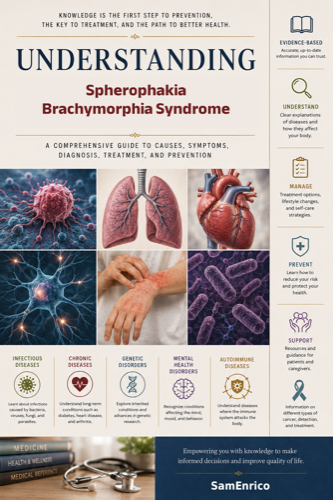 Understanding Spherophakia Brachymorphia SyndromeCurrie Ray$17.99
 How to Start a Civil Engineering Construction Business (Beginners Guide)Currie Ray$11.99
 Bonus Depreciation Phase OutCurrie Ray$12.99
 Directors Climate LiabilityCurrie Ray$12.99
 Utility Knife Blade ChangingCurrie Ray$11.99
You may also like
 Hong Kong Handover 1997Dunn Johnnie$11.99
 Zumba For Postnatal Recovery CourseNeal Christian$11.99
 Zumba for BeginnersLadner Nikia$11.99
 YouTube Comment Mining GuideHumes Pandora$12.99
 Worry Box MeditationCarlin Rudy$11.99
 Workplace Stress MeditationNguyen Lynn$11.99
 Workplace Stress and Sleep RepairHawley Ivory$11.99
 Workplace Perfectionism CureDelaney Jeffry$11.99
 Workplace Injustice Anger GuideWallen Isabelle$11.99
 Work Addiction and Burnout LinkGreenwood Ester$11.99
 Women in Yoga and WellnessBeattie Galina$11.99
 Women in Stand Up ComedyChun Evangeline$11.99