

Non-FictionSelf-HelpCommunication
Communication Legacy Guide eBook
Leave skills of deep listening and honest speech f
Leave skills of deep listening and honest speech for your family using this workbook.
Formats
Free sample
Chapter 1: The Last Question...--The question arrived in the smallest of moments, wrapped in the most ordinary of packages. My daughter was twelve years old, sitting at the kitchen table, her homework spread out before her like a battlefield she was losing. I was rushing—always rushing—between the stove and the laundry room, answering emails on my phone, mentally composing a grocery list, and half-listening to her describe a problem with a friend at school. I thought I was listening. I was making the appropriate sounds: "Uh-huh," "Oh really," "That's too bad." I was even making eye contact between glances at my screen.Then she stopped talking.
Not in the way that signals the end of a story. In the way that signals something else entirely. The way that says: You have failed me, and now I am going to make you feel it.She looked at me with the kind of directness that only children and the dying possess. And she asked me a question that I have never forgotten."Mom," she said, "are you listening to me, or are you just waiting for your turn to talk?"The room went silent. The email could wait.
The laundry could wait. The grocery list evaporated from my mind. I set down my phone. I pulled out a chair. I sat across from her at the kitchen table, my elbows on the surface where she had spilled orange juice that morning, and I looked at her face—really looked at it—for what felt like the first time in weeks."I'm sorry," I said.
"I wasn't listening. I was doing a lot of things, but I wasn't listening. Can we start over?"She nodded, slowly, as if deciding whether to trust me. And then she began again, and this time I listened. I listened to the whole story—the friend who had said something hurtful, the lunch table where no one had saved her a seat, the way her stomach had clenched when she realized she was standing alone in the cafeteria holding her tray.
I listened without interrupting, without offering solutions, without checking my phone. I listened the way I had wanted my own parents to listen to me when I was twelve and the world felt enormous and terrifying and I had no one to help me navigate it.When she finished, she was crying. Not sobbing—just silent tears tracking down her cheeks. And she said something that I have also never forgotten."Thank you for hearing me," she said. "That's all I wanted.
I just wanted you to hear me."That moment at the kitchen table was not the beginning of my journey toward better communication. I had been a parent for twelve years by then. I had read the books, attended the workshops, pinned the inspirational quotes about listening. But that moment was the beginning of something else: the beginning of my understanding that legacy is not about the money we leave behind, the property we bequeath, or the advice we dispense. Legacy is about the question our children ask themselves when they remember us: Did my parent really hear me?This book is an answer to that question.
It is a workbook for leaving the skills of deep listening and honest speech to your family—not as abstract ideals but as daily practices, teachable skills, and living habits that will outlive you. It is built on the premise that the greatest gift you can give your children is not financial security but emotional fluency: the ability to listen when someone is hurting, the courage to speak when you are hurting, and the wisdom to know the difference between the two.The Sleeping Giant There are approximately fifty million parents in the United States today who are raising children or grandchildren while still having enough time, energy, and self-awareness to intentionally shape their family's communication culture. These are Generation X (born 1965-1980) and older Millennials (born 1981-1985)—a demographic that has been called the "Sleeping Giant" of legacy planning. Unlike previous generations who may have focused primarily on financial security—amassing savings, paying off mortgages, building investment portfolios—this generation has the opportunity to pass down something far more enduring: the skills of connection.Think about what you actually remember about your own parents or grandparents. If you are like most people, you do not lie awake at night thinking about the size of the inheritance they left you.
You think about the way your grandmother listened when you told her about your first heartbreak. You think about the way your father put down his newspaper when you walked into the room. You think about the way your mother could look at you across a crowded room and know exactly what you were feeling without a single word being spoken.Those are the memories that outlast money. Those are the legacies that compound across generations. And those are the skills that this workbook will help you build, practice, and pass down.But here is the uncomfortable truth: most of us are not good at these skills.
We think we are. We believe ourselves to be good listeners, honest speakers, emotionally available parents. But the research tells a different story. Studies of family communication show that parents overestimate their listening skills by a staggering margin. When asked to rate their own listening ability, parents consistently give themselves high marks.
When their children are asked to rate the same parents, the scores drop dramatically. The gap between how we think we listen and how our children experience being listened to is one of the most painful and persistent features of family life.This workbook is designed to close that gap. It is not a book you read passively, nodding along while flipping pages. It is a workbook you use actively—writing in the margins, completing the exercises, practicing the skills with your actual family members in your actual kitchen at your actual dinner table. The chapters that follow are structured as a twelve-week journey, but you can take longer if you need to.
The goal is not speed. The goal is transformation.The Four Components of Legacy Before we dive into the skills themselves, let us talk about what we mean by "legacy." The term is often used to refer to financial inheritance—the money, property, and possessions we leave behind when we die. And certainly, financial planning is important. But financial legacy is only one component of what we leave, and it is arguably the least durable.Legacy planning expert Richard O. Weijo has identified four components of a lasting legacy:Values and life lessons.
This is the wisdom you have accumulated over a lifetime—what you have learned about love, work, friendship, failure, forgiveness, and everything in between. Values and life lessons are the most durable form of legacy because they can be passed down indefinitely. A dollar can be spent. A house can be sold. But a value like "listen before you speak" or "always tell the truth, especially when it is hard" can be taught to grandchildren, great-grandchildren, and generations beyond.Personal possessions of emotional value.
These are the objects that carry meaning—the recipe box in your grandmother's handwriting, the watch your father wore every day…
This is the end of the free sample. Get the eBook to keep going. Buy now
About this book
Details
- Author
- Adcock Mitzie
- Publisher
- SamEnrico
- Language
- English
- Genre
- Non-Fiction, Self-Help, Communication
- Released
- 2026-06-06
- Pages (approx.)
- 130
- Available as
- eBook, Audiobook

Read better in the ZLOADR app
Your eBooks on your phone or tablet. Sign in with your SamEnrico account and start reading.
More by Adcock Mitzie
 The Senior Self Esteem Coloring BookAdcock Mitzie$11.99
 Submarine Escape EquipmentAdcock Mitzie$11.99
 The Behavioral Addiction Hope GuideAdcock Mitzie$11.99
 The MDD Medication Treatment GuideAdcock Mitzie$11.99
 The Wave Weavers: African Surfing Legends and the Birth of Big Wave Fashion (1400s-1600s)Adcock Mitzie$11.99
 Water ParksAdcock Mitzie$11.99
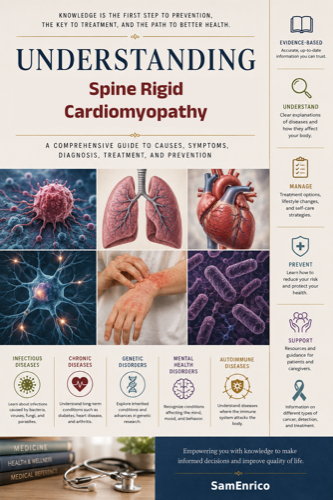 Understanding Spine Rigid CardiomyopathyAdcock Mitzie$17.99
 Portability Election UpdateAdcock Mitzie$12.99
 Healthcare Climate InsuranceAdcock Mitzie$12.99
 How to Become a Drum Loader And UnloaderAdcock Mitzie$11.99
You may also like
 Hong Kong Handover 1997Dunn Johnnie$11.99
 Zumba For Postnatal Recovery CourseNeal Christian$11.99
 Zumba for BeginnersLadner Nikia$11.99
 YouTube Comment Mining GuideHumes Pandora$12.99
 Worry Box MeditationCarlin Rudy$11.99
 Workplace Stress MeditationNguyen Lynn$11.99
 Workplace Stress and Sleep RepairHawley Ivory$11.99
 Workplace Perfectionism CureDelaney Jeffry$11.99
 Workplace Injustice Anger GuideWallen Isabelle$11.99
 Work Addiction and Burnout LinkGreenwood Ester$11.99
 Women in Yoga and WellnessBeattie Galina$11.99
 Women in Stand Up ComedyChun Evangeline$11.99