
Common App Essay Workbook eBook
Brainstorm and draft your personal statement using
Brainstorm and draft your personal statement using seven proven prompts, with fill-in templates that help you show vulnerability and growth.
Formats
Free sample
Chapter 1: The Box in Your Backpack...--You have a box inside your backpack right now. You didn't put it there on purpose. You didn't buy it from a store or unwrap it on a birthday morning. But it is there, zipped between your calculator and your half-empty water bottle, stuffed with receipts you meant to throw away, a pen with teeth marks on the cap, a keychain from a trip you barely remember, a ticket stub you told yourself you would keep forever and then forgot why.This box is invisible. No one else can see it.
But it contains everything you need to write your college essay.Here is what most college admissions guides won't tell you: the essay does not start with a prompt. It does not start with a five-paragraph structure or a list of "what admissions officers want to hear." It starts with objects. Physical, touchable, slightly embarrassing objects that you have held in your actual hands. Because here is the truth about the human brain: it cannot think in abstractions. You cannot sit down and say "I will now reflect on my identity" and produce anything real.
That is like trying to catch smoke with a butterfly net. But you can look at a green pen with a chewed cap and remember exactly why you chewed it. You can hold a worn bus pass and feel the weight of a thousand silent morning commutes. You can unfold a crumpled receipt and smell the coffee shop where you cried.That is what this chapter is for. We are going to open the box.The Problem with "Just Write About Yourself"Every year, hundreds of thousands of students open the Common Application, stare at Prompt #1 ("Some students have a background, identity, interest, or talent that is so meaningful they believe their application would be incomplete without it"), and freeze.
Their cursor blinks on a white screen. Their mind produces the following sequence:"I am a normal person.""Nothing interesting has ever happened to me.""I should write about that one time I did something kind of cool.""Wait, that's not cool enough.""I have nothing to say."[Opens Tik Tok for three hours]This is not a failure of character. This is a failure of method. You have been asked to produce something abstract (a story about your identity) without being given any tools to access that abstraction. Imagine asking someone to paint a portrait of a feeling.
Impossible. Now give them a photograph of a specific face. Now they can paint.Your objects are your photographs.I have watched this exercise work with over two thousand students. I have watched the boy who said "I'm literally the most boring person alive" discover his entire essay in a broken skateboard wheel. I have watched the girl who wrote "I have no personality" circle a stained coffee cup and then write a paragraph about her grandmother's dementia that made her own mother cry.
I have watched the student who insisted "nothing bad ever happened to me" find his vulnerability in a green pen with a chewed cap.You are not boring. You have just been looking in the wrong place. You have been looking inside your head, where everything is vague and blurry and nothing has edges. Your objects have edges. Your objects are real.
Your objects have been sitting in your backpack this whole time, waiting for you to notice them.What This Chapter Will Do for You By the end of this chapter, you will have accomplished three specific things:First, you will have listed twenty objects you have touched in the last twenty-four hours. This will break the "I have nothing to write about" logjam by proving, on paper, that you have a life full of specific details.Second, you will have circled the three objects that feel heavy, strange, or slightly uncomfortable to look at. These are not your favorite objects. They are not your proudest objects. They are the objects that carry a weight you have never named.Third, you will have completed a fill-in-the-blank template for each of those three objects, transforming each one from a literal thing into a metaphorical doorway.
One of those doorways will lead to your essay.You do not need to know which one yet. You do not need to have your thesis statement or your narrative arc or your "takeaway." You just need to open the box.The Concrete Over Abstract Principle Before we open the box, we need to understand why this works. This principle will guide every chapter of this book, and you will see it referenced repeatedly. (When you do, you can return here for the full explanation.)The principle is simple: concrete details beat abstract claims every single time.Here is what I mean. Read these two sentences:A.
"I am a persistent person who never gives up, even when things get hard."B. "I chewed the cap of my green pen until the plastic flattened, then kept rewriting the same sentence for another hour."Which one do you believe? Which one creates a picture in your mind? Which one sounds like a real human being rather than a resume bullet point dressed up in a trench coat?Sentence A is abstract. It tells you a trait (persistence) and expects you to accept it on faith.
Sentence B is concrete. It shows you a behavior (chewing a pen, rewriting a sentence) and lets you draw your own conclusion. Admissions officers read thousands of Sentence A's every day. "I am passionate." "I am hardworking." "I am a leader." These words have lost all meaning. They are white noise.
But a green pen with a chewed cap? That is a photograph. That is a mystery. That is a story waiting to be told.Here is the secret that no other college essay guide will tell you: you do not need to be an amazing writer to follow this principle. You just need to be a specific observer.
You do not need to invent beautiful metaphors. You just need to describe what you actually saw, touched, smelled, heard, or tasted. The metaphor will emerge on its own.Let me prove it.Think of a specific moment from your life. Any moment. Now describe it in two ways.
First, use abstract words: "I was nervous." Second, use a concrete detail from that moment: "My throat tightened as I watched the judge's finger hover over the bell." Which one made you feel something? Which one could only have come from you?That is the power of concrete details. And we are going to find yours by starting with the objects you already own.Step One: The Twenty Objects List Clear your desk. Put away your phone. Set a timer for exactly ten minutes.
You are going to list twenty objects you have touched in the last twenty-four hours.Not objects you own in general. Not objects you like. Objects you have physically touched with your own hands since you woke up yesterday morning.Here is the rule: you cannot stop at ten. You cannot stop at fifteen. You must get to twenty.
The first seven objects will be obvious and boring (phone, computer, toothbrush, bed, backpack, pencil, water bottle). That is fine.…
This is the end of the free sample. Get the eBook to keep going. Buy now
About this book
Details
- Author
- Dobbins Versie
- Publisher
- SamEnrico
- Language
- English
- Genre
- essays, Student's Shortcut
- Released
- 2026-05-29
- Pages (approx.)
- 160
- Available as
- eBook, Audiobook

Read better in the ZLOADR app
Your eBooks on your phone or tablet. Sign in with your SamEnrico account and start reading.
More by Dobbins Versie
 Flame Retardant Furniture AvoidanceDobbins Versie$11.99
 Assertive Customer ServiceDobbins Versie$11.99
 Retirement Housing Relocation ReimbursementDobbins Versie$11.99
 The Courtroom ChildDobbins Versie$11.99
 Remote Work Prioritization GuideDobbins Versie$11.99
 Grief and Guilt ParentsDobbins Versie$11.99
 Remote Work Kids ActivitiesDobbins Versie$11.99
 Entrepreneurial Success Without BurnoutDobbins Versie$11.99
 The Great Dartmoor Escape: Britain’s Boldest Prison Break of the Prohibition EraDobbins Versie$11.99
 The Maestro and the Moonlight: A Love Letter to MozartDobbins Versie$11.99
 How to Produce Water OvensDobbins Versie$11.99
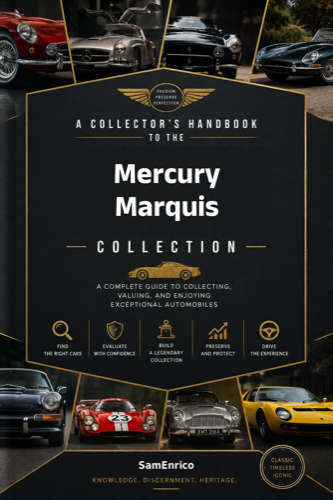 A Collector's Handbook to the Mercury MarquisDobbins Versie$11.99
You may also like
 YouTube Video Essay DepthLeon Lala$11.99
 TOEFL Independent Essay GuideMintz Alex$11.99
 Music Theory Essay GuideWilkinson Maisha$11.99
 Expository Essay AI PromptsApplegate Dalia$11.99
 Exam Essay MemorizationMcgovern Johna$11.99
 Compare Contrast Essay PromptsOntiveros Marx$11.99
 College Application Essay GuideSisson Aimee$11.99College Application Essay GuideSisson Aimee$11.99
 The 100 Word Essay ChallengeAli Luciana$11.99
 Journalism Essay PromptsThatcher Williemae$11.99
 Finance Essay PromptsShrader Lamont$11.99
 Cause Effect Essay GPT GuideBland Jacelyn$11.99