
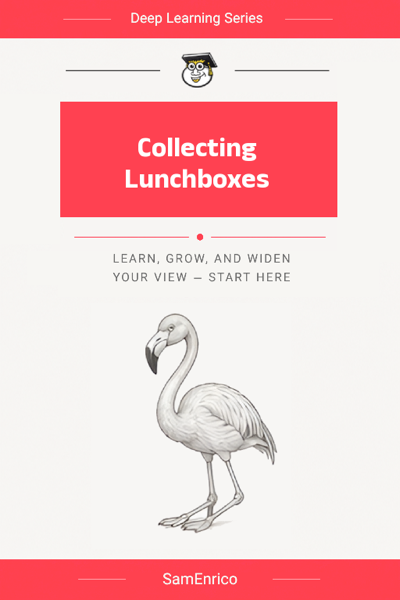
Non-FictionInformativeEducational
Collecting Lunchboxes
A Coursebook on Collecting Lunchboxes
A Coursebook on Collecting Lunchboxes
Formats
About this book
Free sample
Chapter 1: The Tin Time Machine...--–- The box was dented, rusted along the edges, and the thermos inside rattled with what sounded like dried mud. On the lid, a faded cowboy aimed a six-shooter at a long-forgotten enemy. The flea market vendor wanted three dollars. I handed over a five and told her to keep the change. That afternoon, I became a lunchbox collector, though I didn't know it yet.
I was simply buying a piece of my father's childhood, a birthday gift meant to spark a conversation. But when I placed that battered Hopalong Cassidy box on my father's kitchen table, he didn't smile. His eyes watered. He traced the chipped lithography with his fingertip and whispered about second grade, about a peanut butter sandwich eaten in a sunlit classroom in 1951, about a world that had vanished. That three-dollar box contained not rust and tin, but a time machine.
And that is the secret that every serious lunchbox collector eventually discovers: we do not collect objects. We collect doorways.The Question at the Heart of the Hobby Why would a rational adult spend thousands of dollars on a piece of printed tin that once held a bologna sandwich? This question is the first one asked by outsiders and the last one answered by collectors themselves. The answer is not rational, and that is precisely the point. Lunchbox collecting sits at the intersection of industrial history, developmental psychology, and consumer culture.
To understand why a mint Clutch Cargo box can command five thousand dollars or why a rare Godfather lunchbox sold for eighty-five hundred dollars in 2021, one must first understand that the monetary value is a shadow cast by a much larger emotional truth.The psychology of collecting begins with what I call "childhood memory anchoring." Between the ages of five and twelve, the human brain is uniquely receptive to forming intense emotional bonds with objects. This is the age of security blankets, of stuffed animals dragged through airports, of the first bicycle and the first watch. It is also the age of the lunchbox. For six critical years…
This is the end of the free sample. Get the eBook to keep going. Buy now
Contents
- Chapter 1
- Chapter 2
- Chapter 3
- Chapter 4
- Chapter 5
- Chapter 6
- Chapter 7
- Chapter 8
- Chapter 9
- Chapter 10
- Chapter 11
- Chapter 12
Details
- Author
- Blanco Tashina
- Publisher
- SamEnrico
- Language
- English
- Genre
- Non-Fiction, Informative, Educational
- Released
- 2026-06-02
- Pages (approx.)
- 126
- Available as
- eBook, Audiobook

Read better in the ZLOADR app
Your eBooks on your phone or tablet. Sign in with your SamEnrico account and start reading.
More by Blanco Tashina
 Metta for Inner ChildBlanco Tashina$11.99
 Occupation Duty Japan 1945Blanco Tashina$11.99
 Seminole Black Maroon CommunityBlanco Tashina$11.99
 Buffett's Retail Annual MeetingsBlanco Tashina$11.99
 When the Sky Split Open: The Mayan Birth of the WorldBlanco Tashina$11.99
 Franchise Advisory CouncilBlanco Tashina$12.99
 How to Become a Batch TruckerBlanco Tashina$11.99
 How to Produce Bows and CrossbowsBlanco Tashina$11.99
You may also like
 Hong Kong Handover 1997Dunn Johnnie$11.99
 Zumba For Postnatal Recovery CourseNeal Christian$11.99
 Zumba for BeginnersLadner Nikia$11.99
 YouTube Comment Mining GuideHumes Pandora$12.99
 Worry Box MeditationCarlin Rudy$11.99
 Workplace Stress MeditationNguyen Lynn$11.99
 Workplace Stress and Sleep RepairHawley Ivory$11.99
 Workplace Perfectionism CureDelaney Jeffry$11.99
 Workplace Injustice Anger GuideWallen Isabelle$11.99
 Work Addiction and Burnout LinkGreenwood Ester$11.99
 Women in Yoga and WellnessBeattie Galina$11.99
 Women in Stand Up ComedyChun Evangeline$11.99