
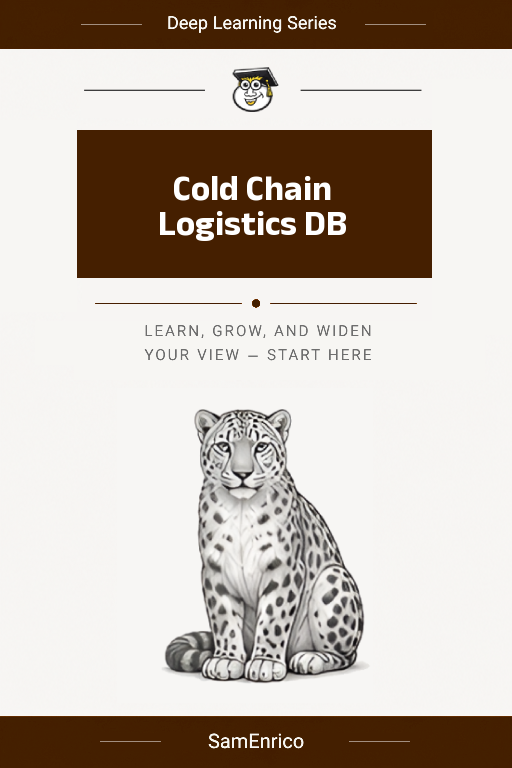
Non-FictionMarket Entry DirectoryCold Chain
Cold Chain Logistics DB eBook
Directory of temperature-controlled carriers and w
Directory of temperature-controlled carriers and warehousing providers for pharmaceuticals and food.
Formats
Free sample
Chapter 1: The Broken Chain--The temperature inside the trailer read forty-three degrees Fahrenheit. It should have been thirty-eight. The data logger, a small plastic device no bigger than a pack of gum, had recorded the excursion for eleven hours before anyone noticed. By then, the truck had crossed three state lines, and the payload—$1.8 million worth of a biologic drug for a rare pediatric cancer—had been sitting in the danger zone for nearly half its journey. The manufacturer would not discover the problem until the receiving hospital's quality control team ran their standard check.
By then, the drug had already been administered to four children.This is not a hypothetical scenario. It happened in 2019, and the details were sealed in a legal settlement to avoid public disclosure. I am describing it here because it represents a truth the cold chain industry would prefer you not fully appreciate: the system works remarkably well most of the time, and when it fails, it fails catastrophically, and those failures are vastly underreported.The global cold chain is one of the most complex, invisible, and vital infrastructures on earth. It moves vaccines to rural health clinics in sub-Saharan Africa. It delivers chemotherapy drugs to your local hospital.
It brings strawberries from Mexico to a grocery store in Toronto in January. It carries human hearts from a donor in Ohio to a recipient in Florida. And it does all of this with a degree of reliability that borders on miraculous—until it doesn't.This book is not a celebration of the cold chain. It is a directory, a manual, and a warning. It exists because the people who need to move temperature-sensitive goods—pharmaceutical manufacturers, food distributors, clinical research organizations, and logistics managers—face a persistent problem: they do not know who to trust.
The market is fragmented. Certifications are confusing. Providers make promises their equipment cannot keep. And when something goes wrong, the blame game begins, and the product is already destroyed.Before we get to the directories, the matrices, and the selection guides that form the core of this book, we must first understand the landscape we are navigating. This chapter establishes the scale of the cold chain, the players within it, the consequences of failure, and the framework—the Provider Scorecard—that will guide every decision you make using this book.--The $780 Billion Invisible Machine The cold chain is not a single thing.
It is a network of networks: warehouses, trucks, ships, airplanes, data loggers, packaging engineers, quality auditors, and dispatchers. Its value is measured in the goods it protects, not the infrastructure itself. When it works, you do not think about it. Your vaccine arrives cold. Your steak arrives frozen.
Your flowers arrive bright. When it fails, you notice immediately, and the consequences range from financial loss to loss of life.As of this writing, the global cold chain market is valued at approximately 380billionandisprojectedtoexceed380 billion and is projected to exceed 380billionandisprojectedtoexceed780 billion by 2030. This growth is driven by three converging forces, each of which deserves a moment of attention.First, the pharmaceutical industry has undergone a quiet revolution over the past two decades. The era of small-molecule drugs that could survive days at room temperature is giving way to the era of biologics—large-molecule drugs derived from living cells that are exquisitely sensitive to temperature. Monoclonal antibodies, gene therapies, and cell-based treatments require storage at temperatures ranging from refrigerated (2-8°C) to cryogenic (-150°C and below).
A single excursion of two hours can render a $500,000 CAR-T cell therapy worthless. The number of biologic drugs on the market has tripled since 2010, and each one requires cold chain protection from the manufacturing plant to the patient's bedside.Second, the food industry has been transformed by consumer demand for fresh, prepared, and exotic products. Meal kit services, grocery delivery apps, and the globalization of produce mean that a head of lettuce grown in California might be eaten in Berlin six days later. The modern consumer expects strawberries in December and avocados year-round. This expectation is only possible because of a sophisticated cold chain that moves perishable goods across continents.
The food cold chain operates at a different economic scale than pharma—lower value per pound, vastly higher volume—but the cost of failure is still measured in billions of dollars of waste annually.Third, and most visibly, the COVID-19 pandemic accelerated cold chain investment by a decade in the span of eighteen months. The Pfizer-Bio NTech and Moderna vaccines required ultra-cold storage at -70°C and -20°C respectively, temperatures that most existing infrastructure could not support. Governments and logistics companies poured billions into freezer farms, specialized packaging, and temperature-controlled transport. That infrastructure now exists, and it is being repurposed for other biologic drugs, creating a permanent shift in cold chain capacity.Understanding these drivers is not academic. The reason this book exists is that growth attracts opportunists.
As the cold chain expands, so does the number of providers claiming capabilities they do not possess. The director of a small logistics company might tell you they are "GDP certified" when they have only completed an online training course. A warehouse manager might assure you their backup generators are tested weekly when the last test was six months ago. A carrier might promise real-time temperature monitoring when their data loggers are actually post-trip devices that report failure only after the cargo has already spoiled.The Provider Scorecard, introduced later in this chapter, is designed to cut through this noise. But first, you need to know who the players are.--The Ecosystem: 3PLs, 4PLs, and Asset-Based Carriers The cold chain logistics industry is divided into three categories of providers.
Understanding the distinction is essential because each type carries a different risk profile, cost structure, and accountability framework.Asset-Based Carriers own their equipment. They have trucks, reefers, warehouses, and drivers on their payroll. When you contract with an asset-based carrier, you are dealing with a single company that controls the entire physical chain of custody. This is the simplest model from a liability perspective: if something goes wrong, there is no one else to blame. The carrier owns the truck, the reefer unit, the driver, and the maintenance records.
The downside is that asset-based carriers have fixed capacity. They can only move as much freight as they own equipment to move. During peak seasons, they may be fully booked weeks in advance, and they rarely have the ability to subcontract excess volume without violating their own service guarantees.Examples of large asset-based carriers include companies like C.H. Robinson (which owns a significant fleet despite also operating as a 3PL), Kuehne+Nagel's dedicated pharma fleet, and regional carriers like Polar Speed in the UK. The provider tables in Chapter 12 distinguish asset-based carriers by their fleet size and owned warehouse square footage.Third-Party Logistics Providers (3PLs) do not necessarily own assets.
Instead, they act as intermediaries between shippers and asset-based carriers. A 3PL will take your shipment, select a carrier from their approved network, book the space, handle documentation, and provide a single point of contact for tracking and issue resolution. The advantage of a 3PL is flexibility. They have relationships with dozens or hundreds of…
This is the end of the free sample. Get the eBook to keep going. Buy now
About this book
Details
- Author
- Pippin Regenia
- Publisher
- SamEnrico
- Language
- English
- Genre
- Non-Fiction, Market Entry Directory, Cold Chain
- Released
- 2026-05-29
- Pages (approx.)
- 155
- Available as
- eBook, Audiobook

Read better in the ZLOADR app
Your eBooks on your phone or tablet. Sign in with your SamEnrico account and start reading.
More by Pippin Regenia
 Conflict Rituals for CouplesPippin Regenia$11.99
 Fitness Walking Start GuidePippin Regenia$11.99
 Chunking for Dyslexia StudentsPippin Regenia$11.99
 Binge Eating and Holiday Triggers GuidePippin Regenia$11.99
 Final Exam Crunch SurvivalPippin Regenia$11.99
 Silent Verdict: The Trial of the SphinxPippin Regenia$11.99
 The Alchemist's Redemption: Dmitri Mendeleev and the Birth of the Periodic TablePippin Regenia$11.99
 Freelance Bookkeeping TimePippin Regenia$12.99
 Financial ExaminerPippin Regenia$11.99
 Understanding Emphysema, Congenital LobarPippin Regenia$17.99
 How to Start a Power-driven Staplers Business (Beginners Guide)Pippin Regenia$11.99
You may also like
 Hong Kong Handover 1997Dunn Johnnie$11.99
 Zumba For Postnatal Recovery CourseNeal Christian$11.99
 Zumba for BeginnersLadner Nikia$11.99
 YouTube Comment Mining GuideHumes Pandora$12.99
 Worry Box MeditationCarlin Rudy$11.99
 Workplace Stress MeditationNguyen Lynn$11.99
 Workplace Stress and Sleep RepairHawley Ivory$11.99
 Workplace Perfectionism CureDelaney Jeffry$11.99
 Workplace Injustice Anger GuideWallen Isabelle$11.99
 Work Addiction and Burnout LinkGreenwood Ester$11.99
 Women in Yoga and WellnessBeattie Galina$11.99
 Women in Stand Up ComedyChun Evangeline$11.99