
Non-FictionSelf-HelpCodependency
Codependency Recovery Self Esteem eBook
Stop losing yourself in your partner and rebuild y
by Lawson Erick
Stop losing yourself in your partner and rebuild your independent identity.
Formats
Free sample
Chapter 1: The Human Pretzel--–- You are not too nice. You are not too sensitive. You are not "just a giver." Those are the stories you have been telling yourself because the truth is harder to sit with. The truth is that somewhere along the way, you learned to disappear. Not all at once, not in a dramatic explosion that you could point to and name.
Slowly. Quietly. The way water erodes stone—not by force, but by persistence. You gave a little here, bent a little there, told yourself it was love, told yourself it was kindness, told yourself that this is what good partners do. And now you wake up one day and realize you do not know what you think until you have checked what they think.
You do not know what you feel until you have measured their mood. You do not know what you want because wanting something for yourself feels like a betrayal.This chapter is called "The Human Pretzel" because that is what you have become. You have twisted yourself into a shape that fits someone else's needs, someone else's moods, someone else's version of reality. You have folded your own preferences, desires, opinions, and dreams into smaller and smaller packages until they fit neatly into the corners of someone else's life. And the worst part—the part that keeps you stuck—is that you have been praised for it.
You have been called selfless. Accommodating. Easy to be with. Low maintenance. You have been told that your ability to bend is your greatest strength.
But a muscle that only bends and never straightens is not strong. It is sprained. It is injured. It is crying out for someone to notice that it cannot hold itself up anymore.This chapter dismantles the most dangerous myth in codependency recovery: that you are simply "too nice" or "too helpful." Those labels are not the problem. They are the camouflage.
They are the costume you wear so that no one sees the real wound underneath—the loss of your own self. By the end of this chapter, you will understand the difference between healthy accommodation (temporary flexibility without losing your core) and pathological self-abandonment (permanent erasure). You will meet the "human pretzel" as a metaphor that will guide this entire book. And you will begin to see, perhaps for the first time, that your exhaustion, your resentment, your quiet desperation are not signs that you are failing at love. They are signs that you have been succeeding at self-abandonment.
And it is time to stop.The Lie of "Too Nice"Let us name the lie directly. The lie is this: your problem is that you care too much. You have heard it from friends who watched you stay too long in a bad relationship. You have heard it from family members who said, "You just have such a big heart." You have probably said it to yourself in the quiet moments when you wondered why you felt so empty despite giving so much. "Maybe I just care more than other people," you told yourself.
"Maybe I am just wired to give."This is not the truth. This is the story your shame wrote to protect you from a more frightening reality. The truth is not that you care too much. The truth is that you have confused caring with controlling, love with vigilance, and self-sacrifice with self-worth. You do not give because you are overflowing with generosity.
You give because giving feels like the only way to be safe. You give because somewhere underneath all that kindness is a terrified child who learned that being needed was the only reliable way to not be abandoned.Let us be clear about what we mean. Kindness is not the problem. Generosity is not the problem. Being a loving, attentive partner is not the problem.
The problem is when your giving becomes a survival strategy rather than a free choice. The problem is when you cannot stop giving even when you are exhausted. The problem is when the thought of saying "no" sends a spike of panic through your chest because you have learned, somewhere deep in your nervous system, that "no" equals rejection and rejection equals annihilation.This is the difference between healthy accommodation and pathological self-abandonment. Healthy accommodation sounds like this: "I would prefer Italian food, but I am happy to have sushi because I enjoy spending time with you and the restaurant choice is not a big deal to me." Your preference remains intact. You know what you want.
You are simply choosing to set it aside temporarily because the relationship matters more than the meal. Pathological self-abandonment sounds like this: "I do not even know what I want for dinner because I have spent the last hour trying to guess what you might want. I will say I like sushi even though I hate it because I am afraid you will be disappointed in me if I disagree. And later tonight I will feel a vague, unnamed resentment that I cannot explain even to myself."Do you see the difference? In the first scenario, you have a self to set aside.
In the second scenario, there is no self left to consult. You have already preemptively erased yourself in anticipation of someone else's needs. That is not kindness. That is self-erasure disguised as virtue.The Human Pretzel: A Metaphor for Self-Abandonment Imagine a pretzel. You have seen how it is made.
A long, straight rope of dough is folded over itself, twisted, bent into a shape that bears almost no resemblance to its original form. The dough does not resist. It cannot. It is soft, pliable, designed by its very nature to take whatever shape the baker imposes. And here is the question this book will ask you, over and over: Are you dough or are you bone?The human pretzel is the codependent who has been bent so many times in so many directions that they no longer remember their original shape.
They have twisted themselves to fit a partner's anger, folding smaller so as not to provoke. They have bent themselves to fit a partner's neediness, stretching thinner and thinner to cover more and more ground. They have wrapped themselves around a partner's addiction, their depression, their ambition, their chaos—becoming the stabilizing force that holds everything together while quietly crumbling from the inside.Here is what the human pretzel does not realize: the twisting is never done. You cannot arrive at a final shape and rest. Because the person you are twisting yourself to fit is also changing.
Their moods shift. Their needs evolve. Their expectations grow. Every time you successfully bend to accommodate one demand, the bar moves. You are now expected to maintain that new shape while also preparing for the next twist.
This is why codependency is exhausting in a way that ordinary relationship effort is not. Ordinary effort has limits. You help your partner move a couch, and then you rest. You listen to them vent about a bad day, and then you go to sleep. The effort ends.
The human pretzel never rests because the twisting never ends. There is always a new mood to manage, a new…
This is the end of the free sample. Get the eBook to keep going. Buy now
About this book
Details
- Author
- Lawson Erick
- Publisher
- SamEnrico
- Language
- English
- Genre
- Non-Fiction, Self-Help, Codependency
- Released
- 2026-06-08
- Pages (approx.)
- 144
- Available as
- eBook, Audiobook

Read better in the ZLOADR app
Your eBooks on your phone or tablet. Sign in with your SamEnrico account and start reading.
More by Lawson Erick
 Email Copywriting Best PracticesLawson Erick$11.99
 Iron Management WorkbookLawson Erick$11.99
 Self Hypnosis For Migraine Prevention GuideLawson Erick$11.99
 Hybrid Work Data GuideLawson Erick$11.99
 Love and Shadows in the Congo: The Tragic Romance of the Last ExplorersLawson Erick$11.99
 Blood Moon Prophecies: The Forgotten Vampires of the Mayan UnderworldLawson Erick$11.99
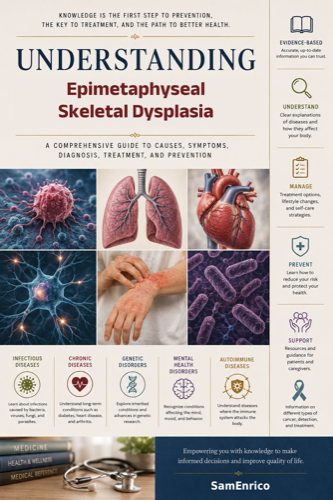 Understanding Epimetaphyseal Skeletal DysplasiaLawson Erick$17.99
 Harvard Extension vs LSE Library AccessLawson Erick$12.99
 House Sitting Thank You NoteLawson Erick$12.99
 Ultimate Handbook Guide to San Diego : (United States) Travel GuideLawson Erick$11.99
 Landscape LaborerLawson Erick$11.99
You may also like
 Hong Kong Handover 1997Dunn Johnnie$11.99
 Zumba For Postnatal Recovery CourseNeal Christian$11.99
 Zumba for BeginnersLadner Nikia$11.99
 YouTube Comment Mining GuideHumes Pandora$12.99
 Worry Box MeditationCarlin Rudy$11.99
 Workplace Stress MeditationNguyen Lynn$11.99
 Workplace Stress and Sleep RepairHawley Ivory$11.99
 Workplace Perfectionism CureDelaney Jeffry$11.99
 Workplace Injustice Anger GuideWallen Isabelle$11.99
 Work Addiction and Burnout LinkGreenwood Ester$11.99
 Women in Yoga and WellnessBeattie Galina$11.99
 Women in Stand Up ComedyChun Evangeline$11.99