
Non-FictionHealth & WellnessImplants
Cochlear Implant Decision Guide eBook
Determine if cochlear implantation is right for se
by Corley Bart
Determine if cochlear implantation is right for severe age-related hearing loss.
Formats
Free sample
Chapter 1: The Sound of Loneliness--The first time Margaret realized she was disappearing from her own life, she was sitting at a restaurant table with her two adult daughters. The plates had just arrived—glasses of chardonnay, a basket of sourdough, the warm light catching the silverware. Her daughters were laughing at something. Their mouths moved with animation. Margaret smiled and nodded, the way she had learned to do over the past several years.
She had no idea what they were saying. She hadn't heard a single word since the waiter asked for her order. Later, in the car, her older daughter touched her arm and said, "Mom, I asked if you wanted to come see the grandkids' play next weekend. You nodded. Is that a yes?" Margaret felt the familiar shame rise in her chest.
She had not heard the question. She had simply learned that nodding was safer than saying "What?" for the fifth time.This is not a book about hearing loss. This is a book about the moment you realize that hearing loss has stolen something you cannot get back by turning up the volume. And it is about the unexpected solution that most people discover five to ten years too late.The Silent Epidemic Nobody Talks About Age-related hearing loss, medically known as presbycusis, affects approximately two-thirds of adults over the age of 70 and nearly 80 percent of those over 85. These numbers are staggering, yet hearing loss remains one of the most undertreated chronic conditions in modern medicine.
Why? Because it happens slowly. Unlike a heart attack or a broken bone, hearing loss creeps in like a fog, taking away first the consonants, then the conversation, then the connection. By the time most people acknowledge the problem, they have already spent years living in a world that feels increasingly distant and exhausting.The insidious nature of presbycusis is that it does not make the world quiet. It makes the world unclear.
This distinction is everything. A person with typical age-related hearing loss can still hear a car horn, a door slam, or a television turned up to maximum volume. Loudness remains intact. What disappears is the ability to distinguish the specific sounds that give speech its meaning—the high-frequency consonants like S, F, TH, SH, and K. These sounds are linguistically lightweight but semantically heavy.
Without them, "I love you" becomes "I ?ove you." "Let's eat" becomes "Let's ?eat." The brain, desperate to make sense of the garbled input, begins to guess. And guessing is exhausting.This is the sound of loneliness. Not silence. Confusion.Why Loud Doesn't Mean Clear To understand why hearing aids eventually fail so many people, you need to understand the basic architecture of the inner ear. The cochlea, a snail-shaped structure about the size of a pea, is lined with thousands of microscopic hair cells.
These hair cells are not actually hairs—they are sensory receptors that convert mechanical vibration (sound waves) into electrical signals that the auditory nerve can understand. Different regions of the cochlea are responsible for different frequencies. The base of the cochlea handles high frequencies. The apex handles low frequencies.Age-related hearing loss almost always begins in the high-frequency region. The hair cells there are metabolically active and vulnerable to cumulative damage from decades of noise exposure, medication use, and simply the wear and tear of living.
As these hair cells die, they do not regenerate. The result is a characteristic "ski-slope" audiogram: normal or near-normal hearing in the low frequencies (think bass notes, vowels, the rumble of a refrigerator) and a precipitous drop in the high frequencies (think consonants, birdsong, the difference between "ship" and "chip").A hearing aid is a sophisticated amplifier. It takes incoming sound, applies frequency-specific amplification based on your audiogram, and delivers a louder version of that sound into your ear canal. If your problem were simply that sounds were too quiet, a hearing aid would be a complete solution. But for the person with high-frequency hearing loss, the problem is not volume.
The problem is that the hair cells responsible for transmitting those high-frequency details are dead. Making a dead hair cell receive louder sound does not make it come back to life. It simply means the patient hears a louder version of the incomplete signal.This is why the most common complaint from frustrated hearing aid users is not "I can't hear anything." It is "I can hear that you are talking, but I cannot understand what you are saying." The distinction between hearing and understanding is the central theme of this book.The Spouse Knows First There is a well-documented phenomenon in audiology clinics across the country. A patient comes in for a hearing evaluation, often reluctantly, often accompanied by a spouse. The patient reports that their hearing is "fine" or "not that bad." The spouse sits in the corner with crossed arms and a familiar expression of quiet exasperation.
When the audiologist asks about specific difficulties, the patient says, "I can hear everything. People just mumble these days." The spouse exhales slowly.The data are unequivocal. Spouses consistently identify hearing loss an average of four to six years before the patient acknowledges it. This is not because spouses are more perceptive (though they often are). It is because the patient's brain has developed sophisticated compensatory mechanisms that hide the severity of the loss from the patient's own awareness.The most important of these mechanisms is called phonemic restoration.
The brain is an extraordinary pattern-recognition machine. When it receives an incomplete auditory signal—say, the middle of a word is missing—it automatically fills in the missing phonemes based on context. This happens unconsciously and almost instantaneously. It is the reason you can understand a sentence when someone coughs over a single syllable. But phonemic restoration has a dark side.
It creates the illusion of normal hearing. The brain fills in so many gaps that the patient genuinely believes they heard the entire conversation. The spouse, who was not missing those sounds, knows the truth: the patient is nodding and smiling but missing critical information.This asymmetry creates a predictable pattern of marital conflict. The spouse feels unheard (literally and emotionally). The patient feels nagged.
The spouse begins to avoid conversations that require nuance. The patient begins to withdraw from social situations where they cannot control the listening environment. The dinner table goes quiet. The phone calls become shorter. The shared jokes stop being shared because one person never hears the punchline.By the time the patient finally agrees to a hearing evaluation, the marriage has often been strained for years.
And tragically, many of these patients will be fitted with high-end hearing aids—costing six thousand dollars or more—only to discover that the aids do not solve the underlying problem. Because if the hair cells are dead, amplification alone will never restore clarity.The Seven-Year Window This brings us to the single most important concept in this chapter, and arguably in this entire book: auditory deprivation.The auditory system, like every other system in the human body, operates on a use-it-or-lose-it principle. When the cochlea stops sending high-frequency information to the auditory nerve, and the auditory nerve stops sending that information to…
This is the end of the free sample. Get the eBook to keep going. Buy now
About this book
Details
- Author
- Corley Bart
- Publisher
- SamEnrico
- Language
- English
- Genre
- Non-Fiction, Health & Wellness, Implants
- Released
- 2026-06-09
- Pages (approx.)
- 138
- Available as
- eBook, Audiobook

Read better in the ZLOADR app
Your eBooks on your phone or tablet. Sign in with your SamEnrico account and start reading.
More by Corley Bart
 Rest and Creativity LinkCorley Bart$11.99
 Inside The Heist CrewCorley Bart$11.99
 Manager Employee Anger GuideCorley Bart$11.99
 Nicotine Withdrawal Symptom GuideCorley Bart$11.99
 Dust Storm Pioneers: Chasing the Great Arabian TempestsCorley Bart$11.99
 Cosmic Grooves: How Motown’s Sound Conquered the Space RaceCorley Bart$11.99
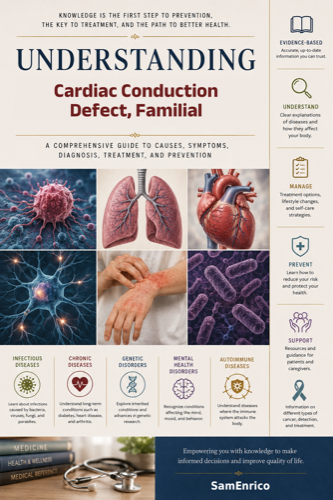 Understanding Cardiac Conduction Defect, FamilialCorley Bart$17.99
 Ramadan B2B Sales GuideCorley Bart$12.99
 Language Learning For CheapCorley Bart$12.99
 Real Estate AdministratorCorley Bart$11.99
You may also like
 Hong Kong Handover 1997Dunn Johnnie$11.99
 Zumba For Postnatal Recovery CourseNeal Christian$11.99
 Zumba for BeginnersLadner Nikia$11.99
 YouTube Comment Mining GuideHumes Pandora$12.99
 Worry Box MeditationCarlin Rudy$11.99
 Workplace Stress MeditationNguyen Lynn$11.99
 Workplace Stress and Sleep RepairHawley Ivory$11.99
 Workplace Perfectionism CureDelaney Jeffry$11.99
 Workplace Injustice Anger GuideWallen Isabelle$11.99
 Work Addiction and Burnout LinkGreenwood Ester$11.99
 Women in Yoga and WellnessBeattie Galina$11.99
 Women in Stand Up ComedyChun Evangeline$11.99