
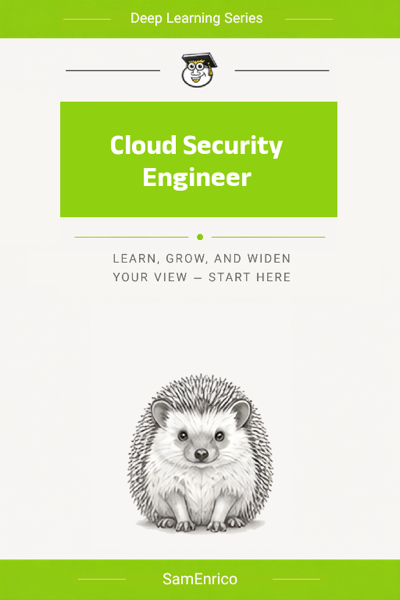
Cloud Security Engineer eBook
A Coursebook on Cloud Security Engineer
A Coursebook on Cloud Security Engineer
Formats
Free sample
Chapter 1: The $5 Million Mistake...–- The first alert arrived at 2:13 AM on a Tuesday. Sarah, the lead cloud engineer at a fast-growing fintech startup, was jolted awake by her phone buzzing against the nightstand. Seven messages in three minutes. She rubbed her eyes and unlocked the screen, expecting the usual false alarm—maybe an auto-scaling event or a routine deployment notification. Instead, she saw the words no cloud engineer ever wants to read: "S3 bucket 'fintech-prod-logs' has been publicly accessible for 412 days.
Estimated data exposure: 3.2 million customer records."Her stomach dropped. She sat up, heart pounding, and opened her laptop before her feet touched the floor. The next two hours would become a blur of incident response calls, emergency credential rotations, and the slow, sinking realization that her company's stock price would drop fifteen percent before the week ended. The CEO would later describe it as "a learning opportunity" during the all-hands meeting. Sarah knew the truth: it was a mistake she had sworn would never happen on her watch.This book exists because Sarah's story happens every single day—to Fortune 500 companies, to government agencies, to startups with brilliant engineers who simply didn't know what they didn't know.
The cloud does not come with guardrails. It comes with power, flexibility, and the terrifying freedom to expose your entire customer database to the internet with a single checkbox.The Landscape You're Entering Cloud security engineering is not a job title. It is a mindset, a discipline, and—for those who master it—one of the most in-demand skills in technology. As of 2025, there are over 3.5 million unfilled cloud security positions globally. Companies are desperate for engineers who understand not just how to launch EC2 instances or create S3 buckets, but how to defend them against adversaries who are smarter, faster, and more patient than most people realize.But here is the uncomfortable truth that most certification courses won't tell you: the vast majority of cloud breaches are not caused by sophisticated zero-day exploits or nation-state actors.
They are caused by misconfigurations. By overprivileged IAM roles. By security groups left wide open "just for testing." By engineers who assumed that because they were using a cloud provider with a perfect security record, their data was automatically safe.That assumption is the most dangerous vulnerability of all.The Shared Responsibility Model: What Your Provider Won't Do For You Before we go any further, we need to establish the single most important concept in all of cloud security. It is called the Shared Responsibility Model, and misunderstanding it has cost companies billions of dollars.Every major cloud provider—Amazon Web Services (AWS), Microsoft Azure, Google Cloud Platform (GCP)—operates on the same fundamental principle: they are responsible for the security of the cloud, and you are responsible for security in the cloud.Let us break that down with absolute clarity.The cloud provider secures the physical data centers, the hypervisors that run your virtual machines, the networking cables, the cooling systems, and the physical servers. They ensure that no unauthorized person can walk into their facilities.
They patch the underlying infrastructure. They protect their APIs from external attacks.You are responsible for everything else.That means your operating systems, your applications, your data, your IAM policies, your network configurations, your encryption keys, your customer information, your intellectual property—all of it. If you misconfigure an S3 bucket, expose a database port to the internet, or grant an IAM role administrator privileges for convenience, the cloud provider will not stop you. They will not warn you (unless you configure them to). They will silently and dutifully execute your commands while your data streams out to anyone who knows where to look.Breaking Down the Service Models The Shared Responsibility Model shifts depending on what type of cloud service you are using.
Understanding these distinctions is critical because your security obligations change dramatically between them.Infrastructure as a Service (Iaa S) – This is raw computing infrastructure: virtual machines (EC2, Compute Engine), storage (S3, Azure Blob), and networking (VPC, Virtual Network). In this model, you are responsible for everything from the operating system upward. You patch the OS. You configure the firewall. You manage the database.
You encrypt the data. The provider handles the physical hardware and hypervisor.Platform as a Service (Paa S) – This includes managed services like RDS (AWS's managed database), App Engine (GCP), or Azure SQL. Here, the provider takes responsibility for the operating system, runtime, and middleware. You are responsible for your application code, your data, and access management. This is where many engineers get confused: just because it is a managed service does not mean you can ignore security.
You still need to configure encryption, manage backups, and control who can access the service.Software as a Service (Saa S) – Think Office 365, Salesforce, or Dropbox. In this model, the provider secures almost everything. Your responsibility is limited to user access (who has accounts), data classification (what you put into the service), and device security (how your employees access the service). Saa S is the easiest from a security engineering perspective but also the easiest to mess up through poor identity management.The Compliance Landscape: Frameworks That Actually Matter If you work in cloud security, you will eventually be asked: "Are we compliant with [fill in the acronym]?" Understanding the major compliance frameworks is not optional—they will shape your architecture, your monitoring, and your incident response plans.ISO 27017 – This is the international standard specifically designed for cloud security. It builds on ISO 27001 (general information security) and adds cloud-specific controls like how to handle multi-tenant environments, how to manage virtualized network devices, and how to handle customer data in shared infrastructure.
If you work for an international company or a vendor that sells to enterprises, you will encounter ISO 27017 frequently.PCI DSS – The Payment Card Industry Data Security Standard applies to any company that processes, stores, or transmits credit card information. The current version (PCI DSS v4.0) has specific requirements for cloud environments: you must maintain an inventory of all cloud resources, implement automated configuration monitoring, and ensure that your cloud provider's compliance certifications are current. Failure to comply can result in fines up to $100,000 per month and the loss of your ability to process credit card payments.HIPAA – The Health Insurance Portability and Accountability Act applies to healthcare providers, insurers, and any business that handles protected health information (PHI). In the cloud, HIPAA requires encryption of all PHI both at rest and in transit, strict access controls documented and audited, and a business associate agreement (BAA) with your cloud provider. Not every cloud service is HIPAA-eligible, and using a non-compliant service for PHI is a federal offense.SOC 2 – While not a legal requirement like HIPAA, SOC 2 (Service Organization Control 2) has become the de facto standard for demonstrating security posture to customers.
A SOC 2 report (Type I or Type II) audits your controls across five trust service criteria: security, availability, processing integrity, confidentiality, and privacy. Many enterprise customers will refuse to sign a contract without a SOC 2 report. We will cover automating SOC 2 evidence collection in Chapter 3.The Zero Trust Mindset: Why Your Network Is Not Your Perimeter Before…
This is the end of the free sample. Get the eBook to keep going. Buy now
About this book
Details
- Author
- Evers Armanda
- Publisher
- SamEnrico
- Language
- English
- Genre
- Non-Fiction, Informative, Educational
- Released
- 2026-05-07
- Pages (approx.)
- 122
- Available as
- eBook, Audiobook

Read better in the ZLOADR app
Your eBooks on your phone or tablet. Sign in with your SamEnrico account and start reading.
More by Evers Armanda
 Digital Products for CreatorsEvers Armanda$11.99
 Stuttering Before PresentationsEvers Armanda$11.99
 Naloxone Vending Machine GuideEvers Armanda$11.99
 The Workplace Rejection ResilienceEvers Armanda$11.99
 Ovahimba Figurative ArtEvers Armanda$11.99
 The Lioness of the Nile: Queen Tiye and the Golden Age of EgyptEvers Armanda$11.99
 How to Become a Dredge Operator SupervisorEvers Armanda$11.99
 Search Console Performance ReportEvers Armanda$12.99
 Furniture Retail PricingEvers Armanda$12.99