
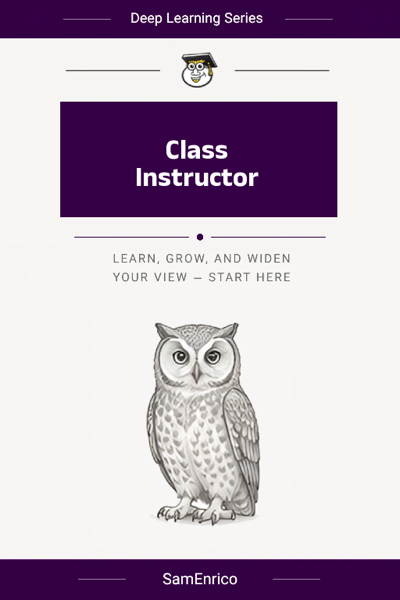
Non-FictionInformativeEducational
Class Instructor eBook
A Coursebook on Class Instructor
by Nielsen Dick
A Coursebook on Class Instructor
Formats
Free sample
Chapter 1: The Silent Epidemic--– Every minute of every day, somewhere in the world, a class instructor stands before a room of learners and fails. Not because they don't know their subject. Not because they haven't prepared. Not because they lack passion. They fail because they are doing exactly what they were taught to do—and what they were taught is wrong.This chapter dismantles the most dangerous myth in professional education: that teaching is about telling.
The instructor who believes this myth measures success by how much information they transmit. They finish a session exhausted but satisfied, having "covered" all their material. Their learners leave with thick binders and full notebooks. And within seventy-two hours, they have forgotten nearly everything.The research is unforgiving. Herman Ebbinghaus's forgetting curve, first described in 1885 and replicated hundreds of times since, shows that humans forget approximately fifty percent of new information within one hour and seventy percent within twenty-four hours—unless specific conditions are met.
Most classrooms, corporate training rooms, and workshops actively violate those conditions. They are designed for instructor convenience, not learner retention. They prioritize coverage over understanding, presentation over practice, and content over cognition.This book exists because that model is dying. The twenty-first-century class instructor must evolve or become irrelevant. The shift is not incremental; it is foundational.
You must move from being a "sage on the stage" to a "guide on the side." From an information dispenser to a learning architect. From someone who talks to someone who designs experiences in which learning happens.This chapter introduces the core problem, the four-hat framework for understanding your role, the Instructor Performance System of competencies, and a diagnostic self-assessment that will tell you exactly where you stand today. By the end of this chapter, you will see your classroom differently. You will understand why your best sessions worked and your worst sessions failed. And you will have a personalized roadmap for becoming the instructor your learners deserve.The Forty-Thousand-Dollar Mistake Consider a typical scenario.
A regional bank spends forty thousand dollars developing and delivering a two-day compliance training for all branch managers. The training is designed by subject matter experts who know the regulations intimately. The instructor is a veteran with twenty years of experience. The materials are professionally designed: slides, workbooks, case studies, and a hundred-page reference manual.The instructor stands at the front of the room. They open with an agenda.
They walk through each regulation, slide by slide, explaining requirements and consequences. They tell stories from their own experience. They answer questions thoroughly. They finish on time, and the smile sheets are glowing: "Great instructor." "Very knowledgeable." "I learned a lot."Ninety days later, the bank conducts an audit. The same branch managers who raved about the training have made the same compliance errors as before.
When interviewed, they cannot recall specific requirements. They remember that the instructor was nice. They remember that the training happened. They cannot remember what they were supposed to do differently.What went wrong? The instructor did everything right according to the traditional model.
They were expert. They were prepared. They were engaging. But they optimized for the wrong metric. They optimized for their own performance—how much they said, how smoothly the slides advanced, how many questions they answered—rather than for learner retention and transfer.The forty thousand dollars accomplished nothing.
Not because the content was wrong. Not because the learners were lazy. Because the instructional model was fundamentally flawed.This book will give you a different model. One that prioritizes what learners remember and apply, not what instructors present. One that measures success by the silence after a question, not the volume of the answer.
One that transforms you from a performer into a facilitator of learning.The Four Hats of the Modern Instructor One of the first confusions new instructors face is role identity. Am I a teacher? A trainer? A presenter? A facilitator?
The answer is yes—all of them, but at different times and for different purposes. The modern class instructor must learn to wear four distinct hats and, more importantly, know which hat to wear in any given moment.The Trainer Hat: Skill Building You wear the Trainer hat when learners need to do something, not just know something. Training is about behavioral change, automaticity, and fluency. When you are training, you demonstrate, you provide scaffolded practice, you give immediate corrective feedback, and you gradually release responsibility to the learner.Example: A customer service representative needs to learn a new call-opening script. You cannot simply explain the script.
You must model it, have them practice with a partner, observe their attempts, and correct specific word choices and tone. The Trainer hat is about the messy, repetitive, occasionally frustrating work of building muscle memory.You know you are in Trainer mode when you are saying "Now you try" more than "Let me explain." When you are circulating the room, watching, listening, and intervening. When your feedback is specific and behavioral: "I noticed you said 'I'll try to help you' instead of 'I will help you.' The second version builds more confidence. Let's try that line again."The Teacher Hat: Knowledge Transfer You wear the Teacher hat when learners need to understand concepts, principles, and relationships. Teaching is about cognitive restructuring—helping learners organize information into mental models they can use to make predictions and solve problems.Example: A project manager needs to understand the difference between waterfall and agile methodologies.
You cannot simply give them a list of differences. You must help them build a mental framework: waterfall assumes requirements are stable; agile assumes they are fluid. From that foundation, everything else follows. The Teacher hat is about clarity, analogy, and conceptual connection.You know you are in Teacher mode when you are drawing diagrams, asking "What would happen if..." questions, and checking for understanding with open-ended prompts like "Explain that back to me in your own words." You are not worried about automaticity yet; you are worried about accuracy of understanding.The Presenter Hat: Information Sharing You wear the Presenter hat when learners need to receive information that does not require immediate application or deep conceptual restructuring. Presenting is about clarity, efficiency, and engagement—but it is largely one-way.
Use this hat sparingly, because it is the least effective for retention.Example: A team needs to know that the office layout will change next month. The details are simple and do not require practice or deep understanding. A five-minute presentation with a map and a timeline is appropriate. The Presenter hat is for announcements, briefings, and contexts where interaction is impossible or unnecessary.You know you are in Presenter mode when you are doing most of the talking, when learners are primarily listening, and when you do not need to verify deep understanding—only receipt of information. The danger is that many instructors default to this hat because it is comfortable and familiar.
Resist that urge. The Presenter hat is a tool, not a default.The Facilitator Hat: Guided Discovery You wear the Facilitator hat when learners need to construct their own understanding through discussion, problem-solving, and reflection. Facilitation is about creating conditions for learning, not…
This is the end of the free sample. Get the eBook to keep going. Buy now
About this book
Details
- Author
- Nielsen Dick
- Publisher
- SamEnrico
- Language
- English
- Genre
- Non-Fiction, Informative, Educational
- Released
- 2026-05-08
- Pages (approx.)
- 155
- Available as
- eBook, Audiobook

Read better in the ZLOADR app
Your eBooks on your phone or tablet. Sign in with your SamEnrico account and start reading.
More by Nielsen Dick
 Foreign Language Presentation FearNielsen Dick$11.99
 Bipolar Disorder Diagnosis PrimerNielsen Dick$11.99
 Chewa Masking TraditionsNielsen Dick$11.99
 Alcohol Withdrawal PotassiumNielsen Dick$11.99
 The First 30 Days Alcohol FreeNielsen Dick$11.99
 The Fires of Mount Cameroon: The Kingdom That Mastered the VolcanoNielsen Dick$11.99
 Understanding Portal Vein ThrombosisNielsen Dick$17.99
 Wireless Service PlansNielsen Dick$12.99
 HARO Confidence Building GuideNielsen Dick$12.99
 How to Become a Optical EngineerNielsen Dick$11.99
You may also like
 Hong Kong Handover 1997Dunn Johnnie$11.99
 Zumba For Postnatal Recovery CourseNeal Christian$11.99
 Zumba for BeginnersLadner Nikia$11.99
 YouTube Comment Mining GuideHumes Pandora$12.99
 Worry Box MeditationCarlin Rudy$11.99
 Workplace Stress MeditationNguyen Lynn$11.99
 Workplace Stress and Sleep RepairHawley Ivory$11.99
 Workplace Perfectionism CureDelaney Jeffry$11.99
 Workplace Injustice Anger GuideWallen Isabelle$11.99
 Work Addiction and Burnout LinkGreenwood Ester$11.99
 Women in Yoga and WellnessBeattie Galina$11.99
 Women in Stand Up ComedyChun Evangeline$11.99