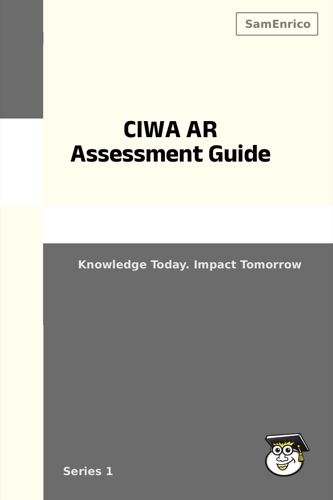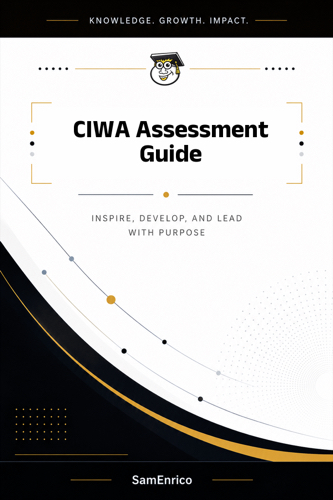
CIWA Assessment Guide
Score alcohol withdrawal severity for treatment de
by Mcelroy Shon
Score alcohol withdrawal severity for treatment decisions.
Formats
About this book
Free sample
Chapter 1: The Seizure That Changed Everything--The patient in Bed 4 had a CIWA score of six. He was watching ESPN, sipping ginger ale through a straw, and denying every symptom on the checklist. The nurse documented "no acute distress" and moved on to the next room. Six minutes later, the cardiac monitor screamed a flatline alarm. The patient was on the floor, his body arched in a tonic-clonic seizure, oxygen saturation plummeting to seventy-four percent.
His blood alcohol level, drawn forty-five minutes earlier, had just resulted at 0.24. He was still legally intoxicated in most states—but he was also withdrawing. The CIWA-Ar had lied, and no one in the room understood why.This is not a theoretical case study pulled from a textbook. It happened at a three-hundred-bed community hospital in the Midwest, and it happens somewhere in America every single day. The patient survived, but he spent four days in the intensive care unit, was intubated for twenty-two hours, and developed aspiration pneumonia from the seizure.
The hospital settled the subsequent malpractice claim for seven hundred fifty thousand dollars. The central allegation was not that the nurses failed to check the CIWA score. They had checked it, meticulously, every four hours as required. The allegation was that they had believed it.If you take nothing else away from this book, remember this one truth, repeated across every chapter that follows: The CIWA-Ar is a tool, not an oracle. It is a standardized questionnaire that converts subjective patient reports into a numerical score between zero and sixty-seven.
That score helps clinicians decide who needs observation, who needs benzodiazepines, and who needs an intensive care unit bed. But the score is only as good as the person asking the questions, the patient answering them, and the clinical context surrounding both. When any of those elements fail, the score fails too.The purpose of this first chapter is to give you the pharmacological foundation you need to understand why the CIWA-Ar works when it works—and why it fails when it fails. You cannot interpret a withdrawal score without understanding the neurobiology of dependence, the…
This is the end of the free sample. Get the eBook to keep going. Buy now
Contents
- Chapter 1
- Chapter 2
- Chapter 3
- Chapter 4
- Chapter 5
- Chapter 6
- Chapter 7
- Chapter 8
- Chapter 9
- Chapter 10
- Chapter 11
- Chapter 12
Details
- Author
- Mcelroy Shon
- Publisher
- SamEnrico
- Language
- English
- Genre
- Non-Fiction, Health & Wellness, Clinical Assessment
- Released
- 2026-06-08
- Pages (approx.)
- 151
- Available as
- eBook, Audiobook

Read better in the ZLOADR app
Your eBooks on your phone or tablet. Sign in with your SamEnrico account and start reading.
More by Mcelroy Shon
 Teen Mentorship ConfidenceMcelroy Shon$11.99
 Gamblers Anonymous Twelve Step AdaptationMcelroy Shon$11.99
 Park Bench HIIT GuideMcelroy Shon$11.99
 Methamphetamine and Borderline PDMcelroy Shon$11.99
 Grief and Appetite After LossMcelroy Shon$11.99
 Gambling Recovery After RelapseMcelroy Shon$11.99
 Child Loss Grief GuideMcelroy Shon$11.99
 The Vanishing Act: How the World Forgot the First Female Pulitzer WinnerMcelroy Shon$11.99
 The Thin Red Line at Balaclava: Scotland's Stand Against the TsarMcelroy Shon$11.99
 How to Produce Electronic PetsMcelroy Shon$11.99
 How to Produce MotherboardsMcelroy Shon$11.99
 A Collector's Handbook to the Renault 30Mcelroy Shon$11.99