
Chunking Study Information Guide
Break complex material into manageable units for e
Break complex material into manageable units for easier encoding and recall.
Formats
About this book
Free sample
Chapter 1: The Forgetting Filter...--–- Every student has experienced the same quiet humiliation. You sit down to study, read the same paragraph three times, close the book, and realize you remember almost nothing. Or worse, you spend an entire evening highlighting and re-reading, walk into the exam feeling prepared, and then stare at a question that seems vaguely familiar but utterly unreachable. The natural conclusion is that your memory is defective, that you are "bad at studying," or that some people are simply born with better brains.None of these conclusions are true. Your memory is not broken.
You are not the problem. The problem is that you have been fighting against the fundamental architecture of your own brain instead of working with it.This chapter reveals a hidden truth that top performers across every field—from chess grandmasters to concert pianists to neurosurgeons—have internalized: forgetting is not a failure. It is a filter. And chunking is the key that allows you to bypass that filter instead of being destroyed by it.The Bottleneck You Never Knew Existed Let us begin with a simple experiment. Read the following sequence of letters once, then close your eyes and try to repeat them in order:F B I C I A C N N F NDifficult, right?
Now try this sequence:F B I C I A C N N F NWait—it is the exact same sequence. But if you did not notice the pattern, you probably failed to recall it. Now try this:FBI CIA CNN FNSuddenly, it becomes trivial. You have not changed your brain's hardware. You have changed how the information is organized.
The first presentation gave you eleven isolated items. The second gave you four meaningful groups. This is chunking.The concept originated in one of the most famous papers in cognitive psychology, written by George Miller in 1956: "The Magical Number Seven, Plus or Minus Two." Miller's research demonstrated that human working memory—the mental workspace where you hold information while actively thinking about it—is severely limited. On average, you can hold only seven discrete items…
This is the end of the free sample. Get the eBook to keep going. Buy now
Contents
- Chapter 1
- Chapter 2
- Chapter 3
- Chapter 4
- Chapter 5
- Chapter 6
- Chapter 7
- Chapter 8
- Chapter 9
- Chapter 10
- Chapter 11
- Chapter 12
Details
- Author
- Donnelly Frankie
- Publisher
- SamEnrico
- Language
- English
- Genre
- Non-Fiction, Self-Help, Cognitive Strategies
- Released
- 2026-06-10
- Pages (approx.)
- 158
- Available as
- eBook, Audiobook

Read better in the ZLOADR app
Your eBooks on your phone or tablet. Sign in with your SamEnrico account and start reading.
More by Donnelly Frankie
 Mental Health During Job Loss GuideDonnelly Frankie$11.99
 Recovery Rituals For ProfessionalsDonnelly Frankie$11.99
 Amber Frey Book ComparisonDonnelly Frankie$11.99
 Fiverr Buyer Persona PrimerDonnelly Frankie$11.99
 UK VAT Registration Backdating Rules ManualDonnelly Frankie$11.99
 Journaling for Couple StressDonnelly Frankie$11.99
 Citation Rules Active Recall WorkbookDonnelly Frankie$11.99
 Resentment Journal MethodDonnelly Frankie$11.99
 Operation Quantum Dawn: The Forgotten Architects of Atomic ScienceDonnelly Frankie$11.99
 Icebound Innovators: The Robots That Conquered AntarcticaDonnelly Frankie$11.99
 The Great Escape: How a 12-Year-Old Outsmarted the NazisDonnelly Frankie$11.99
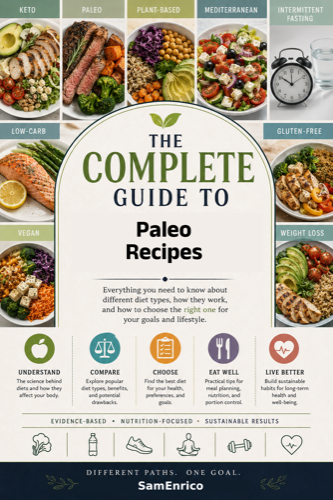 The Complete Guide to Paleo RecipesDonnelly Frankie$11.99