
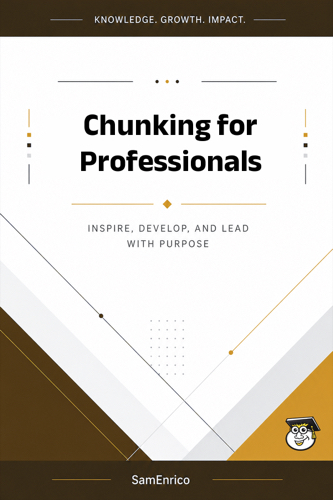
Free sample
Chapter 1: The 4-Channel Trap--–- By the time you finish reading this sentence, your brain will have successfully ignored approximately 47 potential distractions. The hum of the HVAC system. The weight of your watch on your wrist. The ambient light reflecting off your screen. The subtle pressure of your chair against your back.
The sound of your own breathing. These sensory inputs are being filtered, prioritized, and discarded without your conscious permission. This is not a weakness in your cognitive design. It is the only reason you are still alive.Your brain is performing a miracle of compression and filtering every waking moment. It takes approximately 11 million bits of sensory information per second—every sound, sight, smell, texture, and temperature variation within range of your nervous system—and compresses it down to roughly 50 bits per second of conscious awareness.
That is a compression ratio of 220,000 to 1. Without this brutal filtering, you would be paralyzed by the sheer volume of reality, unable to move, speak, or think because your attention would be scattered across every molecule of your environment.But here is the problem that no one tells you about in business school, leadership training, or professional development seminars: the same filtering system that protects you from sensory overload also limits your ability to do complex knowledge work. You have been given a Formula One brain but are trying to drive it through rush-hour traffic while texting, eating, listening to a podcast, and looking at a map. And you are wondering why you feel exhausted at 2 PM every day.This chapter reveals the fundamental architecture of your cognitive limits. Not to discourage you, but to liberate you.
Because once you understand exactly how many conscious slots you have to work with—and the neuroscience now puts this number at approximately four for complex, real-world tasks—you can stop fighting your brain and start working with it. The most productive professionals in the world are not the ones with the largest working memory. They are the ones who have learned to put something meaningful into each of their four slots and ruthlessly exclude everything else.The cost of ignoring this limit is staggering. A 2023 study published in the Journal of Experimental Psychology found that knowledge workers lose an average of 23 minutes of cognitive focus every time they switch between unrelated tasks. Over a typical day of 20 to 30 task-switches, that adds up to 7.6 hours of lost cognitive capacity per week.
Not time spent working, but time spent recovering from the act of switching. You are not too busy. You are too fragmented.This chapter will walk you through the science of the four-channel limit, expose the myth of multitasking for what it really is (rapid task-switching with a 40 percent penalty), introduce the Zeigarnik Effect and explain how open loops differ from conscious multitasking, and preview how top performers from airline cockpits to courtrooms use chunking to stay calm and effective when everyone around them is drowning. By the end, you will never look at your to-do list, your calendar, or your own attention the same way again.The Magical Number That Wasn't Quite Right In 1956, a Harvard psychologist named George Miller published one of the most cited papers in the history of cognitive science. Its title was "The Magical Number Seven, Plus or Minus Two: Some Limits on Our Capacity for Processing Information." Miller's insight was elegant and deceptively simple: when people are asked to remember random items—digits, words, colors, shapes—most can hold between five and nine items in immediate memory.
Seven, on average. This became the foundation of everything from phone number design to UX interface guidelines to Power Point presentation structure.For sixty years, "7±2" was the accepted wisdom. Business books built entire systems around it. Trainers taught that you could hold seven things in your mind at once. But there was a problem that Miller himself acknowledged but that the business world conveniently ignored: the "seven items" finding applied to simple, passive recall of unrelated items.
Remembering seven random digits while doing nothing else is very different from managing a complex work project while answering emails, listening to a colleague, and tracking a deadline.Modern neuroscience has refined Miller's finding significantly. Using functional magnetic resonance imaging (f MRI) and electroencephalography (EEG), researchers can now watch the brain in real time as it attempts to juggle multiple pieces of information. The conclusion is clear: for active, complex manipulation of information—the kind of thinking required for strategic planning, problem-solving, decision-making, creative work, and client negotiation—the human brain has approximately four slots. Not seven. Not nine.
Four.A landmark 2008 study by Dr. Nelson Cowan at the University of Missouri reviewed decades of working memory research and concluded that "the long-standing estimate of 7±2 items in short-term memory is an overestimate. For working memory, the capacity limit is approximately 4±1 chunks when the information is complex and requires active manipulation." Cowan's work has since been replicated across dozens of studies, controlling for verbal ability, age, and cognitive load. The four-slot limit appears to be a fixed architectural feature of the human brain, not a skill that can be improved with training.Why four? The evolutionary answer is compelling.
For most of human history, your ancestors needed to track approximately four things at once to survive: the location of food, the presence of predators, the position of the sun, and the status of their social group. That was enough. Four slots allowed you to hunt, avoid being eaten, navigate, and cooperate. The brain never evolved to track seventeen project deliverables, forty-seven unread emails, and a twelve-item meeting agenda. Your biology is Stone Age; your workload is Information Age.
This mismatch is the source of modern professional exhaustion.The Crucial Distinction: Working Memory vs. Short-Term Memory To understand the four-channel limit, you must understand a distinction that most productivity books get wrong. Short-term memory and working memory are not the same thing, even though the terms are often used interchangeably.Short-term memory is a passive storage system. It holds information for a brief period—about 15 to 30 seconds—without manipulating it. When you look up a phone number and remember it just long enough to dial, you are using short-term memory.
This system can hold approximately 7±2 items of simple, unrelated information. That is Miller's original finding, and it remains accurate for passive storage.Working memory is an active manipulation system. It not only holds information but also operates on it—comparing, contrasting, combining, reordering, and transforming. When you are trying to decide between three vendor proposals while remembering your budget constraints and a stakeholder's preferences, you are using working memory. This system holds approximately 4±1 items of complex, interrelated information.
That is Cowan's refined finding.The difference matters enormously for professionals. Reading a list of seven action items uses short-term memory. Deciding which three to prioritize while considering deadlines, resources, and dependencies uses working memory. The first is easy. The second is where the four-slot limit becomes binding.Consider this test: try to remember the following seven numbers in order: 4, 9, 2, 7, 5, 1, 8.
Most people can do this with a few seconds of concentration. That is short-term memory. Now try to solve this problem in your head: "A bat and a…
This is the end of the free sample. Get the eBook to keep going. Buy now
About this book
Details
- Author
- Reyna Trish
- Publisher
- SamEnrico
- Language
- English
- Genre
- Non-Fiction, Self-Help / Career
- Released
- 2026-06-07
- Pages (approx.)
- 153
- Available as
- eBook, Audiobook

Read better in the ZLOADR app
Your eBooks on your phone or tablet. Sign in with your SamEnrico account and start reading.
More by Reyna Trish
 The Sobriety Grief GuideReyna Trish$11.99
 The Gacy Body Recovery TeamReyna Trish$11.99
 FCPA Tax Official Bribery CasesReyna Trish$11.99
 Opioid Recovery for Chronic PainReyna Trish$11.99
 LTC Insurance For Business OwnersReyna Trish$11.99
 Rewiring Debt ShameReyna Trish$11.99
 TM Evening PracticeReyna Trish$11.99
 The Reformation RiotsReyna Trish$11.99
 The Silent Coup: How a Forgotten Civil Servant Toppled a DictatorReyna Trish$11.99
 The Crimson Mapmakers: How Spanish Cartographers Redrew the World (1900-1936)Reyna Trish$11.99
 Ragnarok Rising: The Lost Prophecy of the SeeressReyna Trish$11.99
 The Dancer's Guide to GrindingReyna Trish$11.99
You may also like
 Hong Kong Handover 1997Dunn Johnnie$11.99
 Zumba For Postnatal Recovery CourseNeal Christian$11.99
 Zumba for BeginnersLadner Nikia$11.99
 YouTube Comment Mining GuideHumes Pandora$12.99
 Worry Box MeditationCarlin Rudy$11.99
 Workplace Stress MeditationNguyen Lynn$11.99
 Workplace Stress and Sleep RepairHawley Ivory$11.99
 Workplace Perfectionism CureDelaney Jeffry$11.99
 Workplace Injustice Anger GuideWallen Isabelle$11.99
 Work Addiction and Burnout LinkGreenwood Ester$11.99
 Women in Yoga and WellnessBeattie Galina$11.99
 Women in Stand Up ComedyChun Evangeline$11.99