
Non-FictionInformativeEducational
Chromatography Operation eBook
A Coursebook on Chromatography Operation
A Coursebook on Chromatography Operation
Formats
Free sample
Chapter 1: The Invisible Divide--–- The first time Maria Vasquez watched a chromatograph print out its spiky, mountain-range results, she thought the machine was broken. The year was 1982, and she was a twenty-four-year-old forensic chemist fresh out of graduate school, standing in a dimly lit lab in Chicago. Her supervisor had handed her a set of gelatin capsules taken from a local pharmacy shelf, telling her only that seven people were dead and that the answer was somewhere inside those small, colorful shells. “Find the poison,” he said, “before we have to tell the mayor we’re guessing.”Maria had no way of knowing that the technique she was about to use—chromatography—would not only solve that case but would go on to become the single most important analytical tool in the history of science. Every drug test you have ever taken, every food safety certification, every environmental report on clean water and air, every doping control at the Olympics, and even the search for organic molecules on Mars depends on the same fundamental principle: the ability to separate a mixture into its individual components.This book is about how that separation works, how to perform it correctly, and how to know when something has gone wrong.
But before we turn a single knob or inject a single sample, we must understand what chromatography actually does at the most basic level. And to do that, we need to start with a question that seems almost too simple: How do you find one thing hidden inside another thing when you cannot see either one?The Problem of the Hidden Needle Imagine someone hands you a glass of water and tells you there is a single grain of salt dissolved in it. You cannot see the salt. You cannot taste it without drinking the entire glass. But you need to prove it is there.
What do you do? You could boil the water away, leaving the salt as a white residue, but that only works if your substance is non-volatile and if you do not mind destroying the water in the process. Now imagine instead that the glass contains not water and salt but blood and a trace amount of a lethal drug, or gasoline and a fingerprint of an explosive residue, or a river sample and one part per billion of a pesticide. Boiling will not help. Freezing will not help.
Looking through a microscope will not help.This is the fundamental problem that chromatography solves. It does so by exploiting a simple, almost primitive observation: different substances travel at different speeds when carried through a confined space by a moving fluid. If you have ever watched water soak up the side of a paper towel and carry coffee stains to different heights, you have seen the principle of chromatography in action. The coffee components do not all move at the same rate because each one has a different preference for sticking to the paper versus dissolving in the water. That preference—that constant tug-of-war between moving forward and staying behind—is the engine of every separation.In the laboratory, we do not use paper towels and coffee.
We use engineered columns packed with specialized materials, and we use pumps or pressurized gases to push samples through those columns at carefully controlled rates. But the underlying physics is identical to that coffee-stained paper towel. Every compound in a mixture has a characteristic “stickiness” to the column material. The less sticky a compound is, the faster it travels and the sooner it emerges from the far end of the column. The more sticky it is, the longer it lingers.
A detector at the outlet watches for each compound as it emerges, producing a graph that looks like a series of peaks. That graph is called a chromatogram, and it is the language in which chromatography speaks.The Three Promises Every chromatographic separation makes three promises, and the quality of your work will be judged entirely on how well you keep them. The first promise is resolution—the ability to separate two peaks so completely that there is no overlap. When peaks overlap, you cannot accurately measure how much of each compound is present. You cannot be certain you are looking at one substance or two.
Resolution is measured by a number (R_s), and the industry standard for calling two peaks “baseline resolved” is R_s = 1.5 or higher. Below that, you are guessing.The second promise is speed. A perfect separation that takes three days to complete is useless in a quality control lab that releases a hundred batches of product per shift. A perfect separation that takes three hours is useless in a forensic lab when a suspect is in custody and the clock is ticking. Speed comes from optimizing flow rates, column dimensions, and temperature or solvent gradients.
But speed always trades against resolution—move too fast, and peaks that would have separated cleanly merge into a single hump. The art of chromatography is finding the balance where speed is acceptable and resolution is sufficient.The third promise is sensitivity. Can you see what is there when there is almost nothing there? Sensitivity is the ability to detect a compound at very low concentrations—parts per million, parts per billion, or even parts per trillion in some advanced systems. Sensitivity depends partly on your detector (different detectors have different lower limits) and partly on your sample preparation.
A dirty sample with lots of interfering compounds will bury your target in noise. A clean, concentrated sample will let even a tiny amount shine through.These three promises—resolution, speed, sensitivity—are in constant tension. Improving one often degrades another. The entire science of chromatography operations is the study of how to manage these trade-offs intelligently.Reading the Chromatogram: A Visual Language Before you ever touch an instrument, you must learn to read a chromatogram. It is a simple document—a two-dimensional plot with time on the horizontal axis (in minutes or seconds) and detector response on the vertical axis (in millivolts, absorbance units, or counts).
But within that simple graph lies everything you need to know about the health of your separation.A healthy chromatogram has certain features. The baseline—the line the detector draws when nothing is eluting—should be flat and stable. It should not drift upward or downward over time, and it should not show regular wiggles or spikes. Baseline instability is almost always a sign of something wrong: a leaking pump seal, a dirty detector, temperature fluctuations, or mobile phase contamination.The peaks themselves should be symmetrical, rising smoothly from the baseline to a rounded apex and then descending just as smoothly. A perfect peak is described mathematically as a Gaussian distribution, but in practice you are looking for a shape that looks like a bell.
When a peak is not symmetrical, the deviation tells you what is wrong. A peak that rises slowly and falls sharply (fronting) suggests the column is overloaded with too much sample. A peak that rises sharply and falls slowly (tailing) suggests the compound is interacting too strongly with the column material, often because of exposed silanol groups on the column…
This is the end of the free sample. Get the eBook to keep going. Buy now
About this book
Details
- Author
- Talley Leanora
- Publisher
- SamEnrico
- Language
- English
- Genre
- Non-Fiction, Informative, Educational
- Released
- 2026-06-02
- Pages (approx.)
- 143
- Available as
- eBook, Audiobook

Read better in the ZLOADR app
Your eBooks on your phone or tablet. Sign in with your SamEnrico account and start reading.
More by Talley Leanora
 Night Stalker Sleeping City FearTalley Leanora$11.99
 Slack Channels Optimization GuideTalley Leanora$11.99
 Email Efficiency AssessmentTalley Leanora$11.99
 Franchising Your Local Brand Across Borders Multi Language SupportTalley Leanora$11.99
 Calorie Adjustment Exercise LogTalley Leanora$11.99
 The Velvet Revolution: How a Designer Toppled a DynastyTalley Leanora$11.99
 Silent Diplomacy: The Untold Story of the Helsinki AccordsTalley Leanora$11.99
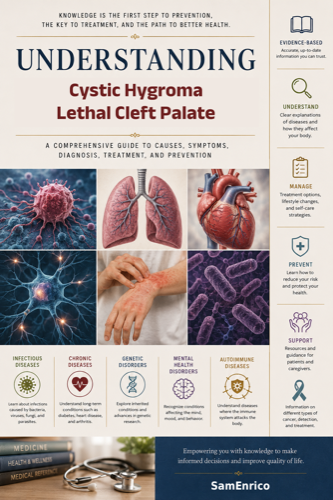 Understanding Cystic Hygroma Lethal Cleft PalateTalley Leanora$17.99
 How to Become a Cheese CutterTalley Leanora$11.99
 Low Income Housing Green CreditsTalley Leanora$12.99
 Referral Marketing One PageTalley Leanora$12.99
You may also like
 Hong Kong Handover 1997Dunn Johnnie$11.99
 Zumba For Postnatal Recovery CourseNeal Christian$11.99
 Zumba for BeginnersLadner Nikia$11.99
 YouTube Comment Mining GuideHumes Pandora$12.99
 Worry Box MeditationCarlin Rudy$11.99
 Workplace Stress MeditationNguyen Lynn$11.99
 Workplace Stress and Sleep RepairHawley Ivory$11.99
 Workplace Perfectionism CureDelaney Jeffry$11.99
 Workplace Injustice Anger GuideWallen Isabelle$11.99
 Work Addiction and Burnout LinkGreenwood Ester$11.99
 Women in Yoga and WellnessBeattie Galina$11.99
 Women in Stand Up ComedyChun Evangeline$11.99