
Chinese Supplier Negotiation Scripts eBook
Use proven phrases and counter-offers for common n
Use proven phrases and counter-offers for common negotiation scenarios.
Formats
Free sample
Chapter 1: The Should-Cost Flip--–- The first time I watched a Chinese factory owner drop his price by 22% without a single counter-offer, I was sitting in a conference room in Dongguan. The buyer, a woman from Ohio who sourced automotive components, had not asked for a discount. She had not threatened to walk. She had not mentioned competitors. Instead, she had opened her laptop, turned the screen toward the supplier, and said something I have never forgotten.
"I am not looking for a discount," she said calmly. "I am looking for transparency. My math shows your raw material cost at 4.87perunit.Yourquoteis4.87 per unit. Your quote is 4.87perunit.Yourquoteis12.40. Can you help me understand the difference?" The silence that followed lasted seventeen seconds.
Then the factory owner laughed, said "You are not a normal American buyer," and reduced the price to 9.65.Inseventeenseconds,shehadsavednearly9.65. In seventeen seconds, she had saved nearly 9.65.Inseventeenseconds,shehadsavednearly3 per unit on an order of 50,000 pieces. She had not negotiated better. She had negotiated differently.Most buyers walk into Chinese supplier negotiations carrying the wrong weapon. They carry charm, or persistence, or the threat of volume.
These are all useful. But the most powerful weapon you can carry is not a negotiation tactic at all. It is a spreadsheet. This chapter will teach you how to build and deploy what procurement professionals call a "should-cost model"—a bottom-up calculation of what a product must cost based on physics, public commodity prices, and basic manufacturing logic. More importantly, this chapter will teach you the exact script that turns that spreadsheet into a psychological weapon that Chinese suppliers do not expect and often cannot counter.The reason this approach works is rooted in a simple asymmetry.
Most buyers negotiate from the supplier's quote downward. They ask "Can you do better?" or "What is your best price?" These questions concede the entire frame to the supplier. You are begging for a reduction from a number they invented. The supplier expects this. They have built margin into that number specifically for you to negotiate away.
When you ask for a discount, you are playing their game by their rules. The should-cost model flips the script. Instead of negotiating down from their quote, you build up from the raw materials. You are no longer asking for a favor. You are asking for an explanation.
That shift—from begging to auditing—changes the entire power dynamic.Why the "Foreigner Tax" Exists Before we get to the script itself, we need to understand what you are fighting against. Chinese suppliers do not charge Western buyers higher prices because they are greedy or dishonest. They charge higher prices because they have learned, through thousands of transactions, that Western buyers behave predictably. The typical Western buyer asks for a quote, asks for a discount, negotiates for a few days, and then places an order. The typical Chinese domestic buyer, by contrast, walks in with a should-cost model.
They know the price of steel. They know the labor rate in the province. They know how much the factory pays for electricity. When a supplier quotes a domestic buyer an inflated price, that buyer will simply laugh and show them the math.This information asymmetry is what procurement experts call the "foreigner tax." It is not a tax in the literal sense. It is the premium you pay because you have not done the homework that Chinese buyers consider routine.
The average Western importer overpays by 20 to 40 percent on every order. Over a year of sourcing, that can mean hundreds of thousands of dollars left on the table—not because you are a bad negotiator, but because you are using the wrong framework.The should-cost model closes that gap. When you show a supplier that you know exactly how much raw material is in their product and exactly what that raw material costs on the open market, you signal something profound. You signal that you are not a tourist. You signal that you have done the work.
And you signal that you are willing to walk away if the math does not add up. That signal alone is often enough to unlock savings that no amount of charm could achieve.The Anatomy of a Should-Cost Model A should-cost model sounds more sophisticated than it actually is. At its core, it is simply a bottom-up estimate of the minimum cost required to produce one unit of your product, assuming reasonable manufacturing efficiency and standard overhead. You do not need access to the factory's books to build one. You need four things: raw material weight, commodity price, estimated labor, and standard overhead.Let us break down each component.Raw Material Weight.
This is the most important number in your model. Every physical product has a certain weight of raw material—plastic, steel, aluminum, copper, wood, fabric. You can often find this information on the supplier's specification sheet, on a competitor's website, or by simply weighing a sample. Be conservative. If a product contains 0.8 kilograms of polypropylene plastic, use 0.8 kilograms in your model.
Do not guess upward. The supplier will correct you if you are wrong, and that correction is itself valuable information.Commodity Price. Once you know the weight of each raw material, you need the current market price for that material. These prices are publicly available. For metals, the London Metal Exchange (LME) publishes daily prices for copper, aluminum, zinc, nickel, and tin.
For plastics, you can check Platts or even simple Google searches for "polypropylene price Asia." For wood, check lumber futures. For textiles, check cotton or polyester indexes. The specific source matters less than the fact that you have *a* source. Suppliers cannot argue with the LME. They can argue with your memory of what copper cost last year.
Always use current, verifiable data.Estimated Labor. Labor is harder to calculate because it varies by region and complexity. However, you do not need precision here. You need a reasonable range. General labor rates in Chinese manufacturing hubs range from 2.50to2.50 to 2.50to5.00 per hour, depending on the province (Guangdong and Zhejiang are on the higher end; inland provinces are lower).
A simple product that takes one minute of labor per unit has 0.04to0.04 to 0.04to0.08 of labor cost. A complex product that takes ten minutes has 0.40to0.40 to 0.40to0.80. If you are unsure, assume the higher end. The supplier will correct you downward, which works in your favor.Standard Overhead. Overhead includes electricity, rent, machine depreciation, quality control, and management salaries.
In Chinese manufacturing, overhead typically adds 15 to 25 percent to the sum of raw materials and labor. This is a standard assumption. You can state it directly to the supplier: "I am assuming standard factory overhead of 20 percent. Is that reasonable for your facility?" Most suppliers will accept this number or offer a slightly higher one. Either way, you have established a baseline.Putting It Together.
Your should-cost model then looks like this:(Raw Material Weight × Commodity Price) + (Labor Hours × Hourly Rate) × (1 + Overhead Percentage) = Should-Cost Price For example, a product with 0.8 kg of polypropylene (at 1.20/kg),2minutesoflabor(at1.20/kg), 2 minutes of labor (at 1.20/kg),2minutesoflabor(at4/hour), and 20 percent overhead:(0.8 × 1.20) = 0.96rawmaterials(2/60×4)=0.96…
This is the end of the free sample. Get the eBook to keep going. Buy now
About this book
Details
- Author
- Montoya Chelsey
- Publisher
- SamEnrico
- Language
- English
- Genre
- Non-Fiction, Business Brief
- Released
- 2026-06-01
- Pages (approx.)
- 144
- Available as
- eBook, Audiobook

Read better in the ZLOADR app
Your eBooks on your phone or tablet. Sign in with your SamEnrico account and start reading.
More by Montoya Chelsey
 The EQ for Freelancers GuideMontoya Chelsey$11.99
 Restless Leg Syndrome Compression TherapyMontoya Chelsey$11.99
 Messner Manaslu Winter AscentMontoya Chelsey$11.99
 Twelve Step Meeting AnxietyMontoya Chelsey$11.99
 NVC For Conflict Resolution GuideMontoya Chelsey$11.99
 Should Statements Challenging GuideMontoya Chelsey$11.99
 Nuclear Energy Capital AllocationMontoya Chelsey$11.99
 Yehuda Halevi Kuzari ArgumentsMontoya Chelsey$11.99
 Progress Billing GuideMontoya Chelsey$11.99
 The Last Pharaoh's Gambit: Cleopatra's Secret CoronationMontoya Chelsey$11.99
 The Marble and the Myth: The First Olympic Scandal in the Middle EastMontoya Chelsey$11.99
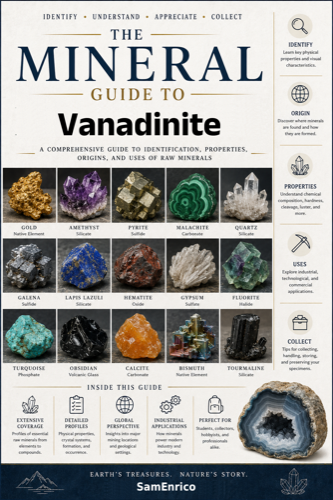 The Mineral Guide to VanadiniteMontoya Chelsey$11.99
You may also like
 Hong Kong Handover 1997Dunn Johnnie$11.99
 Zumba For Postnatal Recovery CourseNeal Christian$11.99
 Zumba for BeginnersLadner Nikia$11.99
 YouTube Comment Mining GuideHumes Pandora$12.99
 Worry Box MeditationCarlin Rudy$11.99
 Workplace Stress MeditationNguyen Lynn$11.99
 Workplace Stress and Sleep RepairHawley Ivory$11.99
 Workplace Perfectionism CureDelaney Jeffry$11.99
 Workplace Injustice Anger GuideWallen Isabelle$11.99
 Work Addiction and Burnout LinkGreenwood Ester$11.99
 Women in Yoga and WellnessBeattie Galina$11.99
 Women in Stand Up ComedyChun Evangeline$11.99