

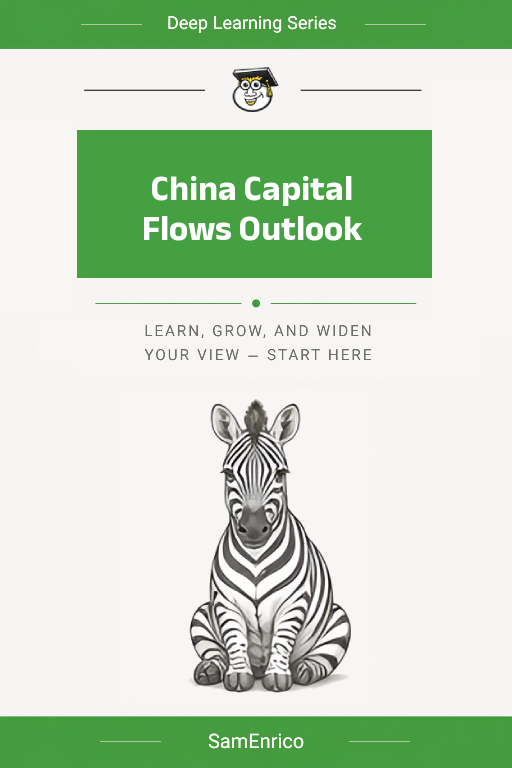
Non-FictionForecast & OutlookChina Investment
China Capital Flows Outlook
Project inbound FDI policy shifts, outbound M&A re
Project inbound FDI policy shifts, outbound M&A restrictions, and domestic capital market liberalization through 2030.
Formats
About this book
Free sample
Chapter 1: The Great Bifurcation--China’s capital flows no longer follow a single logic. For most of the post-2001 era, the pattern was simple: capital came in to manufacture goods for export, and profits flowed out through a relatively permissive system. That era ended sometime between the trade war of 2018 and the regulatory reset of 2021. What replaced it is not a single policy but a coherent dual strategy that every investor, treasurer, and board member must now internalize.The Chinese state has constructed two parallel environments for capital. The first is a highly restrictive, security-driven “curtain” that surrounds strategic assets, outbound technology transfers, and any capital movement that could threaten national interests.
The second is an increasingly open, incentive-laden “golden door” that welcomes specific types of foreign capital – but only on Beijing’s terms. Understanding where your capital falls is the difference between thriving and being trapped.This chapter introduces the central framework of this book: the bifurcation of manufacturing foreign direct investment. Low-end manufacturing FDI is dead. High-end manufacturing FDI is not only alive but actively courted. The 15th Five-Year Plan (2026–2030) codifies this distinction, and ignoring it means pitching yesterday’s value proposition to regulators who stopped listening years ago.The Death of the Quantity Era From China’s accession to the World Trade Organization in 2001 until roughly 2015, the government measured FDI success by one metric above all others: volume.
More factories meant more jobs, more exports, and more foreign exchange reserves. Tax incentives were automatic. Land was cheap. Environmental and labor standards were flexible. A foreign company could set up a textile plant in Guangdong or a toy factory in Zhejiang with minimal friction, produce for global markets, and repatriate profits with modest scrutiny.That world has vanished.The 15th Five-Year Plan, released in early 2026, makes the shift explicit.
The document mentions “FDI volume” only three times across its 200 pages. Instead, it uses phrases like “high-quality development,” “strategic alignment,” and “innovation-driven growth” more than two hundred times. This is not semantic drift. It is a fundamental redefinition of what the state considers valuable foreign capital.The official FDI guidance…
This is the end of the free sample. Get the eBook to keep going. Buy now
Contents
- Chapter 1
- Chapter 2
- Chapter 3
- Chapter 4
- Chapter 5
- Chapter 6
- Chapter 7
- Chapter 8
- Chapter 9
- Chapter 10
- Chapter 11
- Chapter 12
Details
- Author
- Winchester Sigrid
- Publisher
- SamEnrico
- Language
- English
- Genre
- Non-Fiction, Forecast & Outlook, China Investment
- Released
- 2026-06-01
- Pages (approx.)
- 122
- Available as
- eBook, Audiobook

Read better in the ZLOADR app
Your eBooks on your phone or tablet. Sign in with your SamEnrico account and start reading.
More by Winchester Sigrid
 Humorous Persuasion TechniquesWinchester Sigrid$11.99
 Affirmations for Financial StressWinchester Sigrid$11.99
 Governor's Farm CrisisWinchester Sigrid$11.99
 The Retirement Housing Repair Reserve FundWinchester Sigrid$11.99
 Influencer Disclosure For NetworksWinchester Sigrid$11.99
 The Quantum Leap: How a 20-Year-Old Coder Cracked AI in a GarageWinchester Sigrid$11.99
 IoT-Based Product Business LaunchWinchester Sigrid$11.99
 MVP Mindset Shift GuideWinchester Sigrid$12.99
 Understanding Japanese EncephalitisWinchester Sigrid$17.99
 How to Become a Tubing-machine TenderWinchester Sigrid$11.99
You may also like
 Hong Kong Handover 1997Dunn Johnnie$11.99
 Zumba For Postnatal Recovery CourseNeal Christian$11.99
 Zumba for BeginnersLadner Nikia$11.99
 YouTube Comment Mining GuideHumes Pandora$12.99
 Worry Box MeditationCarlin Rudy$11.99
 Workplace Stress MeditationNguyen Lynn$11.99
 Workplace Stress and Sleep RepairHawley Ivory$11.99
 Workplace Perfectionism CureDelaney Jeffry$11.99
 Workplace Injustice Anger GuideWallen Isabelle$11.99
 Work Addiction and Burnout LinkGreenwood Ester$11.99
 Women in Yoga and WellnessBeattie Galina$11.99
 Women in Stand Up ComedyChun Evangeline$11.99