
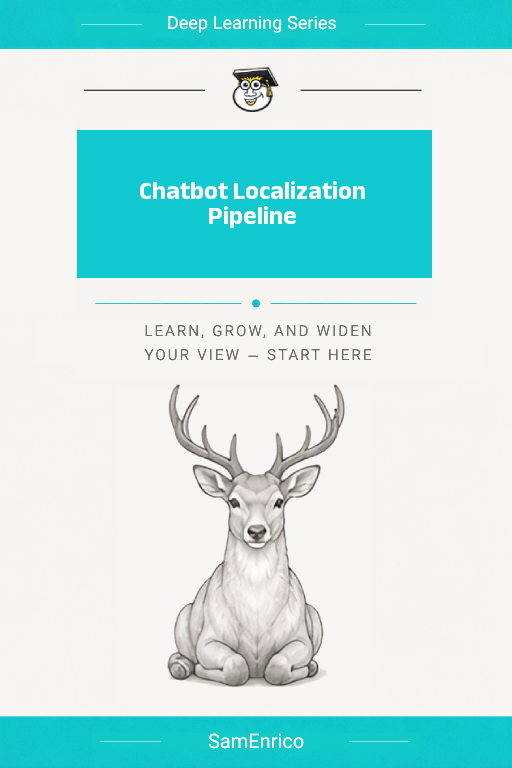
Chatbot Localization Pipeline
Localize conversational AI intents, entities, and
Localize conversational AI intents, entities, and responses. Adapt chatbot personality and cultural references for regional users naturally.
Formats
About this book
Free sample
Chapter 1: The Cultural Blindspot--–- In 2019, a well-funded American fintech company launched its AI-powered customer service chatbot in Japan with what the engineering team believed was a flawless multilingual strategy. The bot had been trained on 50,000 Japanese customer service transcripts. Every menu had been professionally translated by a Tokyo-based agency. The team had even hired a native speaker to record voice prompts. By all conventional metrics, the launch was a success.Within seventy-two hours, the bot achieved a 94 percent user dissatisfaction rate.
Escalations to human agents increased 800 percent. The company lost $2.3 million in Japanese market investment and withdrew from the country entirely eighteen months later.The problem was not translation quality. The bot used grammatically perfect Japanese. The problem was that the bot treated every user interaction as if it were happening in New York.When a Japanese user said, "I'll think about it" regarding a loan offer, the bot interpreted this as a genuine maybe and followed up three times with increasing urgency. In Japanese business culture, "I'll think about it" is almost always a polite refusal.
The user felt harassed. When a user asked about late fees, the bot responded with direct, efficient information about penalties. In Japan, this felt aggressive and shame-based rather than helpful. When a user called to dispute a charge—a rare action in itself, because Japanese customers rarely complain directly—the bot offered an immediate refund. This was the wrong response.
The user wanted acknowledgment of inconvenience and an apology, not money.The fintech company learned a painful lesson that thousands of organizations are learning right now: multilingual is not multicultural. A chatbot can be grammatically flawless in twelve languages and still be culturally incompetent in every single one.The Unseen Bias in Every Training Corpus Every large language model currently powering commercial chatbots carries embedded cultural assumptions. These assumptions are not malicious. They are not even necessarily wrong within their original contexts. But they are invisible to the engineers who train the models and to the product managers who deploy them.Consider the data that trains most commercial LLMs.
Reddit threads, Wikipedia articles, news publications from Western outlets, social media conversations in English, academic papers written in American or…
This is the end of the free sample. Get the eBook to keep going. Buy now
Contents
- Chapter 1
- Chapter 2
- Chapter 3
- Chapter 4
- Chapter 5
- Chapter 6
- Chapter 7
- Chapter 8
- Chapter 9
- Chapter 10
- Chapter 11
- Chapter 12
Details
- Author
- Madden Lavonna
- Publisher
- SamEnrico
- Language
- English
- Genre
- Non-Fiction, AI Operator
- Released
- 2026-05-28
- Pages (approx.)
- 156
- Available as
- eBook, Audiobook

Read better in the ZLOADR app
Your eBooks on your phone or tablet. Sign in with your SamEnrico account and start reading.
More by Madden Lavonna
 Body Scan for ElderlyMadden Lavonna$11.99
 Emotional Intelligence for NeurodivergentsMadden Lavonna$11.99
 Berlin 1945 Final VictoryMadden Lavonna$11.99
 Stress and Blended FamiliesMadden Lavonna$11.99
 The Baghdad Art Heist: Looting the Soul of MesopotamiaMadden Lavonna$11.99
 How to Become a Hide SplitterMadden Lavonna$11.99
 CAD EngineerMadden Lavonna$11.99
 How to Produce Body JewelryMadden Lavonna$11.99
You may also like
 AI Presentation WorkbookSommers Tonda$11.99
 PowerPoint Copilot MasteryConway Lanita$11.99
 Branded AI DecksWindham Loni$11.99
 AI Presentation CourseGrooms Olin$11.99
 AI Presentation CertificationBlank Dolly$11.99
 AI Deck Version ControlMedley Lorina$11.99
 AI Deck Update AutomationFraser Tresa$11.99
 AI Deck Myths DebunkedCrittenden Romelia$11.99
 AI Deck Customization GuideDove Hannelore$11.99
 AI Bullet to Slide ConverterKohn Eloisa$11.99
 AI Deck Notes CreatorBarela Sunday$11.99
 AI Deck Outline GeneratorAshmore Morgan$11.99