
Non-FictionHistorySri Lankan History
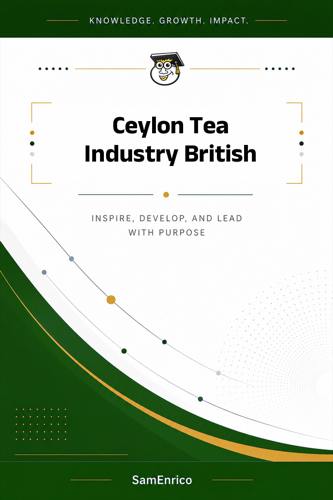
Ceylon Tea Industry British
Details how Scottish planters transformed the isla
Details how Scottish planters transformed the island into a tea monoculture.
Formats
About this book
Free sample
Chapter 1: The Ruin of Kings...-- In 1869, the most valuable crop on the island of Ceylon was not tea. It was not even a beverage. It was a red cherry, plump and glossy, containing two green beans that, when roasted, produced a drink the British Empire had learned to crave above almost all others. Coffee was king. And in that year, the king began to die.The first sign of trouble appeared on a single estate in the Madulsima district, a remote corner of the hill country where Scottish planters had carved fortunes from the jungle.
A young superintendent noticed something strange on his coffee bushes: small orange spots, like rust on iron, spreading across the undersides of leaves. Within weeks, the spots turned yellow, then brown, then black. The leaves curled, withered, and fell. The branches that remained were bare, skeletal, and useless. No one knew what the spots were.
No one knew how to stop them. And within a decade, the orange rust would sweep across the entire island, bankrupting hundreds of planters, destroying a million acres of cultivation, and forcing the British Empire to find a new drink for its morning cup.This is the story of that catastrophe, and of the men who turned disaster into the most famous tea industry the world has ever known.The Golden Age Before the Fall To understand the panic of the 1870s, one must first understand the paradise that preceded it. In the 1830s, Ceylon was a backwater of the British Empire, valued primarily for its deep-water harbor at Trincomalee and its strategic position along the sea routes to India. The island's interior was a wall of jungle, mountains, and malaria. The British had taken control from the Dutch in 1815, after the Kandyan Convention, but for two decades they struggled to extract any real wealth from the colony.All of that changed in 1835, when the British Colonial Office made a decision that would reshape the island forever.
Under the direction of Governor Sir Robert Wilmot-Horton, the government passed the Crown Lands Ordinance of 1833, followed by the Waste Lands…
This is the end of the free sample. Get the eBook to keep going. Buy now
Contents
- Chapter 1
- Chapter 2
- Chapter 3
- Chapter 4
- Chapter 5
- Chapter 6
- Chapter 7
- Chapter 8
- Chapter 9
- Chapter 10
- Chapter 11
- Chapter 12
Details
- Author
- France Alexandria
- Publisher
- SamEnrico
- Language
- English
- Genre
- Non-Fiction, History, Sri Lankan History
- Released
- 2026-06-06
- Pages (approx.)
- 111
- Available as
- eBook, Audiobook

Read better in the ZLOADR app
Your eBooks on your phone or tablet. Sign in with your SamEnrico account and start reading.
More by France Alexandria
 Hinton Book The Sun Does ShineFrance Alexandria$11.99
 Physical Anger Release MethodsFrance Alexandria$11.99
 Social Security Statement AnalysisFrance Alexandria$11.99
 Method Of Loci For Motivational QuotesFrance Alexandria$11.99
 Toddler Dream LanguageFrance Alexandria$11.99
 Five Second Rule for ActionFrance Alexandria$11.99
 The Ghost in the Machine: Haruki Murakami and the Birth of Japan’s Literary Pop CultureFrance Alexandria$11.99
 Shadows Over Isandlwana: The Zulu Spy Who Changed the Course of WarFrance Alexandria$11.99
 How to Produce Drum HeadsFrance Alexandria$11.99
 Mastering The TrapeziusFrance Alexandria$11.99
 Grant Writing Timeline Cheat SheetFrance Alexandria$12.99
 High Stress Job Micro-Break PrimerFrance Alexandria$12.99
You may also like
 Hong Kong Handover 1997Dunn Johnnie$11.99
 Zumba For Postnatal Recovery CourseNeal Christian$11.99
 Zumba for BeginnersLadner Nikia$11.99
 YouTube Comment Mining GuideHumes Pandora$12.99
 Worry Box MeditationCarlin Rudy$11.99
 Workplace Stress MeditationNguyen Lynn$11.99
 Workplace Stress and Sleep RepairHawley Ivory$11.99
 Workplace Perfectionism CureDelaney Jeffry$11.99
 Workplace Injustice Anger GuideWallen Isabelle$11.99
 Work Addiction and Burnout LinkGreenwood Ester$11.99
 Women in Yoga and WellnessBeattie Galina$11.99
 Women in Stand Up ComedyChun Evangeline$11.99