
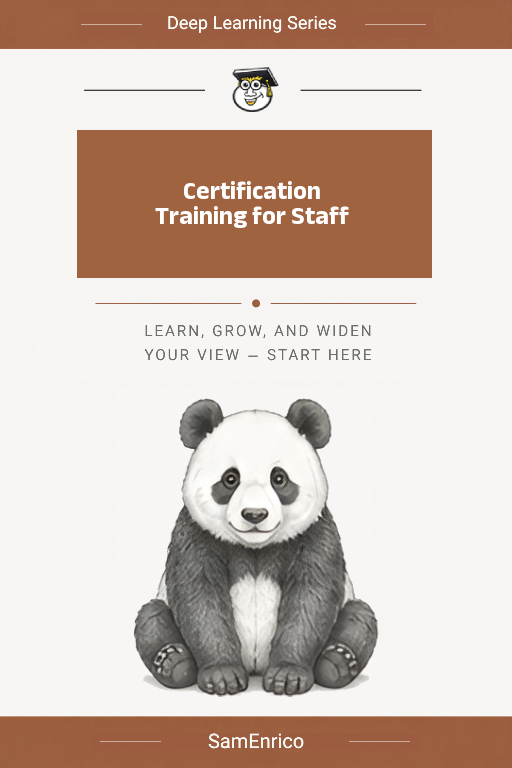
Certification Training for Staff Audiobook
Train export team members on sustainability certif
Train export team members on sustainability certification requirements with quiz modules and competency assessments.
Formats
Free sample
Chapter 1: The Three Forces--The email arrived on a Tuesday morning. Zhang Wei, the export manager for a medium-sized aluminum parts manufacturer in Guangzhou, had just opened his inbox to find a notice from his largest customer in Germany. The subject line read: “Urgent: New Sustainability Requirements for 2025 Suppliers.”The message was polite but firm. Effective January 1, all suppliers must provide verified emissions data for CBAM compliance. Additionally, the customer would begin requiring amfori BSCI social compliance certification within eighteen months.
Without these, the contract—worth $4 million annually—would be at risk.Zhang Wei had heard about sustainability requirements. He knew they were coming. But he had assumed they applied to large corporations, not to his mid-sized factory. He was wrong. The three forces of global trade had arrived at his door.This chapter is about those three forces.
Understanding them is the first step toward certification readiness. By the end of this chapter, you will be able to identify the major sustainability standards and regulations affecting your export markets, distinguish between mandatory regulations and voluntary standards, explain the business case for certification, and map applicable requirements to your products and markets.The Three Forces Reshaping Global Trade Sustainability has moved from the margins of corporate social responsibility to the center of international trade regulation. This shift is not a trend. It is a structural change driven by three powerful forces.Force One: Regulatory Pressure from Governments The European Union has led the world in sustainability regulation. The European Green Deal, adopted in 2020, is a package of policies designed to make Europe climate-neutral by 2050.
For exporters, three regulations matter most.The Carbon Border Adjustment Mechanism (CBAM) requires importers of iron, steel, aluminum, cement, fertilizers, electricity, and hydrogen to report the embedded emissions in their products. During an initial transitional period, reporting is required but no financial adjustment is paid. After the transitional period, importers must purchase CBAM certificates to cover those emissions. This is not a voluntary guideline. It is a law with penalties.The Corporate Sustainability Due Diligence Directive (CSDDD) requires large companies to identify, prevent, and mitigate adverse human rights and environmental impacts in their supply chains.
While the directive applies primarily to EU companies, its requirements flow down to non-EU suppliers. If you sell to a company covered by CSDDD, you may be required to provide information about your labor practices, allow audits of your facilities, implement corrective…
This is the end of the free sample. Get the Audiobook to keep going. Buy now
About this book
Details
- Author
- Marin Evangeline
- Publisher
- SamEnrico
- Language
- English
- Genre
- Non-Fiction, Business Brief
- Released
- 2026-06-01
- Pages (approx.)
- 138
- Available as
- eBook, Audiobook

Listen in the VoxFlicks app
Audiobooks and audio dramas wherever you go. Sign in with your SamEnrico account and press play.
More by Marin Evangeline
 Young Adult Purpose Exploration HandbookMarin Evangeline$11.99
 Boredom Shopping Fix GuideMarin Evangeline$11.99
 Success Mindset RewiringMarin Evangeline$11.99
 The Influencer Fine and Penalty GuideMarin Evangeline$11.99
 Yoga Nidra Body Scan GuideMarin Evangeline$11.99
 Hashtag Revolution: The 1838 Canadian Rebellion’s Viral ResurgenceMarin Evangeline$11.99
 Low Income Acquisition CostMarin Evangeline$12.99
 Understanding Urogenital AdysplasiaMarin Evangeline$17.99
 Gymnastics CoachMarin Evangeline$11.99
 How to Become a Plastic MolderMarin Evangeline$11.99
You may also like
 Hong Kong Handover 1997Dunn Johnnie$11.99
 Zumba For Postnatal Recovery CourseNeal Christian$11.99
 Zumba for BeginnersLadner Nikia$11.99
 YouTube Comment Mining GuideHumes Pandora$12.99
 Worry Box MeditationCarlin Rudy$11.99
 Workplace Stress MeditationNguyen Lynn$11.99
 Workplace Stress and Sleep RepairHawley Ivory$11.99
 Workplace Perfectionism CureDelaney Jeffry$11.99
 Workplace Injustice Anger GuideWallen Isabelle$11.99
 Work Addiction and Burnout LinkGreenwood Ester$11.99
 Women in Yoga and WellnessBeattie Galina$11.99
 Women in Stand Up ComedyChun Evangeline$11.99