
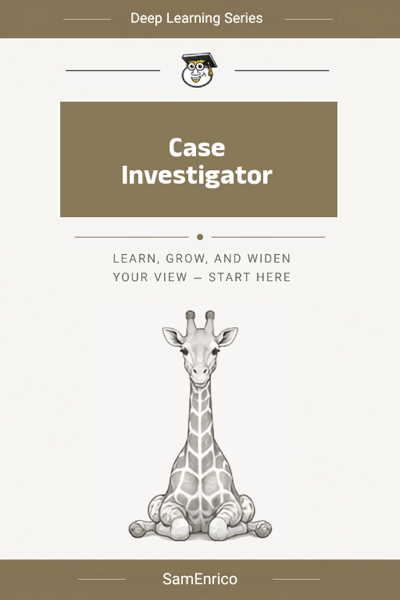
Non-FictionInformativeEducational
Case Investigator
A Coursebook on Case Investigator
A Coursebook on Case Investigator
Formats
About this book
Free sample
Chapter 1: The Moral Compass...–- Every investigation begins long before the first interview, the first evidence bag, or the first case number. It begins with a single decision: to seek the truth, no matter where it leads. For the case investigator, this is not merely an aspirational goal but a daily discipline—one tested by pressure, ambiguity, and the ever-present temptation to cut corners. This chapter establishes the professional and legal foundation required before an investigator handles any case, because without this foundation, technique becomes dangerous and evidence becomes unreliable.The Two Worlds of Investigation The case investigator operates in a profession split by a fundamental legal divide: public sector versus private sector. Understanding this distinction is not academic—it determines what you can legally do, what rights you must respect, and what consequences follow from overstepping.Public sector investigators work for government entities: federal agencies (FBI, Secret Service, Homeland Security), state bureaus of investigation, county district attorney offices, and municipal police departments.
When a public sector investigator acts, that action is considered state action under the Fourteenth Amendment. This means constitutional protections—the Fourth Amendment's prohibition against unreasonable searches and seizures, the Fifth Amendment's right against self-incrimination, the Sixth Amendment's right to counsel—apply directly and fully. Evidence obtained in violation of these rights is subject to the exclusionary rule, meaning it cannot be used in a criminal prosecution. Worse, investigators who knowingly violate constitutional rights can face civil liability under 42 U.S.C. § 1983 and, in extreme cases, criminal prosecution.Private sector investigators work for corporations, insurance companies, law firms, private investigation agencies, or as solo practitioners.
They are not government actors. Therefore, the constitutional restrictions that bind public sector investigators do not apply directly to them. A private investigator does not need a warrant to search property—but only because they have no legal power to compel entry. If a private investigator searches without consent, they commit trespass or burglary, not a constitutional violation. This distinction is both liberating and dangerous.
Liberating because private investigators have more operational flexibility. Dangerous because they lack the immunity and legal protections that public sector…
This is the end of the free sample. Get the eBook to keep going. Buy now
Contents
- Chapter 1
- Chapter 2
- Chapter 3
- Chapter 4
- Chapter 5
- Chapter 6
- Chapter 7
- Chapter 8
- Chapter 9
- Chapter 10
- Chapter 11
- Chapter 12
Details
- Author
- Longo Michiko
- Publisher
- SamEnrico
- Language
- English
- Genre
- Non-Fiction, Informative, Educational
- Released
- 2026-05-07
- Pages (approx.)
- 145
- Available as
- eBook, Audiobook

Read better in the ZLOADR app
Your eBooks on your phone or tablet. Sign in with your SamEnrico account and start reading.
More by Longo Michiko
 Pinterest Craft ComparisonLongo Michiko$11.99
 Partner Success Self Esteem GuideLongo Michiko$11.99
 Rembg Background Removal GuideLongo Michiko$11.99
 Insect Phobia WorkbookLongo Michiko$11.99
 The Sober First Thirty Days WorkbookLongo Michiko$11.99
 Understanding Infantile Striato Thalamic DegenerationLongo Michiko$17.99
 Alcohol Beverage Spending TrendsLongo Michiko$12.99
 Foundation Database ProspectorLongo Michiko$12.99
 How to Become a Mud-mixer OperatorLongo Michiko$11.99
You may also like
 Hong Kong Handover 1997Dunn Johnnie$11.99
 Zumba For Postnatal Recovery CourseNeal Christian$11.99
 Zumba for BeginnersLadner Nikia$11.99
 YouTube Comment Mining GuideHumes Pandora$12.99
 Worry Box MeditationCarlin Rudy$11.99
 Workplace Stress MeditationNguyen Lynn$11.99
 Workplace Stress and Sleep RepairHawley Ivory$11.99
 Workplace Perfectionism CureDelaney Jeffry$11.99
 Workplace Injustice Anger GuideWallen Isabelle$11.99
 Work Addiction and Burnout LinkGreenwood Ester$11.99
 Women in Yoga and WellnessBeattie Galina$11.99
 Women in Stand Up ComedyChun Evangeline$11.99