
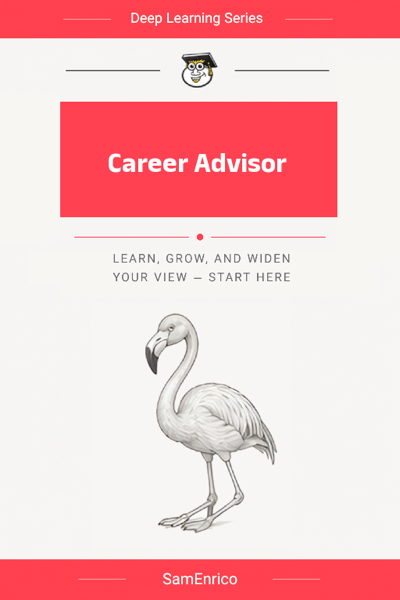
Non-FictionInformativeEducational
Career Advisor eBook
A Coursebook on Career Advisor
A Coursebook on Career Advisor
Formats
Free sample
Chapter 1: The Quiet Crisis--–- Every day, across America, millions of people sit at desks, stand at workbenches, or walk through hospital corridors doing jobs that feel nothing like the lives they imagined. They took the safe path, the practical choice, the job their parents approved of, the offer that came first. And now, somewhere between their morning coffee and their evening commute, they have arrived at a terrifying realization: they have no idea what they actually want to do with their working lives.This is not laziness. This is not a lack of ambition. This is a quiet crisis that has become the defining psychological burden of the modern worker.
According to Gallup's annual State of the Global Workplace report, only 23 percent of employees worldwide are engaged in their jobs. Seventy-seven percent are sleepwalking through their workdays, showing up physically but checking out mentally. The average person will spend ninety thousand hours at work over a lifetime. That is one-third of their waking life. And most of them will spend that time feeling vaguely dissatisfied, secretly envious of colleagues who seem to know what they are doing, and quietly convinced that everyone else has figured out something they have not.The lie they have been told is this: career clarity is something you either have or you don't.
Some people just know what they want to do. They are the lucky ones. The rest of us are stuck guessing.That lie is the reason this book exists. Career clarity is not a personality trait. It is not a gift bestowed upon a chosen few.
It is a skill, a process, a system. And like any system, it can be learned, practiced, and mastered. The people who seem to have it all figured out are not magical. They have simply stumbled upon, or been taught, the frameworks that turn confusion into direction. This book makes those frameworks available to everyone.The Hidden Role of the Career Advisor Before we talk about how you will use this book to transform your own work life, we need to understand what a career advisor actually does.
The title sounds official, even a little stuffy. It conjures images of fluorescent-lit university career centers, stacks of personality tests, and well-meaning professionals who ask, "So, what do you like to do?" But the modern practice of career advising has evolved far beyond that stereotype.A career advisor is someone who helps another person navigate the intersection of three complex systems: their own psychology, the labor market, and the decision-making process that connects the two. This is not therapy, though it borrows from therapeutic methods. This is not teaching, though it involves education. This is not recruiting, though it requires labor market knowledge.
It is a distinct professional discipline with its own frameworks, ethics, and skills.The three roles that often get confused with career advising deserve a closer look.Career counseling focuses on psychological blocks to working. A career counselor has clinical training. They help clients who are depressed, anxious, traumatized, or struggling with deep-seated identity issues that manifest as work problems. If a client cannot hold a job because of untreated bipolar disorder, they need a career counselor or a therapist, not a career advisor. The boundary is critical.
Career advisors do not treat mental illness. They refer to those who do.Academic advising focuses on course selection and degree progress. An academic advisor works within a specific educational institution and helps students navigate requirements, prerequisites, and graduation timelines. They know which classes fulfill which distribution requirements. They do not, typically, know whether those classes lead to jobs graduates actually want.Recruiting focuses on filling specific job openings for a specific employer.
A recruiter works for a company. Their job is to find candidates who match that company's needs. They are not neutral. They do not exist to serve the candidate's long-term interests, however much they might seem friendly and helpful during the interview process.Career advising sits at the center of these three circles. It looks at the whole person, not just their transcript or their resume.
It considers their values, their family history, their hidden skills, their fears, and their wildest dreams. Then it connects that internal landscape to the external reality of the labor market. And finally, it helps the person build a bridge from where they are to where they want to be.The 3-I Model: A Framework for Clarity Every effective career advising process follows a predictable arc, whether the person guiding it is a trained professional or a reader working through a book alone. That arc has three phases. I call it the 3-I Model: Inquire, Inform, Integrate.Inquire is the first phase.
It is the work of gathering information about the person making the decision. This is not the shallow "What are your hobbies?" kind of inquiry. This is deep, structured curiosity about the forces that have shaped a person's relationship to work. What did your parents do for a living, and what did they say about work around the dinner table? What jobs were celebrated in your family?
Which ones were mocked or feared? When was the last time you lost track of time because you were so absorbed in an activity, and what were you doing? What would you do with your working life if you knew you could not fail and money was not a concern?These questions are not rhetorical. They are data. They reveal the hidden architecture of a person's career assumptions.
Most people have never been asked them. Most people have never asked themselves. The Inquire phase is about excavating that buried material and bringing it into the light where it can be examined honestly.Inquire also involves assessments. The chapter on assessment tools will give you dozens of specific instruments, from formal psychological tests to simple card sorts you can print at home. But the principle is simple: you cannot know where you want to go until you know where you are.
Assessments are not destiny. They are not personality prisons. They are simply mirrors. They show you patterns you might not have noticed on your own.Inform is the second phase. It is the work of gathering accurate, timely information about the world of work.
This is where most career guides go wrong. They tell you to "follow your passion" without telling you whether that passion leads to a job that pays rent. Or they tell you to "research industries" without teaching you how to research effectively.The Inform phase is ruthlessly practical. It teaches you how to read labor market data from sources like the Bureau of Labor Statistics and O*NET. It teaches you how to spot the difference between a declining industry (print journalism, coal mining, traditional retail) and a growing one (wind turbine technology, data science, healthcare).
It teaches you how to conduct informational interviews that yield honest answers about what a job is actually like, not the polished version a recruiter would give you.Here is a truth that might sting: your dream job might not exist in the form you imagine. Or it might exist but pay poverty wages. Or it might be a field…
This is the end of the free sample. Get the eBook to keep going. Buy now
About this book
Details
- Author
- Lemus Mirella
- Publisher
- SamEnrico
- Language
- English
- Genre
- Non-Fiction, Informative, Educational
- Released
- 2026-06-03
- Pages (approx.)
- 136
- Available as
- eBook, Audiobook

Read better in the ZLOADR app
Your eBooks on your phone or tablet. Sign in with your SamEnrico account and start reading.
More by Lemus Mirella
 The Gut Brain Adrenal ConnectionLemus Mirella$11.99
 Space Mission Controller Stress CourseLemus Mirella$11.99
 Disappointment in Graduate SchoolLemus Mirella$11.99
 Comparison Addiction Recovery ManualLemus Mirella$11.99
 The Gambling Addiction After Prison GuideLemus Mirella$11.99
 The Great British Foreclosure: How a Nation Sold Its SoulLemus Mirella$11.99
 Freight Payment Audit TechLemus Mirella$12.99
 PII Redaction & Protection WorkbookLemus Mirella$12.99
 Understanding Lassa FeverLemus Mirella$17.99
 How to Become a Coating OperatorLemus Mirella$11.99
You may also like
 Hong Kong Handover 1997Dunn Johnnie$11.99
 Zumba For Postnatal Recovery CourseNeal Christian$11.99
 Zumba for BeginnersLadner Nikia$11.99
 YouTube Comment Mining GuideHumes Pandora$12.99
 Worry Box MeditationCarlin Rudy$11.99
 Workplace Stress MeditationNguyen Lynn$11.99
 Workplace Stress and Sleep RepairHawley Ivory$11.99
 Workplace Perfectionism CureDelaney Jeffry$11.99
 Workplace Injustice Anger GuideWallen Isabelle$11.99
 Work Addiction and Burnout LinkGreenwood Ester$11.99
 Women in Yoga and WellnessBeattie Galina$11.99
 Women in Stand Up ComedyChun Evangeline$11.99