
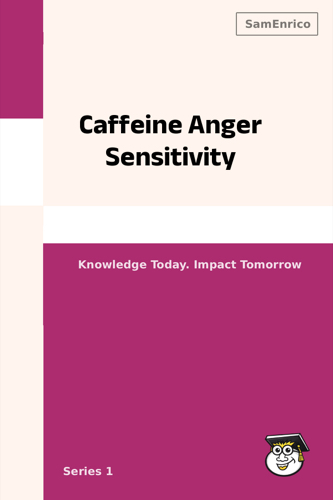
Caffeine Anger Sensitivity eBook
Examines how excessive caffeine can lower anger th
by Kemp Margo
Examines how excessive caffeine can lower anger threshold.
Formats
Free sample
Chapter 1: The Hijacked Amygdala...--–- You are not an angry person. You are a person whose brain has been chemically disarmed. That is the first and most important sentence of this book, and I want you to read it twice before you read another word.The second most important sentence is this: the difference between a calm person and a rageful person is often not character, not childhood, not trauma, and not even willpower. It is a single molecule called adenosine, and the drug you probably consumed within the last ninety minutes is currently blocking it from doing its job.Let me show you what I mean.Imagine you are driving to work. The traffic is heavier than usual.
Someone cuts you off without signaling. Your first reaction is a flash of heat in your chest, a tightening in your jaw, a pressure behind your eyes. You honk. You mutter something unkind. By the time you park, you are still carrying that heat.
Ten minutes later, a coworker asks a perfectly reasonable question, and you snap at them. You spend the rest of the morning wondering why you are so irritable, so reactive, so unlike the person you believe yourself to be.Now imagine the same scenario, but you skipped your morning coffee. The traffic is still heavy. The same driver cuts you off. But instead of heat, you feel annoyance, a mild frustration that passes within seconds.
You arrive at work calm. Your coworker asks their question, and you answer patiently. By lunch, you have forgotten the incident entirely.Same person. Same traffic. Same coworker.
Different neurochemistry.This chapter is about why that happens. It is about the molecule that keeps you calm, the drug that disables it, and the small almond-shaped structure in your brain that decides, in milliseconds, whether a minor inconvenience becomes a full-blown explosion.The Brain's Brake Pedal: Adenosine Every second of your waking life, your brain is producing a neurotransmitter called adenosine. You have probably never heard of it, which is a shame, because adenosine is the unsung hero of your emotional stability. While your attention is captured by the more famous neurotransmitters—dopamine the pleasure molecule, serotonin the mood regulator, adrenaline the fight-or-flight fuel—adenosine is quietly doing the most important job of all: it is calming you down.Here is how it works.Adenosine molecules float through your brain and attach to specialized receptors on the surface of your neurons. Think of these receptors as parking spots.
When adenosine parks in one of these spots, it sends a signal to the neuron to slow down. Fire less frequently. Take a breath. The result is a cascade of calming effects: your heart rate stabilizes, your blood pressure lowers, your muscles relax, and most importantly for our purposes, your amygdala—the brain's fear and anger center—receives a steady stream of inhibitory signals telling it to stay in its lane.This is why adenosine is often called the brain's brake pedal. Without it, your neurons would fire at maximum speed all the time, and you would live in a permanent state of agitation, hypervigilance, and exhaustion.
Adenosine is what allows you to sit in traffic, wait in line, listen to a slow talker, and tolerate the thousand small frustrations of daily life without losing your mind.But adenosine has a built-in clock. The longer you are awake, the more adenosine your brain produces. This is the biological basis of sleep pressure. By late afternoon, your adenosine levels are high, your neurons are slowed down, and you feel drowsy. When you finally sleep, your brain clears out the accumulated adenosine, and you wake up refreshed.That is the natural cycle.
Enter caffeine.The Caffeine Molecule: A Perfect Impersonator Caffeine is a chemical marvel of evolutionary trickery. The coffee plant evolved caffeine as a pesticide—it paralyzes and kills insects that try to eat its leaves and beans. But in the human brain, caffeine does something entirely different and far more insidious. It looks almost exactly like adenosine.I want you to picture a lock and a key. The lock is the adenosine receptor on your neuron.
The natural key is adenosine, which fits perfectly and turns the lock to activate the calming signal. Caffeine is a counterfeit key. It fits into the same lock, but it does not turn it. Instead, it just sits there, blocking the lock so that the real key cannot get in.This is called competitive antagonism, and it is the single most important biochemical fact in this entire book.When you drink coffee, tea, or an energy drink, caffeine travels through your bloodstream, crosses the blood-brain barrier, and begins occupying adenosine receptors. The real adenosine molecules are still there, floating around, but they have nowhere to park.
They cannot deliver their calming signal. Your neurons, starved of inhibition, begin firing faster and more easily.Now here is where the anger connection becomes clear.Your amygdala, the brain's threat-detection and anger-response center, is normally kept on a short leash by adenosine. The constant low-level inhibitory signals tell your amygdala: "Not everything is an emergency. That person who looked at you funny? Not a threat.
That slow internet connection? Not a threat. That question from your partner? Definitely not a threat."But when caffeine blocks those adenosine receptors, the leash is removed. Your amygdala is no longer receiving its regular stream of calming instructions.
It becomes hyperexcitable, primed to react, waiting for a trigger. And because the amygdala is one of the oldest and fastest parts of your brain, it does not wait for your logical prefrontal cortex to weigh in. It reacts in milliseconds.This is the mechanism behind what I call the Amygdala Hijack—a term borrowed from emotional intelligence research but given a sharper biochemical edge here. A hijack occurs when the amygdala responds to a stimulus with full alarm before the prefrontal cortex has even had time to process whether the alarm is justified.Under normal conditions, the adenosine brake keeps the amygdala's alarm threshold high. A major insult is required to set it off.
Under caffeine, with the brake removed, the threshold drops dramatically. A minor annoyance—a slow website, a dropped pen, a question asked twice—can now trigger the same neural cascade as a genuine threat.This is why you find yourself screaming at a computer screen. This is why you honk at a driver who made an honest mistake. This is why you snap at a child who is just being a child. Your brain has not become evil.
Your brain has been chemically disarmed.The Dose-Response Curve: From Mild Irritation to Explosive Rage Not all caffeine consumption leads to rage. The relationship between caffeine and anger follows a dose-response curve, and understanding this curve is essential to understanding your own sensitivity.At low doses—roughly 20 to 50 milligrams, the amount in a cup of green tea or a small piece of dark chocolate—caffeine occupies only a small percentage of your adenosine receptors. The brake is still mostly engaged. Most people experience a mild increase in alertness without significant emotional side effects. In fact, at this low dose, some people actually report feeling calmer, likely…
This is the end of the free sample. Get the eBook to keep going. Buy now
About this book
Details
- Author
- Kemp Margo
- Publisher
- SamEnrico
- Language
- English
- Genre
- Non-Fiction, Self-Help, Caffeine
- Released
- 2026-06-09
- Pages (approx.)
- 132
- Available as
- eBook, Audiobook

Read better in the ZLOADR app
Your eBooks on your phone or tablet. Sign in with your SamEnrico account and start reading.
More by Kemp Margo
 Breaking Binge Eating CycleKemp Margo$11.99Breaking Binge Eating CycleKemp Margo$11.99
 Menopause Vision Changes GuideKemp Margo$11.99
 SAS Arctic Warfare CourseKemp Margo$11.99
 Idea Parking Lot Management GuideKemp Margo$11.99
 The Green Book of Gold: The Untold Wealth of Black America's Hidden MogulsKemp Margo$11.99
 The Cursed Crown of the Aztecs: Mexico’s 1970 World Cup RedemptionKemp Margo$11.99
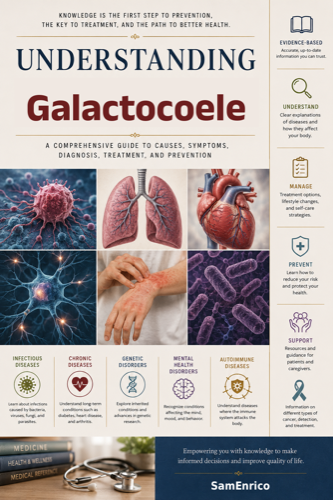 Understanding GalactocoeleKemp Margo$17.99
 How to Start a Azoic Dye Business (Beginners Guide)Kemp Margo$11.99
 Group ESL Teaching ChinaKemp Margo$12.99
 Google AI for Agriculture WorkbookKemp Margo$12.99
 Cliff DivingKemp Margo$11.99
You may also like
 Caffeine Overload Sleep ResetDolan Jenae$11.99
 Food Addiction and Caffeine InteractionReinhardt Janessa$11.99
 Caffeine Anger ManagementKnox Sheena$11.99
 Caffeine Sleep Memory GuideLee Gustavo$11.99
 Caffeine Sensitivity SleepEverett Rosaria$11.99
 Caffeine and Memory SleepJean Malia$11.99
 Caffeine Sleep MemoryOutlaw Elmo$11.99
 Workaholic Caffeine DependenceCalloway Barton$11.99
 Caffeine Timing Sleep GuideSpringer Douglass$11.99
 Caffeine Emotional RegulationAckerman Kirby$11.99
 Self Hypnosis for Coffee ReductionOwen Sabrina$11.99
 Self Hypnosis for Caffeine ReductionMattson Verona$11.99