
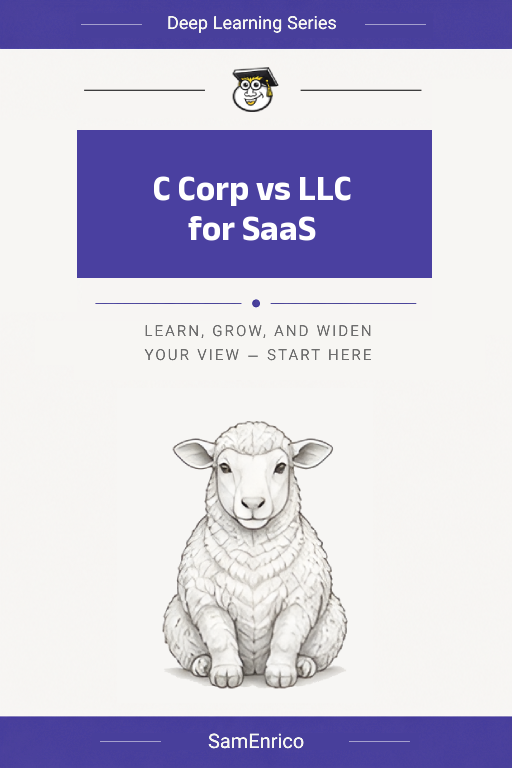
Non-FictionStartup GuideEntity Selection
C Corp vs LLC for SaaS
Choose entity for SaaS startup. Subscription reven
by Houser Delta
Choose entity for SaaS startup. Subscription revenue, VC funding, and international customers.
Formats
About this book
Free sample
Chapter 1: The Entity Trap--It was 3:47 AM when Michael's phone buzzed with an email that would cost him $3.4 million.He had just closed a 40millionacquisitiondealforhis B2BSaa Scompany—asleekanalyticsplatformthathadgrownto40 million acquisition deal for his B2B Saa S company—a sleek analytics platform that had grown to 40millionacquisitiondealforhis B2BSaa Scompany—asleekanalyticsplatformthathadgrownto6.2 million in annual recurring revenue over five years. The buyer, a publicly traded enterprise software giant, had signed the non-binding term sheet. The lawyers were drafting definitive agreements. The champagne was chilling.Then the email arrived from his M&A counsel: "Urgent: Please call before counter-signing. Tax structure issue."The "issue" was not his code, his team, his churn rate, or his customer concentration.
It was the legal entity he had chosen seven years earlier on Legal Zoom in under thirty minutes while eating a cold pizza.Michael had formed a limited liability company because a friend told him it was "cheaper and easier." And for seven years, it was. He paid lower initial fees. He filed simple tax returns on Schedule C. He never attended a board meeting or maintained formal minutes. He thought he had outsmarted the system.But now, at the moment of his largest financial event, the LLC was about to extract its toll with compound interest.The acquiring company's tax team had run the numbers.
Because Michael's company was an LLC—a pass-through entity for tax purposes—the acquisition would be structured as a partnership interest purchase rather than a qualified asset sale. Under Section 1060 of the Internal Revenue Code, the buyer could not "step up" the tax basis of his code, customer relationships, brand goodwill, or other intangible assets. Their after-tax internal rate of return on the acquisition dropped by nearly 9 percent.Their solution? Reduce the purchase price by $3.4 million to compensate for the unfavorable tax treatment.Michael had three choices: accept 36.6millioninsteadof36.6 million instead of 36.6millioninsteadof40 million, walk away from the deal entirely and lose his largest liquidity event, or attempt a frantic last-minute conversion from LLC to C Corporation—which would trigger a taxable "deemed asset sale" under Section 754 of the Internal…
This is the end of the free sample. Get the eBook to keep going. Buy now
Contents
- Chapter 1
- Chapter 2
- Chapter 3
- Chapter 4
- Chapter 5
- Chapter 6
- Chapter 7
- Chapter 8
- Chapter 9
- Chapter 10
- Chapter 11
- Chapter 12
Details
- Author
- Houser Delta
- Publisher
- SamEnrico
- Language
- English
- Genre
- Non-Fiction, Startup Guide, Entity Selection
- Released
- 2026-06-01
- Pages (approx.)
- 150
- Available as
- eBook, Audiobook

Read better in the ZLOADR app
Your eBooks on your phone or tablet. Sign in with your SamEnrico account and start reading.
More by Houser Delta
 Meeting Standup Efficiency GuideHouser Delta$11.99
 Teen Trade School ConfidenceHouser Delta$11.99
 Twitter Status AnxietyHouser Delta$11.99
 Skin Aging and Menopause ConnectionHouser Delta$11.99
 The Joy Audit WorkbookHouser Delta$11.99
 The Great Emoji Heist: How a Tiny Symbol Changed the WorldHouser Delta$11.99
 Understanding Yim–ebbin SyndromeHouser Delta$17.99
 Freelance Bookkeeping for DaycaresHouser Delta$12.99
 Ultimate Handbook Guide to Brasilia : (Brazil) Travel GuideHouser Delta$11.99
 The TikTok CurseHouser Delta$11.99
You may also like
 Hong Kong Handover 1997Dunn Johnnie$11.99
 Zumba For Postnatal Recovery CourseNeal Christian$11.99
 Zumba for BeginnersLadner Nikia$11.99
 YouTube Comment Mining GuideHumes Pandora$12.99
 Worry Box MeditationCarlin Rudy$11.99
 Workplace Stress MeditationNguyen Lynn$11.99
 Workplace Stress and Sleep RepairHawley Ivory$11.99
 Workplace Perfectionism CureDelaney Jeffry$11.99
 Workplace Injustice Anger GuideWallen Isabelle$11.99
 Work Addiction and Burnout LinkGreenwood Ester$11.99
 Women in Yoga and WellnessBeattie Galina$11.99
 Women in Stand Up ComedyChun Evangeline$11.99