
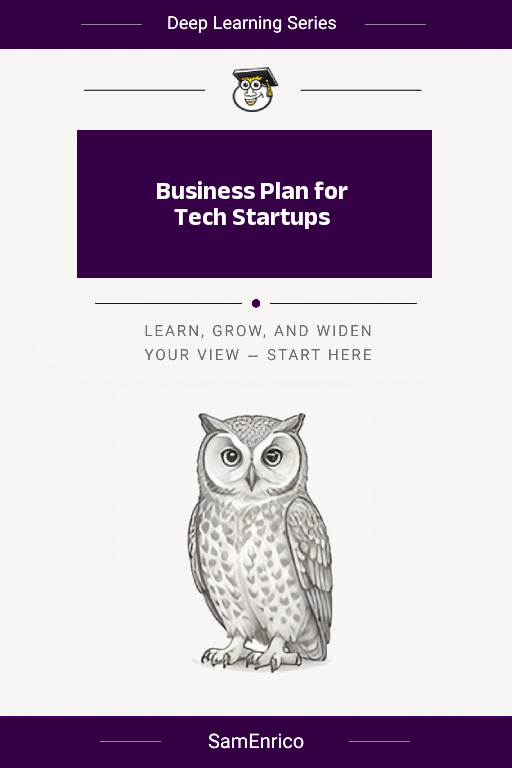
Non-FictionFirst 30 DaysTechnology
Business Plan for Tech Startups eBook
Create a one-page business plan for hardware, soft
Create a one-page business plan for hardware, software, or deep tech ventures with tech risk and patent milestones.
Formats
Free sample
Chapter 1: The Hard Truth--–- Most entrepreneurs believe that a business plan is a business plan. They have been told, repeatedly, that the fundamentals of strategy, marketing, and finance apply equally well whether you are selling a meditation app or building a nuclear fusion reactor. This is a lie. It is a lie that has burned through billions of dollars in venture capital, sent countless Ph.D. founders into unnecessary bankruptcy, and left hardware engineers wondering why the advice they read in best-selling business books feels as useful as a surfboard in a desert.The lie has a name.
It is called the Saa S default.Software-as-a-Service has become the unspoken template for nearly every business book published in the last fifteen years. These books assume that you can write code on a laptop, push updates overnight, acquire customers through a self-service funnel, and scale with near-zero marginal cost. They assume that the biggest risk is product-market fit, not physics. They assume that your intellectual property is a competitive moat, not a manufacturing yield problem. They assume that your team needs growth hackers, not supply chain specialists.If you are building hardware, deep tech, or anything that involves atoms rather than bits, those assumptions will kill you.This chapter dismantles the Saa S default and replaces it with a framework built for the reality of atoms: high capital expenditures, physical supply chains, regulatory approvals, manufacturing yields, and the unforgiving fact that you cannot hotfix a bridge or push a software update to a faulty battery cell.
By the end of this chapter, you will understand why the most successful hard tech ventures—NVIDIA, Tesla, Moderna—operated on decade-long timelines while the software world talked about "blitzscaling." You will also meet the central artifact of this book: the Technical One-Pager, a single-page strategic summary that will replace the sprawling, irrelevant business plans that investors throw in the trash.The Saa S Default: A Silent Killer Let us begin with a thought experiment. Imagine two founders. One is building a project management tool. The other is building a solid-state battery for electric vehicles.The project management founder writes code on a laptop. She deploys updates three times per week.
She acquires customers through a free trial and a credit card form. Her marginal cost per additional user is essentially zero—a few cents for server time. If a feature breaks, she rolls back the update and apologizes on Twitter. Her biggest risk is that a competitor builds something similar faster. Her biggest asset is speed.The battery founder cannot build anything on a laptop.
He needs a wet lab, glove boxes, electrode coaters, and a supply of lithium metal that is controlled by three suppliers on two continents. A single experimental run costs $50,000 in materials and technician time. If his first prototype works, he is not done; he must prove that the 101st prototype works identically. If his battery catches fire during testing, he cannot roll back—he has a literal fire. His biggest risk is not competition; it is physics.
His biggest asset is not speed; it is reproducibility.Now ask yourself: which of these two founders would benefit from reading a book on the Lean Startup method? Which one would find value in a chapter on "growth hacking" or "viral loops"? The answer is obvious, and yet the vast majority of business advice is written for the first founder and consumed by the second.This is not an accident. The software industry has produced an enormous number of successful exits, high-profile IPOs, and charismatic founders. The media loves these stories because they are fast, dramatic, and easy to explain.
Hardware stories are slow, complicated, and full of jargon about yields and thermal coefficients. The result is a systematic bias in the business literature: the Saa S default has become the only default.The Thinking Machine: A Ten-Year Overnight Success To understand what a proper hard tech business plan looks like, we must study a company that ignored the Saa S default entirely. That company is NVIDIA.In 1999, NVIDIA released the Ge Force 256, a chip that the company called the world's first GPU. At the time, the prevailing wisdom in Silicon Valley was that hardware was a commodity and that the real money was in software. NVIDIA's founders believed otherwise.
They bet the company on a single idea: that accelerated parallel computing would eventually become as essential as the CPU.That bet took ten years to pay off.For the first half of that decade, NVIDIA's primary market was PC gaming—a lucrative but narrow niche. Investors asked why the company was not pivoting to software. Competitors like Intel and AMD dismissed GPUs as a toy. Meanwhile, NVIDIA kept investing in architecture, compiler software, and developer tools. They filed patents relentlessly.
They built a moat not through network effects but through raw technical complexity and years of accumulated intellectual property.In 2012, the world caught up. Alex Net, a deep learning model, was trained on two NVIDIA GPUs. The result was a breakthrough in computer vision that launched the modern AI revolution. Suddenly, everyone needed GPUs. NVIDIA's decade-long bet became the most valuable technology franchise on earth.The lesson of NVIDIA is not about patience, though patience was required.
The lesson is that hard tech ventures succeed when they align their business plan with the actual physics and engineering timelines of their product. NVIDIA did not try to "move fast and break things." They moved methodically and built things that could not be broken by a competitor's weekend hackathon.Why Traditional Business Plans Fail Hard Tech Before we introduce the solution, we must understand why the traditional business plan is so poorly suited to hard tech. A standard business plan template—the kind you find in books, on VC websites, or in MBA programs—typically includes the following sections:Executive Summary Company Overview Market Analysis Competitive Landscape Product Description Marketing and Sales Plan Operations Plan Management Team Financial Projections Funding Request Each of these sections contains an implicit assumption that is false for hard tech.Market Analysis assumes that you can estimate total addressable market (TAM) before you have a working product. For a new battery chemistry, your TAM is not "$100 billion." Your TAM is "the subset of EV manufacturers that can tolerate our cycle life, thermal range, and cost structure"—a set you cannot know until you have a prototype.Competitive Landscape assumes that your competitors are other startups. In hard tech, your competitors are often incumbents with trillion-dollar market caps, century-old supply chains, and patent portfolios that would fill a warehouse.
You are not competing with another lab in Berkeley. You are competing with Samsung SDI, CATL, and LG Energy Solution.Financial Projections assumes that you can forecast revenue with any accuracy. A hardware startup's revenue is a function of yield, supplier lead times, regulatory approvals, and customer qualification cycles—none of which are linear or predictable. A five-year forecast with 32% CAGR is not a plan; it is a fantasy.Marketing and Sales Plan assumes that you have a direct channel to customers. In hard tech, your customers are often large enterprises with procurement cycles measured in years.
You do not "acquire" an automotive OEM. You qualify over eighteen months, pass their supplier audit, and then maybe get…
This is the end of the free sample. Get the eBook to keep going. Buy now
About this book
Details
- Author
- Hendrickson Velva
- Publisher
- SamEnrico
- Language
- English
- Genre
- Non-Fiction, First 30 Days, Technology
- Released
- 2026-05-29
- Pages (approx.)
- 151
- Available as
- eBook, Audiobook

Read better in the ZLOADR app
Your eBooks on your phone or tablet. Sign in with your SamEnrico account and start reading.
More by Hendrickson Velva
 The Self Talk for End of LifeHendrickson Velva$11.99
 Mediterranean Meal PrepHendrickson Velva$11.99
 TM for Emergency DispatchersHendrickson Velva$11.99
 Active Listening For Technical SupportHendrickson Velva$11.99
 The CBT for Menopause InsomniaHendrickson Velva$11.99
 The Iron Masters of Meroë: Forging the Heart of AfricaHendrickson Velva$11.99
 Understanding Transplacental InfectionsHendrickson Velva$17.99
 How to Become a Platen-press-operator ApprenticeHendrickson Velva$11.99
 OpenToonz Replaces Toon BoomHendrickson Velva$12.99
 Waterjet Powered Hover BoardHendrickson Velva$11.99
You may also like
 Hong Kong Handover 1997Dunn Johnnie$11.99
 Zumba For Postnatal Recovery CourseNeal Christian$11.99
 Zumba for BeginnersLadner Nikia$11.99
 YouTube Comment Mining GuideHumes Pandora$12.99
 Worry Box MeditationCarlin Rudy$11.99
 Workplace Stress MeditationNguyen Lynn$11.99
 Workplace Stress and Sleep RepairHawley Ivory$11.99
 Workplace Perfectionism CureDelaney Jeffry$11.99
 Workplace Injustice Anger GuideWallen Isabelle$11.99
 Work Addiction and Burnout LinkGreenwood Ester$11.99
 Women in Yoga and WellnessBeattie Galina$11.99
 Women in Stand Up ComedyChun Evangeline$11.99