
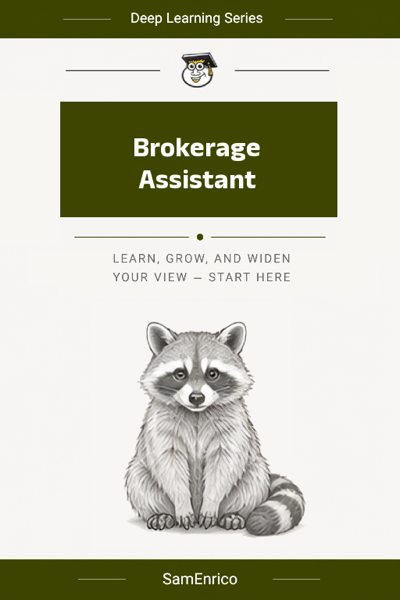
Non-FictionInformativeEducational
Brokerage Assistant eBook
A Coursebook on Brokerage Assistant
A Coursebook on Brokerage Assistant
Formats
Free sample
Chapter 1: The 8:32 AM Reckoning--– The phone rings at 8:32 AM on a Tuesday. You have been at your desk for exactly four minutes. Your coffee is still hot. Your inbox already shows seventeen unread messages. The broker you support—let us call him Steve—is already on another line, waving a pink message slip at you from across the bullpen.
He is mouthing something. You cannot read lips. You pick up the phone.The voice on the other end is a client. He is angry. He says the trade you confirmed yesterday never settled.
He says his account is showing a loss he did not authorize. He says, and you will remember this phrase for the rest of your career, "I am calling my lawyer."You have been a Brokerage Assistant for eleven months. No one trained you for this call. No one gave you a script. The compliance manual is four hundred pages long and lives in a PDF you have never opened.
Steve is now gesturing wildly at a stack of renewal notices on your desk. The underwriter from yesterday's binding is emailing again, demanding a signature that is still sitting in Steve's outbox.Your coffee is cold. Your heart is pounding. And somewhere in the back of your mind, a voice asks: Is this really what I signed up for?This chapter is the answer to that question. It is also a warning, a map, and a promise.
By the time you finish reading these pages, you will understand exactly what a Brokerage Assistant actually does, why the role is nothing like being a secretary, and how mastering the first thirty minutes of your day can separate the indispensable from the invisible.But first, you need to know what you are actually protecting.The Three Brokerage Worlds (And Where You Fit)Most people outside the industry think "brokerage" means one thing: a room full of traders yelling at screens. That is a movie. The reality is messier, more varied, and much more dependent on people like you.The brokerage ecosystem divides into three distinct models, each with its own rhythms, regulations, and risks. Understanding which one you work in—or might move into—is the foundation of everything that follows.Insurance Brokerage: The Paper Chase Insurance brokerages are the oldest form of the trade. A client needs to transfer risk—a factory that could burn down, a ship that could sink, a doctor who could be sued—and a broker finds an insurer willing to take that risk for a price.
The Brokerage Assistant in this world lives and dies by the renewal calendar.Your day revolves around binders, certificates, and suspense dates. A binder is a temporary proof of coverage, issued when the client needs protection immediately but the full policy paperwork is still being processed. A certificate of insurance is a one-page summary that third parties—landlords, general contractors, lenders—demand before they will do business with your client. A suspense date is the deadline you set for yourself when something cannot be completed today.The insurance assistant's greatest fear is the gap. A gap is any period between when coverage should have started and when it actually did.
A one-day gap in a workers' compensation policy can result in a six-figure claim being denied, a lawsuit against the brokerage, and a very uncomfortable conversation with the Errors and Omissions insurance carrier. Your job is to make sure gaps never happen.Securities Brokerage: The Trade Factory Securities brokerages are what most people imagine when they hear the word "brokerage." Clients buy and sell stocks, bonds, options, and exchange-traded funds through a broker who executes the trades. The Brokerage Assistant in this world lives and dies by the settlement clock.Your day revolves around trade affirmations, fail resolution, and the trade blotter. Trade affirmation is the process of confirming that both sides of a trade agree on the terms—security, quantity, price, settlement date. A fail occurs when one side does not deliver what they promised by the settlement deadline.
The trade blotter is a chronological log of every transaction, the single most important document in a securities brokerage during an audit.The securities assistant's greatest fear is the unaffirmed trade. If a trade is not affirmed by the cutoff time—usually 2:00 PM or 4:00 PM depending on the clearing firm—it may fail to settle. A failed settlement can trigger fines, margin calls, and client anger. Your job is to make sure every trade is affirmed before the clock runs out.Wealth Management: The Relationship Bridge Wealth management is the hybrid child of insurance and securities. High-net-worth clients have complex portfolios that include stocks, bonds, insurance products, annuities, and alternative investments.
The Brokerage Assistant in this world lives and dies by the client file.Your day revolves around onboarding, reporting, and compliance documentation. New clients must go through Know Your Customer and Anti-Money Laundering checks before they can open an account. Existing clients receive quarterly and annual reports that must be accurate to the penny. Every recommendation the advisor makes must be documented, dated, and signed.The wealth management assistant's greatest fear is the undocumented recommendation. If a client later claims the advisor recommended an unsuitable investment and there is no written record of the conversation, the brokerage is exposed to arbitration.
Your job is to make sure every conversation leaves a paper trail.This book focuses primarily on insurance brokerage, with sidebars and parallel notes for securities assistants. Wealth management and real estate brokerage assistants will find significant portions relevant, but should also seek specialized resources for their unique compliance requirements.Front, Middle, and Back Office: Where the Assistant Lives Every brokerage, regardless of type, organizes itself into three functional zones. The boundaries between these zones are porous, and the Brokerage Assistant is the person who moves through all of them.Front Office: The Client Face The front office is where revenue is generated. Brokers, advisors, producers, and salespeople sit here. They talk to clients, negotiate terms, close deals, and collect commissions.
The front office is loud, competitive, and emotionally demanding. Brokers in the front office are judged by one metric above all others: production.The Brokerage Assistant touches the front office constantly. You answer the broker's phone when they are on another line. You schedule their client meetings. You prepare the one-page summaries they take into those meetings.
You listen to their rants after a deal falls through and celebrate with them when a binder finally signs.But here is the critical distinction: you are not front office. You do not generate revenue. You do not have a production quota. Your value is measured differently—by what you prevent, not what you produce.Middle Office: The Risk Wall The middle office is where risk is monitored and controlled. Compliance officers, risk analysts, and operations managers sit here.
They set limits, review trades, flag exceptions, and enforce rules. The middle office is quiet, analytical, and often adversarial to the front office. Brokers see the middle office as the "sales prevention department."The Brokerage Assistant touches the middle office every time you flag a limit breach, escalate a compliance issue, or ask for a second pair of eyes…
This is the end of the free sample. Get the eBook to keep going. Buy now
About this book
Details
- Author
- Choi Bettyann
- Publisher
- SamEnrico
- Language
- English
- Genre
- Non-Fiction, Informative, Educational
- Released
- 2026-06-02
- Pages (approx.)
- 146
- Available as
- eBook, Audiobook

Read better in the ZLOADR app
Your eBooks on your phone or tablet. Sign in with your SamEnrico account and start reading.
More by Choi Bettyann
 Fleet White JonBenét SuspectChoi Bettyann$11.99
 Remote Student GuideChoi Bettyann$11.99
 Relapse Prevention Strategies That WorkChoi Bettyann$11.99
 Baja Peninsula LeaderChoi Bettyann$11.99
 The Blood Ritual Murders: A Killer’s Lost IdentityChoi Bettyann$11.99
 Unequal Co Founder EquityChoi Bettyann$12.99
 Learn to Play the CornettChoi Bettyann$11.99
 How to Start a Caramel Sweets Business (Beginners Guide)Choi Bettyann$11.99
You may also like
 Hong Kong Handover 1997Dunn Johnnie$11.99
 Zumba For Postnatal Recovery CourseNeal Christian$11.99
 Zumba for BeginnersLadner Nikia$11.99
 YouTube Comment Mining GuideHumes Pandora$12.99
 Worry Box MeditationCarlin Rudy$11.99
 Workplace Stress MeditationNguyen Lynn$11.99
 Workplace Stress and Sleep RepairHawley Ivory$11.99
 Workplace Perfectionism CureDelaney Jeffry$11.99
 Workplace Injustice Anger GuideWallen Isabelle$11.99
 Work Addiction and Burnout LinkGreenwood Ester$11.99
 Women in Yoga and WellnessBeattie Galina$11.99
 Women in Stand Up ComedyChun Evangeline$11.99