
Non-FictionHistoryDevelopment Economics
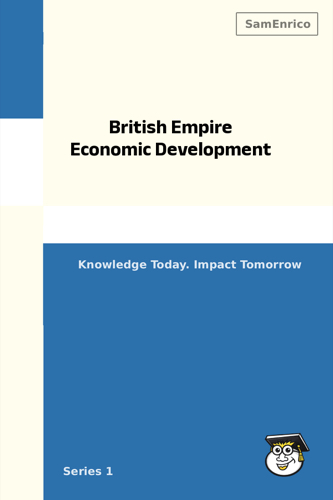
British Empire Economic Development
Controversial examination of whether colonies bene
by Rowe Van
Controversial examination of whether colonies benefited from British rule.
Formats
About this book
Free sample
Chapter 1: The Bengal Transfer...--–- The year is 1765. A clerk in a cramped London office dips his quill into an inkwell and records a transaction that will alter the economic trajectory of two continents. The document before him is not a treaty, not a declaration of war, but something far more mundane and far more powerful: a tax receipt. It acknowledges that the East India Company, a private corporation with its own army and navy, has just acquired the right to collect land revenue from the province of Bengal, a territory the size of France with twenty million inhabitants. The Mughal Emperor, defeated in battle, has signed away the fiscal sovereignty of his richest province.
The clerk does not celebrate. He does not mourn. He simply writes the number: £4,000,000 – the annual tax revenue of Bengal, now payable to a board of directors in Leadenhall Street.This single act of accounting marks the pivot from trade to empire. For the first century of its existence, the East India Company had been exactly what its name suggested: a trading company. It bought spices in Indonesia, textiles in India, and tea in China, paying for these goods with silver shipped from London.
The balance of payments ran against Britain; silver flowed east. But after the Battle of Plassey in 1757 and the formal grant of the Diwani (tax collection rights) in 1765, the arithmetic reversed. The Company now collected taxes from Indian peasants and used that revenue to buy Indian textiles and tea – which it then sold in London for silver. The silver stopped flowing east. Instead, it accumulated in London.
A British shareholder who had never set foot in India could now live on the dividends extracted from a village he could not find on a map.This chapter argues that the economic logic of the British Empire was established not in the factories of Manchester or the docks of Liverpool, but in the tax offices of Bengal. Mercantilism – the seventeenth-century doctrine that colonies existed for the enrichment of the mother country – was not an abstract theory. It was a machine, and…
This is the end of the free sample. Get the eBook to keep going. Buy now
Contents
- Chapter 1
- Chapter 2
- Chapter 3
- Chapter 4
- Chapter 5
- Chapter 6
- Chapter 7
- Chapter 8
- Chapter 9
- Chapter 10
- Chapter 11
- Chapter 12
Details
- Author
- Rowe Van
- Publisher
- SamEnrico
- Language
- English
- Genre
- Non-Fiction, History, Development Economics
- Released
- 2026-06-06
- Pages (approx.)
- 115
- Available as
- eBook, Audiobook

Read better in the ZLOADR app
Your eBooks on your phone or tablet. Sign in with your SamEnrico account and start reading.
More by Rowe Van
 The Self Archetype in DreamsRowe Van$11.99
 Anger And Bipolar Disorder GuideRowe Van$11.99
 Georgian Crime BossesRowe Van$11.99
 The Finished Goods Safety StockRowe Van$11.99
 Passive Aggressive Work BehaviorRowe Van$11.99
 Mobility Loss Self EsteemRowe Van$11.99
 Procrastination for Project ManagersRowe Van$11.99
 The Rebel Artists of 1980s Melbourne: How Graffiti and Streetwear Defied AuthorityRowe Van$11.99
 The Infamous Infanticide Act: How Victorian Britain Reformed the Law on Mothers Who KillRowe Van$11.99
 The Photographer's Guide to Night PhotographyRowe Van$11.99
 How to Start a Hobby in Button CollectingRowe Van$11.99
 Horse Bean: Fava Bean HarvestingRowe Van$11.99
You may also like
 Hong Kong Handover 1997Dunn Johnnie$11.99
 Zumba For Postnatal Recovery CourseNeal Christian$11.99
 Zumba for BeginnersLadner Nikia$11.99
 YouTube Comment Mining GuideHumes Pandora$12.99
 Worry Box MeditationCarlin Rudy$11.99
 Workplace Stress MeditationNguyen Lynn$11.99
 Workplace Stress and Sleep RepairHawley Ivory$11.99
 Workplace Perfectionism CureDelaney Jeffry$11.99
 Workplace Injustice Anger GuideWallen Isabelle$11.99
 Work Addiction and Burnout LinkGreenwood Ester$11.99
 Women in Yoga and WellnessBeattie Galina$11.99
 Women in Stand Up ComedyChun Evangeline$11.99