
Non-FictionSelf-HelpNon-Judgment
Breath Counting Reset eBook
Restarts count when mind wanders without judgment.
by Ohara Vernie
Restarts count when mind wanders without judgment.
Formats
Free sample
Chapter 1: The One That Returns--You are not bad at this. Let’s start there, because if you’ve ever tried to meditate, count your breaths, or just “clear your mind,” you’ve probably concluded that you’re uniquely terrible at it. Your mind wandered to what you’re having for dinner. You started planning tomorrow’s to-do list. You replayed an argument from three years ago.
And then you thought: “See? I can’t do this. My brain is broken.”Your brain is not broken. Your brain is doing exactly what brains evolved to do. The problem isn’t that your mind wanders.
The problem is that no one told you that the wandering isn’t the failure—it’s the signal. And no one told you that the secret to the entire practice is not a high number or a blank mind. It’s one number. The smallest number there is. One.This chapter introduces you to the only practice you’ll ever need: counting your breaths from one to ten, and when your mind wanders—which it will, constantly, forever—you simply start over at one.
No punishment. No judgment. Just one. That’s it. That’s the whole thing.
And it will change your life.The Practice You Can Do Right Now Let’s learn the practice immediately. No preamble. No philosophy. You can do this in the next two minutes, right where you’re sitting.Find a comfortable position. You can sit in a chair, on a couch, on the floor—wherever you are right now.
Keep your back reasonably straight but not rigid. Uncross your legs if that’s comfortable. Rest your hands on your thighs or in your lap. You can close your eyes or keep them open with a soft, unfocused gaze. There’s no magic posture.
Just one that allows you to breathe freely without falling asleep.Now, take a normal breath. Don’t force it. Don’t try to breathe deeply unless that happens naturally. Just breathe the way you always breathe. Your body has been breathing your whole life without your help.
Trust it.As you breathe in, silently say the number “one” to yourself. As you breathe out, say “one” again. That’s one complete breath.On your next inhale: “two.” Next exhale: “two.”Continue until you reach ten. Then start again at one.That’s the entire practice. It takes about sixty seconds to count ten breaths, maybe less.
Two minutes will get you through two or three cycles.But here’s what will happen. By breath three, you’ll think about whether you’re doing it right. By breath five, you’ll remember something you need to do tomorrow. By breath seven, you’ll be mentally writing a text message. Then, at some point—maybe ten seconds later, maybe two minutes later—you’ll realize: “Oh, I lost count.
I have no idea what number I was on.”What do you do? You start over at one.Not “I failed.” Not “I’m bad at this.” Not “I should be better by now.” Just: one.This is the Breath Counting Reset. And the reset—the act of noticing that you’ve drifted and gently beginning again—is not a bug in the system. It is the entire system.The Lie You’ve Been Told About Meditation Most people have been sold a fantasy about meditation. They imagine a monk on a mountaintop, perfectly still, mind completely blank, radiating serenity.
They try to replicate that. Their mind wanders. They conclude that meditation doesn’t work for them.That fantasy is a lie. The monk’s mind wanders too. The difference isn’t that advanced meditators have stopped wandering.
The difference is that they’ve stopped being surprised by it. They notice the wandering sooner, and they return with less drama. That’s all. They’ve just gotten faster at resetting.Think of it like learning to ride a bike. When you first started, you fell constantly.
Each fall was not a failure. Each fall was a data point. You learned what balance felt like by losing it and finding it again. Meditation is exactly the same. Each time you lose count and reset, you’re building the muscle of attention.
You’re teaching your brain what focus feels like by losing it and coming back.The only failure is not starting. The only success is beginning again.Meet The Drift: Your New (Not-Enemy)Let’s give this wandering mind a name. Let’s call it The Drift.The Drift is the automatic, unconscious movement of your attention from one thing to the next. It’s the reason you walk into a room and forget why. It’s the reason you’re reading this sentence and suddenly thinking about something else.
It’s the reason you lie awake at 3 AM replaying old embarrassments.The Drift is not your enemy. It is not a flaw. It is not a sign that you’re broken. The Drift is an ancient survival mechanism. Your ancestors needed to notice the rustle in the bushes while they were focused on gathering food.
A hyper-focused ancestor would have been eaten by a predator. The Drift kept you alive.The problem isn’t The Drift itself. The problem is that modern life has weaponized it. Your phone buzzes. An email arrives.
A notification appears. Your brain has been hijacked by algorithms designed to exploit The Drift. You’re not weak for checking your phone a hundred times a day. You’re a human being with an ancient brain in a world that has hacked that brain.Breath counting is not about stopping The Drift. That’s impossible.
Breath counting is about changing what you do when you notice you’ve drifted. Instead of reacting automatically—checking your phone, spiraling into worry, snapping at a friend—you pause. You reset. You return to one.And every time you do that, you’re widening a tiny gap. The gap between the trigger and your response.
That gap is where freedom lives.The One That Returns Here’s the most important thing you’ll learn in this entire book: counting to ten is the training wheels. The real practice is returning to one.Most people get this backward. They think the goal of breath counting is to reach ten without losing count. They turn it into a game, a competition with themselves. They feel frustrated when they can’t get past three or four.
They feel proud when they finally hit ten. But reaching ten isn’t the point. Reaching ten is just a way to keep the mind engaged long enough to practice the thing that actually matters: coming back.Imagine you’re training a puppy to stay. You tell the puppy to stay. The puppy immediately runs off.
You call the puppy back. You tell it to stay again. That’s not a failure. That’s the training. The puppy learns to stay by repeatedly leaving and returning.
Your attention is the puppy. The breath is the stay. And the reset—the return—is where the learning happens.In meditation traditions, this is sometimes called “beginner’s mind.” The idea is…
This is the end of the free sample. Get the eBook to keep going. Buy now
About this book
Details
- Author
- Ohara Vernie
- Publisher
- SamEnrico
- Language
- English
- Genre
- Non-Fiction, Self-Help, Non-Judgment
- Released
- 2026-06-10
- Pages (approx.)
- 128
- Available as
- eBook, Audiobook

Read better in the ZLOADR app
Your eBooks on your phone or tablet. Sign in with your SamEnrico account and start reading.
More by Ohara Vernie
 Acupuncture for Migraine PreventionOhara Vernie$11.99
 LinkedIn Endorsement Status AnxietyOhara Vernie$11.99
 Caregiver Respite HandbookOhara Vernie$11.99
 Self Hypnosis For Pain ControlOhara Vernie$11.99
 The Iron Lady’s Secret War: Margaret Thatcher’s Untold Cold War BattlesOhara Vernie$11.99
 The Lost Pharaoh’s Last Stand: The Battle of Kadesh in the Age of Ramses IIOhara Vernie$11.99
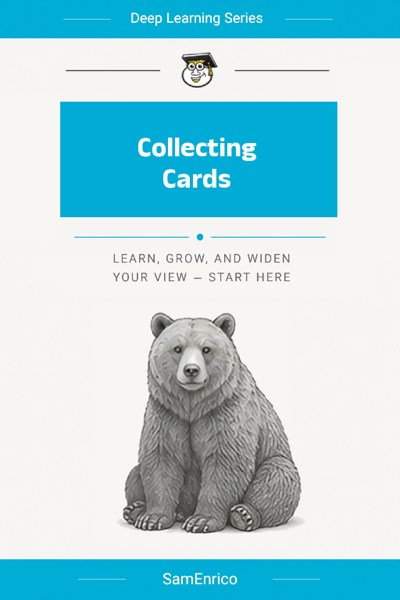 Collecting CardsOhara Vernie$11.99
 Mobile Stock Photo PricingOhara Vernie$12.99
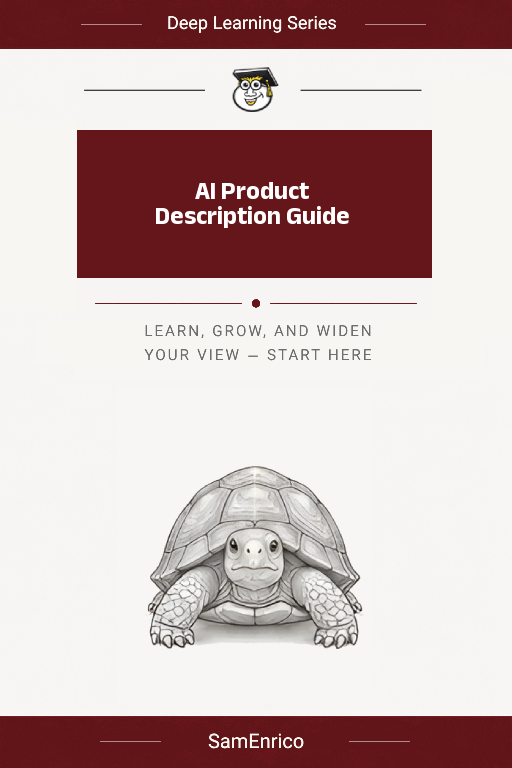 AI Product Description GuideOhara Vernie$12.99
 Understanding Dwarfism Tall VertebraeOhara Vernie$17.99
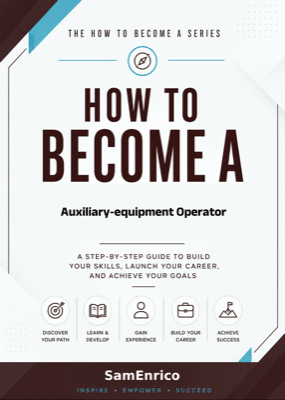 How to Become a Auxiliary-equipment OperatorOhara Vernie$11.99
You may also like
 Hong Kong Handover 1997Dunn Johnnie$11.99
 Zumba For Postnatal Recovery CourseNeal Christian$11.99
 Zumba for BeginnersLadner Nikia$11.99
 YouTube Comment Mining GuideHumes Pandora$12.99
 Worry Box MeditationCarlin Rudy$11.99
 Workplace Stress MeditationNguyen Lynn$11.99
 Workplace Stress and Sleep RepairHawley Ivory$11.99
 Workplace Perfectionism CureDelaney Jeffry$11.99
 Workplace Injustice Anger GuideWallen Isabelle$11.99
 Work Addiction and Burnout LinkGreenwood Ester$11.99
 Women in Yoga and WellnessBeattie Galina$11.99
 Women in Stand Up ComedyChun Evangeline$11.99