
Breakup Insomnia Guide eBook
Heartbreak meditation to rest through emotional pa
Heartbreak meditation to rest through emotional pain.
Formats
Free sample
Chapter 1: Why Pain Steals Sleep--The moment you were told the relationship was over, something shifted inside your body that had nothing to do with your emotions. Your heart did not just ache in the poetic sense. It began to beat differently. Your breathing changed. Your muscles braced for an impact that never came.
Your brain, that three-pound command center, made a decision without asking your permission: you are in danger. And from that moment forward, every night when you closed your eyes, your body refused to believe it was safe to let go.This is not a failure on your part. It is not a sign of weakness. It is not evidence that you are "too sensitive" or "dramatic" or "incapable of moving on." It is biology. It is evolution.
It is your nervous system doing exactly what it was designed to do when faced with a threat to your social survival. The problem is that the threat is not a predator in the dark. It is a person who used to be there. And your body cannot tell the difference.Before you can learn to rest again—before any of the meditations, breath practices, or journaling exercises in this book will make sense—you need to understand what is actually happening inside you when you lie down to sleep and find yourself wide awake at 2 AM, 3 AM, 4 AM. You need to see the machinery of your suffering.
Not because understanding alone will fix it, but because you cannot befriend a nervous system you do not understand. And befriending your nervous system is the only way out of this.The Brain on Heartbreak: What Science Has Discovered Let us begin with a study that changed how researchers think about heartbreak. In 2003, a team of neuroscientists led by Naomi Eisenberger at UCLA placed participants in an f MRI scanner and had them play a virtual ball-tossing game called Cyberball. The participants were told they were playing with two other people. In reality, the other players were computer programs.
The game started normally, with the ball being tossed among all three players. Then, after a few throws, the two computer players began tossing the ball only to each other. They excluded the participant. They left them out. They acted as if the participant had ceased to exist.The results were astonishing.
The regions of the brain that lit up during this social exclusion were the anterior cingulate cortex and the anterior insula. These are the same regions that activate when the body experiences physical pain from a burn, a cut, or a broken bone. In other words, your brain processes being left out as if it were being physically injured. That is why heartbreak genuinely hurts. It is not a metaphor.
It is not an exaggeration for dramatic effect. Your brain is literally registering the loss of a relationship as a form of bodily harm.Now consider what happens when that same brain tries to go to sleep. Sleep is not a passive state. It is an active, complex neurological process that requires the brain to shift from the sympathetic nervous system (the gas pedal, responsible for fight or flight) to the parasympathetic nervous system (the brake, responsible for rest and digest). This shift does not happen automatically.
It requires the brain to feel safe enough to let go of vigilance. And here is the problem: when you are heartbroken, your brain does not feel safe. It feels wounded. It feels threatened. It feels like a animal that has been injured and left alone in the dark.The sympathetic nervous system responds to heartbreak by flooding your body with cortisol and adrenaline.
These are not subtle chemicals. They increase heart rate. They raise blood pressure. They sharpen attention. They prepare muscles for action.
They are designed to help you fight a bear or run from a fire. They are not designed to help you lie still in a dark room and drift into REM sleep. This is why your heart pounds when you think about your ex. This is why you jolt awake at 3 AM with a sense of dread. This is why your mind races from one painful memory to the next, unable to settle.
Your nervous system has been hijacked by an ancient survival response that has no off switch for the specific pain of a broken relationship.Hyperarousal: The State That Kills Sleep Sleep scientists have a name for what you are experiencing. They call it hyperarousal. It is a state of physiological and psychological activation that makes sleep impossible. Hyperarousal is not just "feeling stressed." It is a measurable condition. Your heart rate variability changes.
Your cortisol levels remain elevated late into the night. Your brain waves show patterns of wakefulness even when your eyes are closed. You are, in a very real sense, stuck in a state of high alert with no clear danger to respond to.Hyperarousal after a breakup serves a purpose, even if that purpose is no longer useful. Evolutionarily, humans survived because we stayed connected to our social groups. To be cast out of the group—to be rejected, abandoned, or left behind—was a death sentence.
Our ancestors needed every ounce of vigilance to survive separation. They needed to stay awake, to scan for danger, to figure out what went wrong, to find a way back into the group. Your body is running that same ancient program right now. It does not know that you are not going to die because your ex left. It only knows that you are alone, and being alone used to be lethal.This is why willpower will not fix your insomnia.
You cannot think your way out of a survival response. You cannot reason with your amygdala, the part of your brain that sounds the alarm. The amygdala does not understand language. It understands patterns, threats, and safety cues. Trying to convince yourself that you are fine—that you should be over it, that it is not a big deal, that you need to sleep because you have a big meeting tomorrow—only activates more stress.
Your brain interprets your self-criticism as additional danger. Now you are not just heartbroken. You are also failing at sleeping. And failing at sleeping feels like failing at life.The Gap Where Peace Used to Be There is a second layer to this suffering, one that neuroscience alone cannot address. It comes from an ancient Buddhist concept called dukkha.
Dukkha is often translated as "suffering," but a more accurate translation might be "the painful gap between how things are and how we want them to be."Consider the gaps that are keeping you awake right now. You want to be asleep. You are awake. That is a gap. You want your ex to be lying next to you.
The bed is empty. That is a larger gap. You want the story of your relationship to have had a different ending. It did not. That is the largest gap of all.
Dukkha is not the pain of the breakup itself. It is the pain of wanting reality to be different than it is. And that wanting—that reaching for something that is…
This is the end of the free sample. Get the eBook to keep going. Buy now
About this book
Details
- Author
- Brandon Lisette
- Publisher
- SamEnrico
- Language
- English
- Genre
- Non-Fiction, Self-Help, Breakup
- Released
- 2026-06-09
- Pages (approx.)
- 126
- Available as
- eBook, Audiobook

Read better in the ZLOADR app
Your eBooks on your phone or tablet. Sign in with your SamEnrico account and start reading.
More by Brandon Lisette
 Surgery Recovery Sleep AidBrandon Lisette$11.99
 Morocco Remote Tax GuideBrandon Lisette$11.99
 Mindfulness Meditation for JealousyBrandon Lisette$11.99
 TM for ProcrastinationBrandon Lisette$11.99
 Sleep Apnea Erectile DysfunctionBrandon Lisette$11.99
 Nolan InceptionBrandon Lisette$11.99
 Ombre Test InterpretationBrandon Lisette$11.99
 Pomodoro For DeclutteringBrandon Lisette$11.99
 Silent Payoffs: The Secret Tapes That Toppled a MayorBrandon Lisette$11.99
 Sergei Diaghilev and the Birth of the Ballets Russes: A Revolution in MotionBrandon Lisette$11.99
 The Fire and Fury of Beethoven: Music as Earth-Shaking ForceBrandon Lisette$11.99
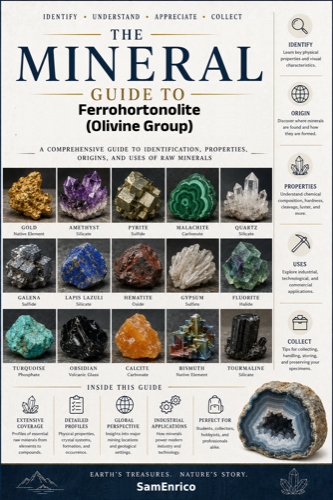 The Mineral Guide to Ferrohortonolite (Olivine Group)Brandon Lisette$11.99
You may also like
 Hong Kong Handover 1997Dunn Johnnie$11.99
 Zumba For Postnatal Recovery CourseNeal Christian$11.99
 Zumba for BeginnersLadner Nikia$11.99
 YouTube Comment Mining GuideHumes Pandora$12.99
 Worry Box MeditationCarlin Rudy$11.99
 Workplace Stress MeditationNguyen Lynn$11.99
 Workplace Stress and Sleep RepairHawley Ivory$11.99
 Workplace Perfectionism CureDelaney Jeffry$11.99
 Workplace Injustice Anger GuideWallen Isabelle$11.99
 Work Addiction and Burnout LinkGreenwood Ester$11.99
 Women in Yoga and WellnessBeattie Galina$11.99
 Women in Stand Up ComedyChun Evangeline$11.99