
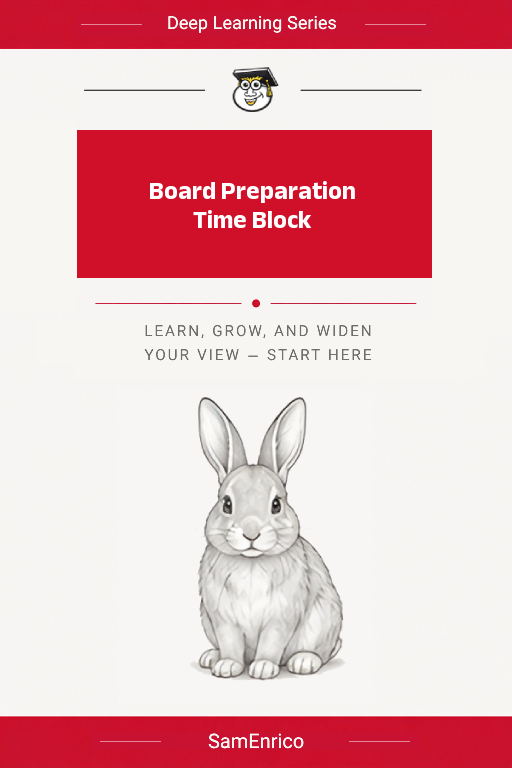
Non-FictionProfessional's Cheat Sheet
Board Preparation Time Block eBook
Reserve dedicated blocks before board meetings to
Reserve dedicated blocks before board meetings to prepare materials thoroughly.
Formats
Free sample
Chapter 1: The $10 Billion Hour--–- The first time I watched a board self-destruct, it took less than ninety seconds. The CEO had just finished a polished presentation about quarterly earnings—revenue up, margins steady, a cautious but optimistic outlook for the remainder of the fiscal year. The board members nodded along, some checking their phones, others flipping idly through the printed deck. Then the lead director asked a question. It was not a difficult question.
It was not even particularly insightful. It was simply the first substantive question of the meeting: "Can you walk us through the assumptions behind that 8 percent growth forecast?"The CEO hesitated. Not because the question was unfair, but because the answer required digging into a footnote on page 23 of a 47-page packet. The CEO fumbled. The CFO jumped in with a defensive explanation about market conditions.
The audit committee chair looked confused. And in that ninety-second window, the entire tone of the meeting shifted from strategic oversight to tactical bickering. The board spent the next forty-five minutes debating the definition of "adjusted EBITDA" instead of discussing the competitor that was quietly eating their market share.That board was not incompetent. They were accomplished executives, seasoned directors, intelligent people who had run billion-dollar divisions and navigated complex regulatory environments. But they had one fatal flaw in common: they had not prepared.
The packet had arrived forty-eight hours before the meeting. Of the twelve directors, only two had read it thoroughly. The other ten had skimmed, scanned, or—in one case—opened the PDF for the first time while walking into the boardroom. The $10 billion enterprise they oversaw deserved better. But it did not get better, because preparation is not a priority until it becomes a crisis.
And by then, it is usually too late.This book is about making preparation a priority before the crisis arrives. It is about the single most underutilized lever in corporate governance: the dedicated, uninterrupted, systematic block of time you set aside before every board meeting to master the materials. I call it the Board Preparation Time Block, and it is the difference between a director who rubber-stamps and a director who leads.If you are reading this book, you already suspect that your current preparation habits are insufficient. You may feel a vague sense of unease before each meeting—a recognition that you are not quite as sharp as you should be, that you are missing something, that you are relying on the CEO to fill in your gaps in real time. That unease is not impostor syndrome.
It is your fiduciary conscience telling you the truth: you are not prepared enough.This chapter will reframe board preparation from an administrative chore to a fiduciary duty with massive economic leverage. You will learn the true cost of coming in cold, the hidden social dynamics that keep unprepared boards stuck in the rubber-stamp trap, and the fundamental shift from "governance as monitoring" to "governance as leadership." By the end of this chapter, you will never again walk into a boardroom without having done your homework. And you will understand why that homework is the single highest-return activity you can perform as a director.The Mathematics of Attention: What Your Preparation Hour Is Really Worth Let us begin with a simple calculation. Assume you serve on the board of a publicly traded company with a market capitalization of 10billion.Thatisamidsizecompany—notamegacaplike Appleor Microsoft,butasubstantialenterprisewiththousandsofemployees,billionsinrevenue,andsignificantstakeholderimpact.Theboardhastwelvedirectors.Eachdirectorreceivesannualcompensationintherangeof10 billion. That is a midsize company—not a megacap like Apple or Microsoft, but a substantial enterprise with thousands of employees, billions in revenue, and significant stakeholder impact.
The board has twelve directors. Each director receives annual compensation in the range of 10billion.Thatisamidsizecompany—notamegacaplike Appleor Microsoft,butasubstantialenterprisewiththousandsofemployees,billionsinrevenue,andsignificantstakeholderimpact.Theboardhastwelvedirectors.Eachdirectorreceivesannualcompensationintherangeof200,000 to 500,000,dependingoncommitteeassignmentsandboardleadershiproles.Forthesakeofthiscalculation,letususe500,000, depending on committee assignments and board leadership roles. For the sake of this calculation, let us use 500,000,dependingoncommitteeassignmentsandboardleadershiproles.Forthesakeofthiscalculation,letususe300,000 as an average.That means the board's total annual compensation is approximately 3.6million.Spreadacrossfourquarterlymeetings,thatis3.6 million. Spread across four quarterly meetings, that is 3.6million.Spreadacrossfourquarterlymeetings,thatis900,000 per meeting. Spread across the typical two days of meeting time (including travel, social events, and executive sessions), that is roughly 450,000perday.Buthereisthenumberthatmattersmost:ifeachdirectorspendstwohourspreparingforeachmeeting—theminimumrecommendedbygovernanceexperts—thatistwenty−fourhoursoftotalpreparationtimepermeeting.At450,000 per day.
But here is the number that matters most: if each director spends two hours preparing for each meeting—the minimum recommended by governance experts—that is twenty-four hours of total preparation time per meeting. At 450,000perday.Buthereisthenumberthatmattersmost:ifeachdirectorspendstwohourspreparingforeachmeeting—theminimumrecommendedbygovernanceexperts—thatistwenty−fourhoursoftotalpreparationtimepermeeting.At300,000 per director per year, that preparation time is worth approximately $75,000 per meeting in director compensation alone.That is just the direct cost. The real economic leverage is not what the board costs but what the board protects—and what it can create. A single strategic decision made correctly can add billions in shareholder value. A single risk missed can wipe out billions.
When a board of directors oversees a $10 billion enterprise, every hour of collective attention is worth millions of dollars in potential value creation or risk mitigation.Consider the math from a different angle. If a director asks a poorly framed question that consumes ten minutes of the CEO's time—time that could have been spent discussing strategy, reviewing competitive threats, or evaluating a potential acquisition—that ten minutes is not free. The CEO's fully loaded cost (salary, bonus, equity, benefits, support staff) might be 10millionannually.At2,000workinghoursperyear,thatis10 million annually. At 2,000 working hours per year, that is 10millionannually.At2,000workinghoursperyear,thatis5,000 per hour. Ten minutes is approximately 830.Multiplythatbytwelvedirectorsaskingsimilarlyunfocusedquestions,andyouhaveconsumednearly830.
Multiply that by twelve directors asking similarly unfocused questions, and you have consumed nearly 830.Multiplythatbytwelvedirectorsaskingsimilarlyunfocusedquestions,andyouhaveconsumednearly10,000 of CEO time in a single meeting. Across four meetings, that is $40,000 diverted from strategic work to tactical clarification.But the real cost is opportunity cost. What strategic opportunity was the CEO not pursuing while answering questions that should never have been asked? What competitor analysis was not completed? What customer call was not made?
Those costs are invisible, but they are very real. They appear in the financial statements as stagnant growth, eroding margins, and missed targets.The "Hourly Value of Your Attention" worksheet (included in the appendix) allows you to calculate this number for your specific board. You will need three inputs: the company's market capitalization (or enterprise value for private companies), the number of directors, and the average director compensation. The worksheet then computes the economic leverage of a well-prepared hour versus a poorly prepared hour. For a 10billioncompany,thedifferenceisrarelylessthan10 billion company, the difference is rarely less than 10billioncompany,thedifferenceisrarelylessthan1 million per meeting.This is not abstract theory.
Consider the Wells Fargo fake accounts scandal, which we will examine in more detail later in this chapter. Between 2002 and 2016, Wells Fargo employees opened millions of unauthorized bank and credit card accounts for unsuspecting customers. The board received regular reports on cross-selling metrics, customer complaints, and sales practices. Those reports contained warning signs—escalating legal fees, whistleblower complaints, unusual customer attrition patterns. But directors who skimmed the packet missed those signals because they were buried in appendices or footnotes.
Had the board dedicated an additional thirty minutes of focused preparation to each quarterly packet, they might have connected the dots years earlier.…
This is the end of the free sample. Get the eBook to keep going. Buy now
About this book
Details
- Author
- Hooker Arvilla
- Publisher
- SamEnrico
- Language
- English
- Genre
- Non-Fiction, Professional's Cheat Sheet
- Released
- 2026-05-29
- Pages (approx.)
- 156
- Available as
- eBook, Audiobook

Read better in the ZLOADR app
Your eBooks on your phone or tablet. Sign in with your SamEnrico account and start reading.
More by Hooker Arvilla
 The Cosmic Consciousness StageHooker Arvilla$11.99
 The Nun Who Tamed TigersHooker Arvilla$11.99
 Employee Data Breach ScriptsHooker Arvilla$11.99
 Friend Betrayal AngerHooker Arvilla$11.99
 Emotions Anonymous GuideHooker Arvilla$11.99
 Acupuncture For Macular DegenerationHooker Arvilla$11.99
 Samantha PowerHooker Arvilla$11.99
 Powerlifting Meet PreparationHooker Arvilla$11.99
 Account Management BurnoutHooker Arvilla$11.99
 Penguins in the Void: Antarctica's Cosmic ConnectionHooker Arvilla$11.99
 The Duchess and the Diamond Heist: A Royal ConspiracyHooker Arvilla$11.99
 Marsilio Ficino: The Philosopher Who Rekindled PlatoHooker Arvilla$11.99
You may also like
 Hong Kong Handover 1997Dunn Johnnie$11.99
 Zumba For Postnatal Recovery CourseNeal Christian$11.99
 Zumba for BeginnersLadner Nikia$11.99
 YouTube Comment Mining GuideHumes Pandora$12.99
 Worry Box MeditationCarlin Rudy$11.99
 Workplace Stress MeditationNguyen Lynn$11.99
 Workplace Stress and Sleep RepairHawley Ivory$11.99
 Workplace Perfectionism CureDelaney Jeffry$11.99
 Workplace Injustice Anger GuideWallen Isabelle$11.99
 Work Addiction and Burnout LinkGreenwood Ester$11.99
 Women in Yoga and WellnessBeattie Galina$11.99
 Women in Stand Up ComedyChun Evangeline$11.99