
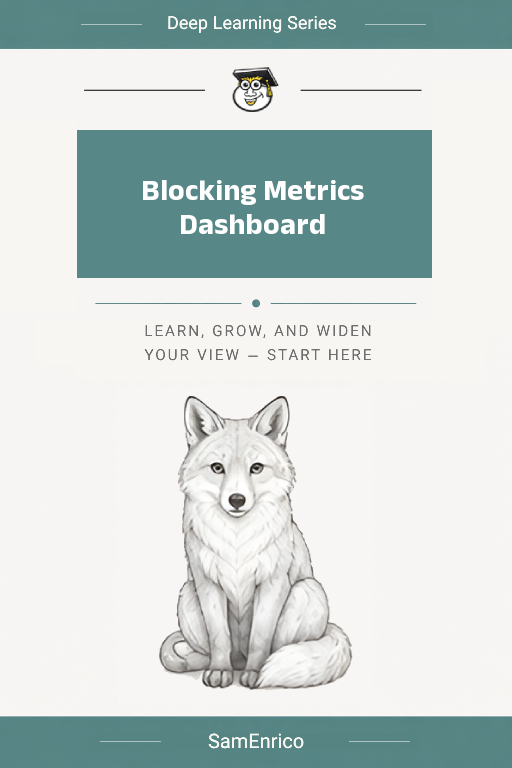
Non-FictionProfessional's Cheat SheetProductivity Metrics
Blocking Metrics Dashboard eBook
Track block adherence, deep work hours, and meetin
by Duke Von
Track block adherence, deep work hours, and meeting ratio using productivity dashboards.
Formats
Free sample
Chapter 1: The 23-Minute Lie--You are not lazy. You are not undisciplined. You are not failing because you lack willpower or talent or ambition. You are failing because the modern workplace has been systematically engineered to steal your attention, one ping at a time, and you have been told that this is simply the price of being productive.The lie begins every morning. You arrive at your desk—or open your laptop from the kitchen table—with a clear intention.
Today, you will finish the proposal. Today, you will debug that stubborn module. Today, you will finally think through the strategic problem that has been nagging you for weeks. You open your calendar. You see a ninety-minute block you scheduled for yourself at 9:00 AM.
Perfect.Then it happens. A Slack message lights up your screen. “Quick question?” Your phone buzzes. An email from your boss with the subject line “Thoughts?” A calendar notification: someone has dropped a thirty-minute “sync” into your focus block without asking. By the time you look up, it’s 9:15 AM.
You answer the Slack. You skim the email. You accept the meeting invite because rejecting it feels rude. You try to settle back into the proposal, but your brain is now somewhere else—half-thinking about the question, half-worrying about the email, fully aware that your focus block is already dissolving.By 11:00 AM, you have answered fourteen Slack messages, attended one unexpected “quick huddle,” and written exactly three sentences of the proposal. You feel exhausted.
You feel behind. You feel a vague sense of shame, as if you have wasted the morning through some personal failure of discipline. You tell yourself that tomorrow will be different. Tomorrow, you will really focus.Tomorrow arrives. The same thing happens.
And the day after that. And the day after that.This is not a personal failing. This is a structural problem. And until you stop blaming yourself and start measuring the machinery that is fragmenting your attention, nothing will change.The Productivity Illusion Let us name the beast. The Productivity Illusion is the seductive, exhausting feeling of being constantly busy while making little meaningful progress.
It is the dopamine hit of closing a notification badge. It is the hollow satisfaction of sending the last email of the day. It is the calendar that looks full and the to-do list that somehow never shrinks.Here is what the Productivity Illusion looks like in data. The average knowledge worker switches between eighteen and thirty-six different apps per day. They check email or Slack approximately once every six minutes.
They spend an average of four hours per week in meetings if they are individual contributors, and nine hours per week if they are managers. And they report feeling “productive” on only three of every ten workdays.But the most damning number—the one that should terrify every leader and every employee—comes from a landmark study conducted at the University of California, Irvine. Psychologists Gloria Mark, Daniela Gudith, and Ulrich Klocke equipped office workers with sensors and tracked their every interruption. Their finding, published in 2008 and replicated many times since, is as simple as it is devastating: after a single interruption, it takes an average of twenty-three minutes and fifteen seconds to fully return to the original task.Not five minutes. Not ten minutes.
Twenty-three minutes and fifteen seconds.This includes the time to disengage from the interruption, to mentally backtrack to where you left off, to rebuild the context you lost, and to re-establish the cognitive focus required for complex work. If you are interrupted six times in a morning, you lose more than two hours just to the cost of switching back. That is not working time. That is recovery time. And it is invisible.The Productivity Illusion thrives on this invisibility.
You feel busy because you are constantly reacting. You feel tired because your brain is constantly context-switching. But you do not feel productive because you are not actually moving the needle on what matters. The dashboard you are about to build will make this invisible cost visible. And visibility is the first step toward liberation.The Three Metrics That Actually Matter Before we can fix a problem, we must measure it.
Most productivity systems fail because they track the wrong things: hours logged, emails sent, meetings attended, tasks checked off. These are activity metrics. They tell you how much you moved. They tell you nothing about whether you moved in the right direction.This book is built around three metrics that together form a complete picture of sustainable, high-impact work. They are not activity metrics.
They are blocking metrics—measurements of how well you protect and use your most valuable resource: uninterrupted cognitive attention.Metric One: Block Adherence Block Adherence is the discipline metric. It answers a simple question: when you schedule time for focused work, do you actually protect that time?The formula is straightforward: Block Adherence % = Actual focus time in scheduled blocks ÷ Total scheduled block time If you schedule a two-hour focus block but spend thirty minutes answering emails and another thirty minutes in an unscheduled meeting, your actual focus time is one hour. Your Block Adherence is 50%. You intended to do deep work. You did shallow work instead.
The dashboard records the gap between intention and action.Block Adherence is uncomfortable because it exposes a truth we would rather ignore: most of us are terrible at protecting our own calendars. We schedule focus blocks the way people schedule gym sessions in January—with enthusiasm, followed by abandonment. The target for Block Adherence is greater than ninety percent. You should protect nine out of every ten minutes you schedule for deep work. Anything less means your calendar is a suggestion, not a commitment.Metric Two: Deep Work Hours Deep Work Hours is the intensity metric.
It answers a different question: how much time are you spending on cognitively demanding, distraction-free work that actually creates value?This term comes from Cal Newport, who defined deep work as “professional activities performed in a state of distraction-free concentration that push your cognitive capabilities to their limit.” Deep work is what produces breakthroughs, mastery, and high-value output. It is the opposite of shallow work—the logistical, administrative, reactive tasks that fill most of our days (email, Slack, formatting documents, data entry, status meetings).Deep Work Hours are measured simply: total hours spent in uninterrupted, cognitively demanding work per week. The baseline for most knowledge workers is two to three hours per day—or ten to fifteen hours per week. But eighty percent of workers report zero uninterrupted ninety-minute blocks in a typical week. They are not doing deep work at all.
They are doing shallow work, interrupted by more shallow work, and calling it a day.Metric Three: Meeting Ratio Meeting Ratio is the efficiency metric. It answers a third question: how much of your working time is spent in meetings versus doing individual work?The formula is: Meeting Ratio = Total Meeting Hours ÷ Total Working Hours Working hours are defined as forty hours per week minus lunch and breaks—typically thirty-five to thirty-seven hours. A Meeting Ratio of twenty-five percent means you spend about nine hours per week in meetings. A Meeting Ratio…
This is the end of the free sample. Get the eBook to keep going. Buy now
About this book
Details
- Author
- Duke Von
- Publisher
- SamEnrico
- Language
- English
- Genre
- Non-Fiction, Professional's Cheat Sheet, Productivity Metrics
- Released
- 2026-05-29
- Pages (approx.)
- 131
- Available as
- eBook, Audiobook

Read better in the ZLOADR app
Your eBooks on your phone or tablet. Sign in with your SamEnrico account and start reading.
More by Duke Von
 Pinterest VA Hashtag StrategyDuke Von$11.99
 Russian Mafia Brighton BeachDuke Von$11.99
 Meditation for Chronic Foot PainDuke Von$11.99
 Breast Cyst Aspiration GuideDuke Von$11.99
 Sugar Addiction and Gut HealthDuke Von$11.99
 The Ancient Healers of Angkor: Mental Health in the Stone TemplesDuke Von$11.99
 Glitch in the Matrix: The 2016 Internet Outage That Almost Broke the WebDuke Von$11.99
 Understanding Colonic AtresiaDuke Von$17.99
 Problem Solution Fit GuideDuke Von$12.99Problem Solution Fit GuideDuke Von$12.99Problem Solution Fit GuideDuke Von$12.99Problem Solution Fit GuideDuke Von$12.99
You may also like
 Hong Kong Handover 1997Dunn Johnnie$11.99
 Zumba For Postnatal Recovery CourseNeal Christian$11.99
 Zumba for BeginnersLadner Nikia$11.99
 YouTube Comment Mining GuideHumes Pandora$12.99
 Worry Box MeditationCarlin Rudy$11.99
 Workplace Stress MeditationNguyen Lynn$11.99
 Workplace Stress and Sleep RepairHawley Ivory$11.99
 Workplace Perfectionism CureDelaney Jeffry$11.99
 Workplace Injustice Anger GuideWallen Isabelle$11.99
 Work Addiction and Burnout LinkGreenwood Ester$11.99
 Women in Yoga and WellnessBeattie Galina$11.99
 Women in Stand Up ComedyChun Evangeline$11.99