
Non-FictionHealth & WellnessSide Effect Management
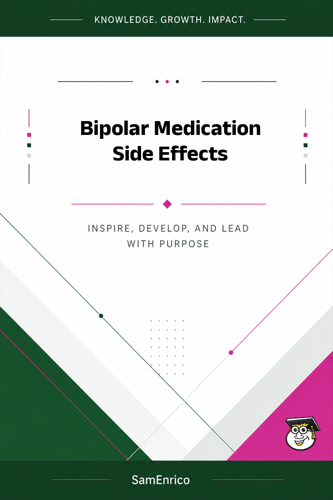
Bipolar Medication Side Effects eBook
Manage weight gain sedation cognitive dulling and
Manage weight gain sedation cognitive dulling and other medication side effects practically.
Formats
Free sample
Chapter 1: The Chemistry of Captivity--–- You are not weak. You are not lazy. You are not failing.If you have gained twenty, forty, or eighty pounds on a medication that keeps you out of the hospital, you have not lost a battle of willpower. If you sleep ten hours, wake up exhausted, and need a nap by noon, you have not become morally deficient. If you stare at a sentence three times and still cannot remember what you just read, you have not lost your intelligence.
What you have lost, temporarily, is a fair fight. And the first step to winning any fight is understanding what you are actually up against.This chapter is not a pep talk. It is a biochemical detective story. By the time you finish reading it, you will know exactly why your medication makes you crave sugar at 10 PM, why your thoughts feel like they are moving through wet cement, and why you cannot seem to wake up in the morning no matter how early you go to bed. More importantly, you will understand that every single one of these experiences has a name, a biological mechanism, and—in later chapters—a set of counter-strategies.
The enemy is not your character. The enemy is a handful of molecules blocking a handful of receptors in ways that evolution never anticipated.Let us begin with a promise: by the end of this chapter, you will never blame yourself for a medication side effect again.The Three Families of Chemical Sabotage Bipolar medications fall into three broad families, and each family has a signature pattern of side effects. Understanding which family your medication belongs to is the first step toward predicting—and managing—what your body will do.The first family is mood stabilizers, primarily Lithium, Lamotrigine (Lamictal), and valproate (Depakote). These drugs work by calming overexcited neurons, stabilizing electrical activity in the brain, and modulating second-messenger systems. They are remarkably effective for preventing both mania and depression.
But they come with a price: they affect the kidneys, the thyroid, and the digestive system. Lithium, in particular, mimics sodium in the body and must be maintained within a narrow therapeutic window. Too little, and it does not work. Too much, and it becomes toxic. This is why Lithium patients get their blood drawn regularly—not because doctors enjoy ordering labs, but because the difference between a therapeutic dose and a toxic dose is smaller than the difference between a cup of coffee and a cup of tea.The second family is atypical antipsychotics, including quetiapine (Seroquel), olanzapine (Zyprexa), risperidone (Risperdal), aripiprazole (Abilify), and lurasidone (Latuda).
These drugs block dopamine receptors (which reduces psychosis and mania), but they also block histamine receptors (which causes sedation and hunger) and, in some cases, acetylcholine receptors (which causes brain fog). The newer drugs in this class, such as lurasidone and cariprazine, are more selective and cause fewer metabolic side effects—but no atypical antipsychotic is completely free of risk. Seroquel and Zyprexa are the most notorious for weight gain and sedation. Abilify is more activating but can cause severe akathisia (that unbearable inner restlessness).The third family is antidepressants, which are used cautiously in bipolar disorder because they can trigger mania. But many people with bipolar II or mixed features take antidepressants alongside mood stabilizers.
These drugs—SSRIs like fluoxetine (Prozac) and SNRIs like venlafaxine (Effexor)—primarily affect serotonin and norepinephrine. Their side effects include sexual dysfunction, sleep disruption, and emotional blunting.Most people reading this book are on more than one medication from more than one family. That is called polypharmacy, and it means your side effect profile is a combination of three different biochemical assaults. This is not a criticism of your doctor. Bipolar disorder often requires multiple medications.
But it does mean you need a more sophisticated toolkit than someone on a single drug. That toolkit begins with understanding what each drug is actually doing inside your body.The Histamine Trap: Why You Crave Donuts at Midnight Let us start with the most frustrating side effect for most patients: the relentless, gnawing, almost sexual craving for carbohydrates that hits like a freight train about an hour after taking certain medications. If you have ever found yourself standing in front of the refrigerator at 11 PM, eating cold pasta directly from the container while feeling like a passenger in your own body, you have experienced the histamine trap.Histamine is best known for its role in allergies. When you have hay fever, antihistamines like Benadryl make you sleepy. But histamine does much more than cause itching and sneezing.
In the brain, histamine acts as a wakefulness-promoting neurotransmitter. It helps regulate appetite, body temperature, and the sleep-wake cycle. When you block histamine receptors—which is exactly what Seroquel, Zyprexa, and many other atypical antipsychotics do—you trigger a cascade of effects that go far beyond drowsiness.Here is what happens inside your brain when you take a highly antihistaminergic medication like Seroquel or Zyprexa. Within thirty to sixty minutes, the drug crosses the blood-brain barrier and begins occupying histamine H1 receptors. These receptors are densely distributed in the hypothalamus, the part of your brain that regulates hunger, thirst, and sleep.
When histamine cannot bind to its own receptors, your brain interprets this as a state of metabolic emergency. Specifically, the hypothalamus receives signals that resemble starvation. Not mild hunger. Not a gentle reminder to eat. Full-scale, red-alert, we-are-running-out-of-fuel starvation.Your brain does not know you just ate dinner.
It does not know that the medication is artificially blocking histamine. It only knows that histamine signaling has dropped precipitously, which in evolutionary terms only happens when the body is starving. So it releases a flood of neuropeptide Y (NPY) and agouti-related protein (Ag RP), two of the most powerful appetite-stimulating chemicals in the human body. These chemicals do not just make you hungry. They make you crave calorie-dense, carbohydrate-rich foods because those foods provide the fastest source of energy in a supposed starvation state.This is why you crave donuts, not celery.
This is why you want pasta, not a salad. Your brain is not being difficult. It is being evolutionarily appropriate. In a true starvation state, seeking high-calorie carbohydrates is the difference between life and death. The fact that you are not actually starving is irrelevant to your hypothalamus.
It only knows what the histamine receptors are telling it, and they are screaming famine.The second piece of this trap is metabolic slowdown. Histamine receptor blockade does not just increase hunger; it also reduces energy expenditure. Your basal metabolic rate—the number of calories you burn at rest—drops by up to fifteen percent on highly antihistaminergic medications. This means that even if you eat exactly the same amount of food as before, you will gain weight. And if you eat more—which the hunger signals are actively forcing you to do—the weight gain accelerates dramatically.A study published in the American Journal of Psychiatry followed patients started on olanzapine (Zyprexa) for the first time.
Within twelve weeks, the average weight gain was over twenty pounds. Some patients gained forty pounds. This was not due to laziness or poor choices.…
This is the end of the free sample. Get the eBook to keep going. Buy now
About this book
Details
- Author
- Samuel Georgeann
- Publisher
- SamEnrico
- Language
- English
- Genre
- Non-Fiction, Health & Wellness, Side Effect Management
- Released
- 2026-06-08
- Pages (approx.)
- 157
- Available as
- eBook, Audiobook

Read better in the ZLOADR app
Your eBooks on your phone or tablet. Sign in with your SamEnrico account and start reading.
More by Samuel Georgeann
 Flashcard MasterySamuel Georgeann$11.99
 Phone Addiction Breakthrough GuideSamuel Georgeann$11.99
 CrossFit Pregnancy GuideSamuel Georgeann$11.99
 Small Talk for Chronic Pain SufferersSamuel Georgeann$11.99
 Asana Task ManagementSamuel Georgeann$11.99
 Circadian Rhythm StabilizationSamuel Georgeann$11.99
 Emotional Vocabulary Expansion GuideSamuel Georgeann$11.99
 Adopted Child DeathSamuel Georgeann$11.99
 The Viral Fallout: How One Leaked Tape Toppled a Political DynastySamuel Georgeann$11.99
 The Last Whisper of the Arctic: The Solo Journey of Ernest KrupkaSamuel Georgeann$11.99
 The Great Compromise: How 36 Men Changed America ForeverSamuel Georgeann$11.99
 The Mineral Guide to JurbaniteSamuel Georgeann$11.99
You may also like
 Hong Kong Handover 1997Dunn Johnnie$11.99
 Zumba For Postnatal Recovery CourseNeal Christian$11.99
 Zumba for BeginnersLadner Nikia$11.99
 YouTube Comment Mining GuideHumes Pandora$12.99
 Worry Box MeditationCarlin Rudy$11.99
 Workplace Stress MeditationNguyen Lynn$11.99
 Workplace Stress and Sleep RepairHawley Ivory$11.99
 Workplace Perfectionism CureDelaney Jeffry$11.99
 Workplace Injustice Anger GuideWallen Isabelle$11.99
 Work Addiction and Burnout LinkGreenwood Ester$11.99
 Women in Yoga and WellnessBeattie Galina$11.99
 Women in Stand Up ComedyChun Evangeline$11.99