
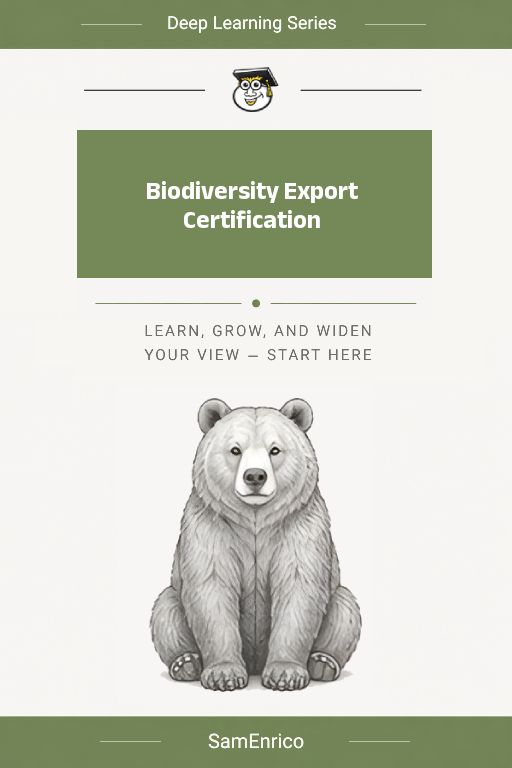
Biodiversity Export Certification
Export with biodiversity certifications including
Export with biodiversity certifications including UEBT, Wildlife Friendly, and Biodiversity Standard for niche eco-markets.
Formats
About this book
Free sample
Chapter 1: The Rotterdam Rejection--The集装箱 sat in the rain for eleven days. Twenty-two tons of specialty-grade coffee, roasted to perfection, packaged in biodegradable bags, certified organic, fair trade, and Rainforest Alliance. The Peruvian exporter, Mateo Alarcon, had done everything right. He had paid his fees, filled his paperwork, and flown to Rotterdam himself to witness the arrival. Instead, he watched from behind a chain-link fence as a customs officer in a yellow vest slapped a red "REJECTED" sticker on the container manifest.
The reason, scrawled in the box labeled "Other," was one Mateo had never seen before: "Insufficient biodiversity due diligence – deforestation risk unverified."His buyer, a mid-sized German roaster that had paid a 30% premium for his single-origin beans, canceled the contract via email three hours later. The shipment would be returned at Mateo's expense – 18,000inshippingcosts,plus18,000 in shipping costs, plus 18,000inshippingcosts,plus42,000 in lost revenue, plus the storage fees accumulating daily. His cooperative of 127 smallholder farmers would not be paid that season. His children's school fees, already late, would wait longer. And somewhere in the headquarters of the European Commission, a working group was drafting the regulation that would make Mateo's experience the new normal for every agricultural exporter on the planet.This book is not about Mateo.
But it is written for every producer, exporter, and agribusiness owner who does not want to become him.The Old World Is Ending For the past three decades, the global trade in agricultural and botanical products operated under a relatively simple sustainability framework. If you wanted to sell into environmentally conscious markets – Europe, parts of North America, Japan – you collected one of the recognized "good guy" certifications. Organic, Fair Trade, Rainforest Alliance, UTZ, perhaps B Corp if you were ambitious. These certifications told buyers that your product was grown without certain chemicals, that workers were paid minimum wages, that some portion of your land was set aside for conservation.The system was imperfect but functional. Certifications competed, overlapped, and confused consumers, but they provided a common language between producers and buyers.
A coffee farmer in Honduras could point to his Rainforest Alliance frog logo and know that a roaster in Hamburg…
This is the end of the free sample. Get the eBook to keep going. Buy now
Contents
- Chapter 1
- Chapter 2
- Chapter 3
- Chapter 4
- Chapter 5
- Chapter 6
- Chapter 7
- Chapter 8
- Chapter 9
- Chapter 10
- Chapter 11
- Chapter 12
Details
- Author
- Banks Georgianna
- Publisher
- SamEnrico
- Language
- English
- Genre
- Non-Fiction, Business Brief
- Released
- 2026-05-30
- Pages (approx.)
- 151
- Available as
- eBook, Audiobook

Read better in the ZLOADR app
Your eBooks on your phone or tablet. Sign in with your SamEnrico account and start reading.
More by Banks Georgianna
 Affirmation App Habit CourseBanks Georgianna$11.99
 Insubordination Anger GuideBanks Georgianna$11.99
 Co Occurring Mental HealthBanks Georgianna$11.99
 Minimalist Approach to SpendingBanks Georgianna$11.99
 The Sexual Shame Recovery GuideBanks Georgianna$11.99
 Blood and Genes: The Fall of Granada and the Last Moorish StrongholdBanks Georgianna$11.99
 Understanding Upshaw–schülman SyndromeBanks Georgianna$17.99
 Pre Seed Success StoriesBanks Georgianna$12.99
 Food Delivery or Meal Prep BusinessBanks Georgianna$11.99
 Ultimate Handbook Guide to Almaty : (Kazakhstan) Travel GuideBanks Georgianna$11.99
You may also like
 Hong Kong Handover 1997Dunn Johnnie$11.99
 Zumba For Postnatal Recovery CourseNeal Christian$11.99
 Zumba for BeginnersLadner Nikia$11.99
 YouTube Comment Mining GuideHumes Pandora$12.99
 Worry Box MeditationCarlin Rudy$11.99
 Workplace Stress MeditationNguyen Lynn$11.99
 Workplace Stress and Sleep RepairHawley Ivory$11.99
 Workplace Perfectionism CureDelaney Jeffry$11.99
 Workplace Injustice Anger GuideWallen Isabelle$11.99
 Work Addiction and Burnout LinkGreenwood Ester$11.99
 Women in Yoga and WellnessBeattie Galina$11.99
 Women in Stand Up ComedyChun Evangeline$11.99