
Non-FictionBiographyStudent ProtestHistorical Narrative
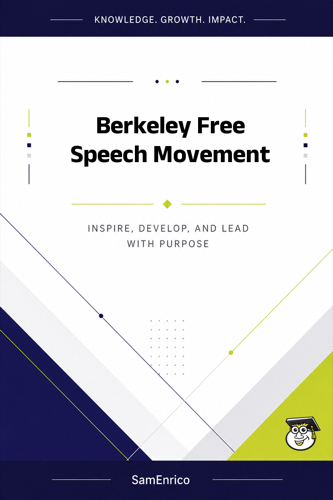
Berkeley Free Speech Movement eBook
A student leader chronicles the 1964 campus protes
1964 UC students recall Sproul Hall sit-in, Mario Savio's speeches, and campus rebellion.
Formats
Free sample
Chapter 1: The Red Dirt Classroom...--–- The bus smelled of sweat, fear, and the artificial orange scent of the motion sickness tablets someone was passing down the aisle. I was twenty years old, a philosophy major from a comfortable Los Angeles suburb, and I had never been south of Bakersfield. Now I was hurtling toward Meridian, Mississippi, in June 1964, and every mile felt like a step off a cliff I had not known existed until I volunteered to jump.The Freedom Summer orientation had been held in Oxford, Ohio, on the campus of Western College for Women. For two weeks, we sat in stifling classrooms learning how to survive. How to curl into a fetal position to protect our internal organs from kicks.
How to form a human chain so that no one could be dragged away alone. How to write our names and next of kin on index cards that would be mailed home if we died. The instructors were veterans of the sit-ins and the Freedom Rides. They did not sugarcoat. "Some of you will not come back," a Black woman named Fannie told us on the third day.
She was maybe twenty-five. She looked fifty. "If that thought makes you hesitate, leave now. No shame in leaving. Shame is staying and freezing."I did not leave.
Neither did the lanky philosophy student from Queens who sat in the row behind me. His name was Mario Savio, and he had already spent time in a Mexican jail for participating in a protest against a hotel that refused to serve Black customers. We struck up a conversation during a break between self-defense sessions. He was intense, almost physically uncomfortable in his own skin, as if his thoughts moved faster than his body could follow. "The law is a mirror," he said to me, squinting at the Ohio sun.
"It reflects whoever is holding it. Right now, the strongest hands are holding it. Our job is to get strong enough to take it." I did not fully understand what he meant. But I remembered the words.That was June. By September, Mario and I would both be back in Berkeley, and the mirror would shatter.The Architecture of Fear Before I tell you about the police car and the thirty-two hours that changed my life, I need to tell you about Mississippi.
Because without Mississippi, there would have been no Berkeley Free Speech Movement. That is not an exaggeration. That is cause and effect. The tactics we used in 1964—the sit-ins, the solidarity, the willingness to be arrested—were not invented on Sproul Plaza. They were forged in the red dirt of the South, in the burning churches, on the freedom roads where bodies were pulled from swamps.My assignment was voter registration.
The theory was simple: if Black citizens could vote, they could change the laws. The practice was anything but simple. I was paired with a local organizer named James, a man in his forties with hands like leather and a voice that never rose above a whisper. "You're here to draw attention," he told me on my first morning in Meridian. "White faces make the news.
Black faces make the morgue. That's not fair, but it's true. Your job is to be seen. My job is to survive after you leave."The weight of that sentence did not hit me immediately. It hit me three days later, when we tried to register a group of farmworkers at the county courthouse.
The clerk, a white woman with cat-eye glasses and a permanent sneer, asked each applicant to recite a section of the Mississippi constitution. This was a legal requirement, but the section changed depending on the applicant's skin color. For Black applicants, it was always the longest, most convoluted passage—something about eminent domain or riparian water rights. For white applicants, it was "I pledge allegiance to the flag." I watched a man who had worked the same land for forty years stumble over words he had never been taught to read. The clerk stamped his application DENIED without looking up.Outside, a sheriff's deputy leaned against a patrol car, chewing tobacco.
He did not speak to us. He did not need to. His presence was a sentence. "You are not safe here," his holster said. "You are not wanted here," his badge said.
"And if you push too hard, you will disappear here," his silence said.That night, James drove me back to the boarding house where I was staying. He parked a block away and killed the lights. "From now on," he said, "you never go straight home. You take three turns. You check your mirror.
You make sure no one is following." I asked him if that was necessary. He looked at me like I had asked if the sun was hot. "They killed Medgar Evers in his own driveway," he said. "His wife and children heard the shot. Yes.
It's necessary."The Lesson of the Sharecropper The moment that changed me forever came on a Tuesday. I had been in Mississippi for three weeks, and the fear had become a constant companion—a low hum in my chest, like an engine idling. I had learned to function despite it, but I had not learned to overcome it. Then I met a man whose name I never learned.He was old—seventy, maybe older—with skin the color of worn leather and eyes that had seen things I could not imagine. He wanted to register to vote.
James had told me not to get my hopes up; the man had only two years of formal schooling, and the clerk would bury him in constitutional text. But the man insisted. So we went.The courthouse was the same. The clerk was the same. The sheriff's deputy was leaning against the same patrol car, in the same spot, as if he had never left.
The man walked past him without glancing sideways. He walked past me without saying a word. He walked up to the counter and placed his calloused hands flat on the marble surface."Name," the clerk said.He gave it."Purpose.""To register to vote."The clerk sighed, pulled out the thick binder, and flipped to the longest section. "Read this aloud," she said. "Starting at paragraph four."The man looked at the page.
He could not read. We both knew this. But he did not lower his head. He did not apologize. He looked the clerk in the eye and said, "I cannot read those words.
But I can tell you what they mean."The clerk blinked. "Excuse me?""I worked this county's roads for forty years. I built the courthouse you're sitting in. I paid taxes on land I don't own. Those words," he said, pointing to the binder, "are about who gets to decide.
And I am here to tell you that I have decided. I am a citizen. I am a man. And I want to vote."The clerk stared at him. For a long moment, no one spoke.
Then the clerk stamped his application DENIED and slid it across the counter. The man picked it up, folded it…
This is the end of the free sample. Get the eBook to keep going. Buy now
About this book
Details
- Author
- Crowell Nicolette
- Publisher
- SamEnrico
- Language
- English
- Genre
- Non-Fiction, Biography, Student Protest, Historical Narrative, Student Activism, 1960s Counterculture Memory
- Released
- 2026-06-08
- Pages (approx.)
- 138
- Available as
- eBook, Audiobook

Read better in the ZLOADR app
Your eBooks on your phone or tablet. Sign in with your SamEnrico account and start reading.
More by Crowell Nicolette
 Hangover Anxiety ReliefCrowell Nicolette$11.99
 Medication Assisted Recovery GuideCrowell Nicolette$11.99
 Cognitive Behavioral Therapy for SADCrowell Nicolette$11.99
 The Meeting Contribution HandbookCrowell Nicolette$11.99
 Nicole Kidman JourneyCrowell Nicolette$11.99
 Widow s Loneliness GuideCrowell Nicolette$11.99
 Job Loss and SleepCrowell Nicolette$11.99
 The Forgotten Pitch: How an 18th-Century African Ball Game Inspired Baseball’s OriginsCrowell Nicolette$11.99
 From the Antipodes to the World Stage: The Unsung Olympians of 19th-Century Australia and New ZealandCrowell Nicolette$11.99
 How to Produce Packaging Organza MaterialCrowell Nicolette$11.99
 How to Become a Roll-slicing-machine TenderCrowell Nicolette$11.99
 A Collector's Handbook to the Rolls-royce LwbCrowell Nicolette$11.99
You may also like
 Hong Kong Handover 1997Dunn Johnnie$11.99
 Zumba For Postnatal Recovery CourseNeal Christian$11.99
 Zumba for BeginnersLadner Nikia$11.99
 YouTube Comment Mining GuideHumes Pandora$12.99
 Worry Box MeditationCarlin Rudy$11.99
 Workplace Stress MeditationNguyen Lynn$11.99
 Workplace Stress and Sleep RepairHawley Ivory$11.99
 Workplace Perfectionism CureDelaney Jeffry$11.99
 Workplace Injustice Anger GuideWallen Isabelle$11.99
 Work Addiction and Burnout LinkGreenwood Ester$11.99
 Women in Yoga and WellnessBeattie Galina$11.99
 Women in Stand Up ComedyChun Evangeline$11.99