
Non-FictionHealth & WellnessMindfulness
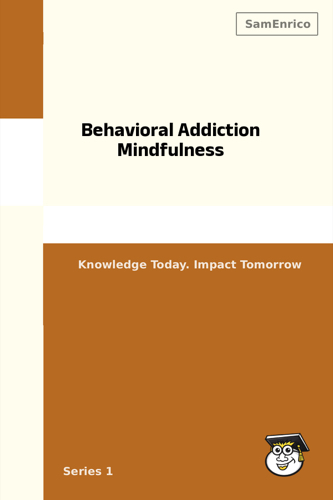
Behavioral Addiction Mindfulness
Apply urge surfing techniques to gambling and gami
Apply urge surfing techniques to gambling and gaming cravings.
Formats
About this book
Free sample
Chapter 1: Beyond the Substance...--–- The first time Marcus lost $3,000 in fifteen minutes, he didn't feel angry. He felt alive. His heart pounded like a drum solo, his palms slicked with sweat, and his vision tunneled until all that existed was the spinning reel and the promise of a jackpot. When he lost, he didn't stop. He doubled his bet.
When he lost again, he tripled it. Only when his phone buzzed with an overdraft alert did he look up, blinking at the fluorescent lights of the casino, and realize three hours had passed. He had no memory of those three hours. He had been awake, alert, clicking—but not present. That dissociative state, that waking trance, is the signature of behavioral addiction.
And it has nothing to do with a lack of willpower.This chapter establishes the foundational distinction between substance use disorders and behavioral addictions. It opens with a clear comparison of DSM-5 criteria for Gambling Disorder and Internet Gaming Disorder versus alcohol or opioid use disorder. The key argument is that behavioral addictions require no external chemical—the brain produces its own addictive compounds (dopamine, adrenaline, cortisol) through specific actions. Two unique phenomena are explored in depth: the near-miss effect in slot machines, where a loss that is close to a win triggers a dopamine spike equal to an actual win, and the "one more level" loop in gaming, where narrative or progression systems create artificial urgency. The chapter then introduces a crucial clarification: the distinction between neurobiological predisposition and executive function.
While addiction itself is not a failure of willpower—it is a learned brain circuit—managing recovery does require strategic use of attention and decision-making, what psychologists call executive resources. This is not a contradiction but a distinction between cause and solution. The chapter concludes with a destigmatization section, reframing behavioral addiction as a treatable medical condition, not a moral failure.The Landscape: Defining Behavioral Addiction In 2013, the American Psychiatric Association made a historic decision. For the first time, it moved a behavioral disorder—Gambling Disorder—into the same category as substance use disorders in the DSM-5. This…
This is the end of the free sample. Get the eBook to keep going. Buy now
Contents
- Chapter 1
- Chapter 2
- Chapter 3
- Chapter 4
- Chapter 5
- Chapter 6
- Chapter 7
- Chapter 8
- Chapter 9
- Chapter 10
- Chapter 11
- Chapter 12
Details
- Author
- Hargrove Elvis
- Publisher
- SamEnrico
- Language
- English
- Genre
- Non-Fiction, Health & Wellness, Mindfulness
- Released
- 2026-06-06
- Pages (approx.)
- 140
- Available as
- eBook, Audiobook

Read better in the ZLOADR app
Your eBooks on your phone or tablet. Sign in with your SamEnrico account and start reading.
More by Hargrove Elvis
 Self Esteem And Emotional DependencyHargrove Elvis$11.99
 The MBSR for Trauma GuideHargrove Elvis$11.99
 Legacy Visualization GuideHargrove Elvis$11.99
 The Forbidden Summit: A Jesuit’s Love and the Lost Kingdom of the AndesHargrove Elvis$11.99
 Kali's Dance of Destruction: The Dark Goddess and the Demon KingHargrove Elvis$11.99
 Understanding HemophobiaHargrove Elvis$17.99
 RabbitsHargrove Elvis$11.99
 How to Become a Classification ClerkHargrove Elvis$11.99
 E-Commerce Platform Market OutlookHargrove Elvis$12.99
 Employer-Respected Online Credential PrimerHargrove Elvis$12.99
You may also like
 Hong Kong Handover 1997Dunn Johnnie$11.99
 Zumba For Postnatal Recovery CourseNeal Christian$11.99
 Zumba for BeginnersLadner Nikia$11.99
 YouTube Comment Mining GuideHumes Pandora$12.99
 Worry Box MeditationCarlin Rudy$11.99
 Workplace Stress MeditationNguyen Lynn$11.99
 Workplace Stress and Sleep RepairHawley Ivory$11.99
 Workplace Perfectionism CureDelaney Jeffry$11.99
 Workplace Injustice Anger GuideWallen Isabelle$11.99
 Work Addiction and Burnout LinkGreenwood Ester$11.99
 Women in Yoga and WellnessBeattie Galina$11.99
 Women in Stand Up ComedyChun Evangeline$11.99