
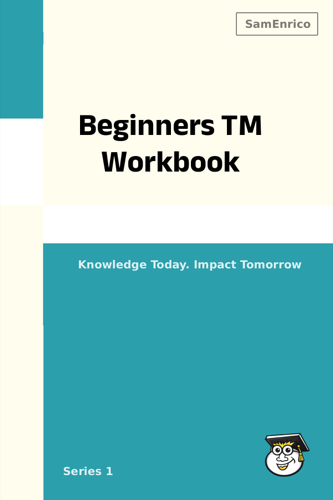
Non-FictionSelf-HelpHabit Formation
Beginners TM Workbook eBook
Step by step exercises to establish and maintain a
Step by step exercises to establish and maintain a consistent TM practice.
Formats
Free sample
Chapter 1: The Effort Trap...--Most people who struggle to meditate share a single, invisible problem. They try too hard. They sit down, close their eyes, and immediately begin fighting their own mind—pushing away thoughts, wrestling with restlessness, and judging every second that feels less than perfectly peaceful. This approach, which seems so logical and so virtuous, is actually the precise opposite of what Transcendental Meditation requires. The harder you try, the further you get from the goal.This chapter introduces the foundational paradox of TM and the single most important distinction that will determine whether you are still practicing six months from now or whether this workbook joins the stack of abandoned self-help books on your shelf.
That distinction is between two entirely different kinds of effort: effort during the meditation session (which must be zero) and effort in building the habit around the session (which is not only allowed but absolutely necessary). Confusing these two domains has derailed more beginners than any other single factor.You are about to learn why your instinct to "work hard" at meditation is actually working against you, how to recognize the subtle ways effort creeps into your practice, and why the most successful meditators are often the ones who seem to be doing the least. By the end of this chapter, you will have a clear understanding of the "effort trap," a personal anchor to keep you motivated, and a baseline awareness of how often you try to force solutions in your daily life—a pattern that TM will gradually unwind.The Toxic Cycle of Trying Harder Before we discuss any technique, any mantra, or any schedule, we must address the cultural water you have been swimming in your entire life. From childhood, you have been taught that effort equals virtue. Try harder.
Push through. No pain, no gain. This ethic works reasonably well for building muscles, passing exams, and advancing careers. But when applied to the inner world of the mind, it backfires catastrophically.Consider what happens when you cannot fall asleep. The more you command yourself to sleep, the more awake you become.
Or recall a time you tried to stop thinking about something—a embarrassing memory, an upcoming worry, a craving. The very act of pushing the thought away gives it more energy. This is the "ironic process theory" in psychology: deliberate attempts to suppress certain thoughts make them more likely to surface. Your mind is not a disobedient pet to be trained through force. It is a sensitive instrument that settles only when you stop interfering.The modern epidemic of toxic stress has amplified this problem.
You feel overwhelmed, anxious, and trapped in a cycle of solving one crisis after another. The natural response is to try harder—more coffee, longer hours, more planning, more control. But this response only deepens the exhaustion. You end up running faster on a treadmill that is already too fast. This workbook exists because you have likely discovered that trying harder has stopped working.
You are ready for a different approach.TM was developed to address precisely this paradox. The technique works not because you do something difficult, but because you stop doing something that has been causing the problem in the first place. You stop stirring the water. You stop fighting the mind. You stop trying to force relaxation.The Critical Distinction: Two Kinds of Effort Let us draw a line down the center of a page.
On the left side, write Effort During Meditation. On the right side, write Effort Building the Habit. These are two completely different domains, and successful TM practitioners learn to keep them strictly separate.On the left side—during the twenty minutes you sit with eyes closed—your only instruction is to allow. You do not concentrate. You do not empty your mind.
You do not analyze your breathing. You do not repeat the mantra with force or urgency. You do not try to feel peaceful. You do not judge whether you are "doing it right." You simply introduce the thought of the mantra easily and then allow it to come and go on its own, like a feather floating on a gentle breeze. Any effort at all—any trying, any forcing, any straining—is a departure from the technique.On the right side—everything outside those twenty minutes—effort is not only permitted but essential.
You must make an effort to schedule your two daily sessions. You must make an effort to prepare your space. You must make an effort to sit down even when you do not feel like it. You must make an effort to return to practice after a missed day. You must make an effort to protect your meditation time from the endless demands of life.
This is the effort of habit-building, and it has nothing to do with the effortlessness of the practice itself.Here is the mistake that derails most beginners: they confuse the two domains. They bring effortful striving into the meditation session, trying to force a particular outcome. Then, when it comes to actually sitting down each day, they become passive, waiting for motivation to strike before they practice. This is exactly backward. Be effortless during the session.
Be effortful in building the habit. Remember this distinction. It will appear throughout this workbook, and mastering it is the single most important skill you will develop.Your Personal Anchor: The "Why" Statement Before you learn any technique, you must know why you are learning it. Motivation is not a luxury; it is the fuel that carries you through the inevitable days when you do not want to meditate. Research on habit formation consistently shows that people who connect their daily actions to a deeper personal value are far more likely to persist than those who rely on willpower alone.Your "Why" Statement is not a vague aspiration like "I want to be less stressed." That is too abstract to sustain you at 6:00 AM when your pillow is warm and your alarm is cruel.
Your Why Statement must be visceral, specific, and emotionally charged. It should evoke a bodily sensation when you read it. It should remind you of a pain you want to escape or a joy you want to access.Here are examples of effective Why Statements from previous readers of this workbook:"So I stop yelling at my kids before school.""So I can sleep through the night without waking at 3:00 AM in a panic.""So I can feel creative again instead of just exhausted.""So I can sit through a meeting without my heart racing.""So I can remember what it feels like to be calm."Notice that none of these are philosophical. None are abstract. Each one describes a concrete, observable change in daily life.
Your Why Statement should do the same.Worksheet 1.1: Your "Why" Statement Take out a separate piece of paper or open a digital note. Set a timer for five minutes. Write continuously without editing. Complete the following sentence in as many ways as you can: "I am learning TM because I want to stop feeling..." or "I am learning TM so that I can finally..."When the timer ends, read…
This is the end of the free sample. Get the eBook to keep going. Buy now
About this book
Details
- Author
- Fisher Suzanne
- Publisher
- SamEnrico
- Language
- English
- Genre
- Non-Fiction, Self-Help, Habit Formation
- Released
- 2026-06-07
- Pages (approx.)
- 145
- Available as
- eBook, Audiobook

Read better in the ZLOADR app
Your eBooks on your phone or tablet. Sign in with your SamEnrico account and start reading.
More by Fisher Suzanne
 Search And Rescue SwimmerFisher Suzanne$11.99
 Tea Plantation GuideFisher Suzanne$11.99
 Postpartum Healing First Weeks GuideFisher Suzanne$11.99
 Breath for SeniorsFisher Suzanne$11.99
 Arthritis Shoulder ExercisesFisher Suzanne$11.99
 Factory Worker Chemical GuideFisher Suzanne$11.99
 Sheppard Case Jury SelectionFisher Suzanne$11.99
 Carnegie Success LessonsFisher Suzanne$11.99
 The Clockmaker of Greenwich: John Harrison and the Quest for LongitudeFisher Suzanne$11.99
 The Last Broadcast of the Sky GodsFisher Suzanne$11.99
 Volt Rush: The Untold Story of Elon Musk’s Secret Tesla Roadster Space MissionFisher Suzanne$11.99
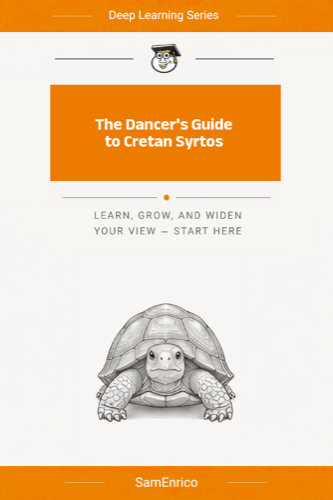 The Dancer's Guide to Cretan SyrtosFisher Suzanne$11.99
You may also like
 Hong Kong Handover 1997Dunn Johnnie$11.99
 Zumba For Postnatal Recovery CourseNeal Christian$11.99
 Zumba for BeginnersLadner Nikia$11.99
 YouTube Comment Mining GuideHumes Pandora$12.99
 Worry Box MeditationCarlin Rudy$11.99
 Workplace Stress MeditationNguyen Lynn$11.99
 Workplace Stress and Sleep RepairHawley Ivory$11.99
 Workplace Perfectionism CureDelaney Jeffry$11.99
 Workplace Injustice Anger GuideWallen Isabelle$11.99
 Work Addiction and Burnout LinkGreenwood Ester$11.99
 Women in Yoga and WellnessBeattie Galina$11.99
 Women in Stand Up ComedyChun Evangeline$11.99