
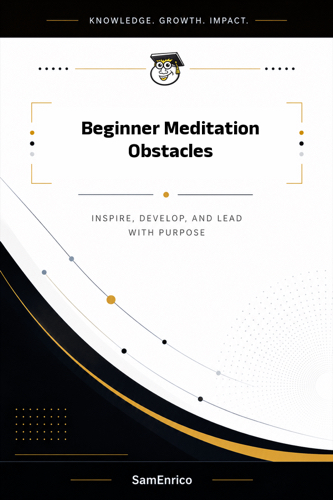
Non-FictionSelf-HelpChallengesPersistence
Beginner Meditation Obstacles eBook
Overcome boredom, restlessness, and doubt that ari
Overcome boredom, restlessness, and doubt that arise in early practice.
Formats
Free sample
Chapter 1: The Unspoken Agreement--–- Every meditation beginner signs a secret contract on their first day. The contract says: “I will sit on this cushion. In exchange, I expect my mind to become quiet, peaceful, and maybe a little bit enlightened within the next ten minutes. If this does not happen, I will assume I am broken and quit.”The problem is that no one told you about this contract. It was written by the culture around meditation—the glossy magazine covers, the serene stock photos, the celebrity endorsements—not by anyone who has actually tried to sit still for more than ninety seconds.
And this contract is the single greatest reason that over sixty percent of people abandon meditation within their first two weeks.They don’t quit because meditation is hard. They quit because they think they are the only ones finding it hard.This chapter exists to tear up that contract. Before we can overcome boredom, restlessness, and doubt, we have to stop believing that those experiences mean something has gone wrong. In fact, they mean something has gone exactly right. A mind that rebels against stillness is not a broken mind.
It is a healthy, normally functioning human brain encountering something it evolved to avoid: the absence of external stimulation.We are going to spend this entire book learning how to work with the three horsemen of early practice: boredom, restlessness, and doubt. But before we pick up any tools, we have to normalize the struggle. If you have ever sat down to meditate and felt immediately frustrated, bored, fidgety, or convinced that this is all a waste of time, you are not a bad meditator. You are a completely normal beginner having a completely normal beginner’s experience.Let’s begin by understanding what is actually happening inside your brain when you first close your eyes.The Myth of the Blank Mind The single most harmful myth about meditation is that the goal is to have no thoughts. This myth appears everywhere—in casual conversations, in introductory articles, even in some poorly designed meditation apps.
The implication is that if you are thinking, you are failing. And if you are thinking anxious, bored, or restless thoughts, you are failing spectacularly.This myth is not just wrong. It is destructive.The human brain does not have an “off” switch for thinking. Even advanced meditators with decades of practice continue to have thoughts. The difference is not the absence of thought but the relationship to thought.
A beginner experiences a thought and believes, “I have failed.” An experienced practitioner experiences a thought and thinks, “Ah, a thought,” and returns to the breath without drama. The thought still arose. The only thing that changed was the judgment attached to it.Research using functional magnetic resonance imaging (f MRI) has shown that when beginners meditate, their brains show high activity in what neuroscientists call the default mode network or DMN. The DMN is the brain’s narrative-generating system. It is responsible for mind-wandering, self-referential thought, planning, reminiscing, and the internal monologue that runs constantly in the background.
When you are not actively focused on a task, the DMN lights up. It is always telling stories about you—your past, your future, your worries, your hopes.Here is the crucial insight: the DMN is not malfunctioning when you meditate. It is doing exactly what it evolved to do. For most of human evolutionary history, a quiet, non-narrative brain would have been a dangerous liability. You needed to be constantly scanning for threats, planning your next meal, and remembering where predators hid.
The DMN kept our ancestors alive.When you first sit down to meditate, you are asking your DMN to do something it has never been trained to do: be quiet. Naturally, it rebels. It generates boredom to make you seek stimulation. It generates restlessness to make you move. It generates doubt to make you quit and do something “more productive.” These are not bugs.
They are features of a brain trying to protect you from what it perceives as a useless activity.The problem is not your brain. The problem is that no one explained this to you before you sat down.The Three Horsemen of Early Practice Throughout this book, we will refer to boredom, restlessness, and doubt as the Three Horsemen of Early Practice. They arrive together, they feed on each other, and they are responsible for more abandoned meditation practices than any other cause. Understanding each horseman individually is the first step to disarming them.Boredom is the experience of under-stimulation. Your brain craves novelty, dopamine, and change.
The breath offers none of these. It is the same breath, over and over, each one remarkably similar to the last. Your brain interprets this lack of novelty as a problem to be solved. It generates an aversive feeling—boredom—to motivate you to find something more interesting. The irony is that boredom itself becomes interesting once you learn to investigate it.
But in the beginning, boredom feels like a verdict: “This activity is not worth your time.”Restlessness is the experience of excess energy with no outlet. Physically, it manifests as fidgeting, itching, back pain, leg cramps, and the overwhelming urge to adjust your posture. Mentally, it manifests as racing thoughts, earworms (songs looping in your head), planning, and the irresistible pull toward your phone. Restlessness is boredom’s aggressive cousin. Where boredom whispers, “This is dull,” restlessness shouts, “Get out of here now.” Both are forms of aversion—the mind’s natural recoiling from discomfort.Doubt is the most seductive horseman because it wears the mask of intelligence.
Doubt says, “Let’s be reasonable about this. Is meditation really working? Are you sure you’re doing it right? Maybe this is just not for you. Some people’s brains are different.” Doubt feels like clear-eyed analysis, but it is almost never that.
True analysis asks questions and stays curious. Doubt makes declarations and leaves. It says “This won’t work” rather than “Let’s see what happens.”These three horsemen are not signs that you are meditating badly. They are signs that you are meditating at all. A person who never sits down never experiences boredom, restlessness, or doubt about meditation.
The very presence of these obstacles means you have shown up. And showing up is ninety percent of the practice.What Ten Bestselling Books Agree On This book synthesizes the wisdom of the ten most influential meditation guides of the past fifty years. They come from different traditions—Burmese vipassanā, Zen, Tibetan, secular mindfulness—but they agree on one thing with remarkable unanimity: every beginner suffers.Bhante Gunaratana, in Mindfulness in Plain English, writes that the first obstacle for every meditator is the “resistance to sitting.” Thich Nhat Hanh, in The Miracle of Mindfulness, describes how his own students initially find the breath “tedious and disappointing.” Jon Kabat-Zinn, who brought mindfulness into mainstream medicine, warns that most people quit before they experience any benefit because they cannot tolerate the discomfort of doing nothing.Dan Harris, the ABC news anchor who had a public panic attack on national television, admits in 10% Happier that he hated meditation for the first several…
This is the end of the free sample. Get the eBook to keep going. Buy now
About this book
Details
- Author
- Beatty Temeka
- Publisher
- SamEnrico
- Language
- English
- Genre
- Non-Fiction, Self-Help, Challenges, Persistence
- Released
- 2026-06-09
- Pages (approx.)
- 134
- Available as
- eBook, Audiobook

Read better in the ZLOADR app
Your eBooks on your phone or tablet. Sign in with your SamEnrico account and start reading.
More by Beatty Temeka
 Coping With Sudden Pet DeathBeatty Temeka$11.99
 The Validating Children's Emotions GuideBeatty Temeka$11.99
 Complicated Grief in ChildrenBeatty Temeka$11.99
 Teacher Classroom CreativityBeatty Temeka$11.99
 The Charioteers of Olympia: Breaking the Gender Barrier in Ancient GreeceBeatty Temeka$11.99
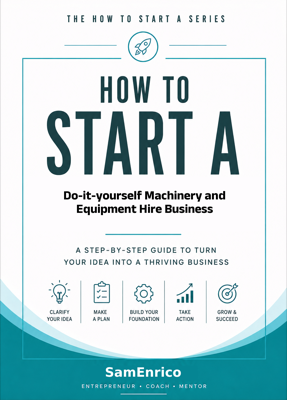 How to Start a Do-it-yourself Machinery and Equipment Hire Business (Beginners Guide)Beatty Temeka$11.99
 Chemistry ProfessorBeatty Temeka$11.99
 Procurement Policy AutomationBeatty Temeka$12.99
 Expense Reporting AI ToolsBeatty Temeka$12.99
You may also like
 Hong Kong Handover 1997Dunn Johnnie$11.99
 Zumba For Postnatal Recovery CourseNeal Christian$11.99
 Zumba for BeginnersLadner Nikia$11.99
 YouTube Comment Mining GuideHumes Pandora$12.99
 Worry Box MeditationCarlin Rudy$11.99
 Workplace Stress MeditationNguyen Lynn$11.99
 Workplace Stress and Sleep RepairHawley Ivory$11.99
 Workplace Perfectionism CureDelaney Jeffry$11.99
 Workplace Injustice Anger GuideWallen Isabelle$11.99
 Work Addiction and Burnout LinkGreenwood Ester$11.99
 Women in Yoga and WellnessBeattie Galina$11.99
 Women in Stand Up ComedyChun Evangeline$11.99