
Non-FictionHealth & WellnessBed Exercises
Bedridden Pelvic Routine eBook
Provides supine pelvic exercises for those with li
Provides supine pelvic exercises for those with limited mobility or bed rest.
Formats
Free sample
Chapter 1: The Hammock Secret--If you are reading this book while lying flat on your back, you have already taken the most important step toward pelvic health. That is not a motivational trick or a gentle fiction. It is a physiological fact. The supine position—lying face up with your spine in a neutral position—transforms gravity from an enemy that has been pulling down on your pelvic organs for years into a neutral observer, and sometimes even a therapeutic ally. Standing upright, gravity constantly tugs at your pelvic floor, asking it to hold back the weight of your bladder, your uterus or prostate, your intestines, and all the fluid and contents within them.
It is a relentless twenty-four-hour job. But when you lie down, that gravitational pull dissipates. Your pelvic floor can finally rest, reset, and relearn its job without the constant pressure of the world bearing down on it.This is the great secret that most pelvic health books never tell you. They assume you can squat, stand on one leg, get on all fours, or perform a bridge pose. They are written for the athlete returning to Cross Fit, the postpartum mother chasing a toddler, or the middle-aged executive trying to run marathons.
Those books are not wrong. They simply are not written for you. And that is not your failure. It is the publishing industry's blind spot. Millions of people spend weeks, months, or even years bedridden—recovering from major surgery, managing a chronic illness, healing from a severe injury, living with long COVID, navigating late-stage cancer, or coping with a stroke.
And almost no one has written a pelvic health book for you. Until now.The truth is that your pelvic floor does not care whether you can do a deadlift or a downward dog. It cares about pressure, breath, and awareness. And all three of those things can be trained perfectly well while lying down. In fact, some aspects of pelvic floor training are actually easier and more effective in the supine position because you remove the variable of gravity.
You get to learn the fundamental movement patterns—release, lift, coordinate—without also having to balance, bear weight, or fight gravity. It is like learning to swim on dry land first, mastering the arm motion before you ever get in the water. When you eventually do sit up, stand, or walk again, your pelvic floor will already know what to do. You will not be learning under pressure. You will be performing under pressure, which is a very different thing.Let me tell you about Margaret.
She is seventy-two years old, a retired schoolteacher, and six weeks post-stroke when she first contacts me. She is bedridden in a rehabilitation facility, unable to stand without two aides supporting her. She has not had a bowel movement in five days because she is terrified of straining. She has leaked urine during every bed bath for the past two weeks, and she has started refusing the baths altogether, telling the nurses she is tired when really she is ashamed. Her daughter bought her the top-selling pelvic floor book from Amazon, the one with five thousand five-star reviews.
Margaret reads the first three chapters and bursts into tears. The book assumes she can squat. It has pictures of a thin, able-bodied woman in yoga pants doing something called a "deep core squat." Margaret cannot sit up without help. She throws the book across the room. That was six days ago.
She has not opened a book since.Margaret is not the problem. The book was the problem. And this is not an unusual story. I have heard versions of it hundreds of times from bedridden patients who felt abandoned by the wellness industry, gaslit by doctors who told them to "just do Kegels" without explaining how, and ignored by publishers who assumed that pelvic health only matters for people who can stand. This book exists because of Margaret and every other person who has been told, implicitly or explicitly, that their body no longer matters because it cannot perform the positions in a glossy fitness manual.Before we go any further, we need to establish some ground rules.
These rules are non-negotiable because they are the safety net that will protect you from injury, frustration, and confusion. The first rule is The Red Light Rule, and it applies to every single exercise, breath, and movement in this book. Here it is: If you feel a bulge, a drop, or see any leakage during any exercise or activity, stop immediately. Do not push through. Do not try harder.
Stop. Rest for one full minute, breathing normally. Then return to the previous chapter's exercises for one full week before attempting to progress again. This is not a suggestion. It is a safety protocol.
Your pelvic floor is communicating with you through sensation. A bulge or a drop means that intra-abdominal pressure is overwhelming your pelvic floor's ability to maintain its position. Leakage means the same thing. These are not signs that you need to try harder. They are signs that you need to slow down, go back, and build a stronger foundation.
There is no shame in this. Every person who has ever recovered pelvic function has hit this wall. The ones who succeed are the ones who respect the wall and back up. The ones who try to crash through it end up worse than when they started.The second rule is the Mobility Triage System. This book is written for bedridden patients, but "bedridden" is not a single condition.
It is a spectrum. Some of you can bend your knees and slide your feet on the sheet. Some of you cannot move your legs at all. Some of you have full use of your arms. Some of you have hemiplegia from a stroke.
Some of you are on palliative care and will never stand again. Some of you are recovering from hip replacement and will stand in two weeks. This book has to work for all of you, which means it cannot treat you all the same way. So we have three tracks.Track A is for patients with zero leg movement or severe mobility limitations. This includes people with complete spinal cord injuries, late-stage multiple sclerosis, severe stroke with hemiplegia, those in palliative care, or anyone who cannot bend their knees or move their legs independently.
If you are in Track A, you will read Chapters 1 through 3 in full. Then you will skip to Chapter 11, which contains breathing-only and awareness-only adaptations. You will not perform the exercises in Chapters 4 through 8 or Chapter 10. Those chapters assume a level of mobility you do not have, and attempting them could cause injury or extreme frustration. Track A is not a lesser track.
It is simply a different track. Your pelvic floor can still improve dramatically using only breath and awareness. I have seen patients with complete spinal cord injuries regain bladder sensation using the techniques in Chapter 2 alone. Do not underestimate the power of what you can do.Track B is for patients with some leg movement. You can bend your knees, place your feet flat on the bed, and slide…
This is the end of the free sample. Get the eBook to keep going. Buy now
About this book
Details
- Author
- Beauregard Adele
- Publisher
- SamEnrico
- Language
- English
- Genre
- Non-Fiction, Health & Wellness, Bed Exercises
- Released
- 2026-06-10
- Pages (approx.)
- 130
- Available as
- eBook, Audiobook

Read better in the ZLOADR app
Your eBooks on your phone or tablet. Sign in with your SamEnrico account and start reading.
More by Beauregard Adele
 CapEx Reserve Planning GuideBeauregard Adele$11.99
 Antwerp Heist Escape RoomBeauregard Adele$11.99
 Librarian Who Built LiteracyBeauregard Adele$11.99
 Teal Swan TruthBeauregard Adele$11.99Teal Swan TruthBeauregard Adele$11.99
 Prediabetes Master GuideBeauregard Adele$11.99
 Contemplating Relinquishment BreathBeauregard Adele$11.99
 The Last Stand of Jens Voigt: The Voice of the PelotonBeauregard Adele$11.99
 Xochiquetzal and Tezcatlipoca: The Flowered Serpent’s Forbidden PassionBeauregard Adele$11.99
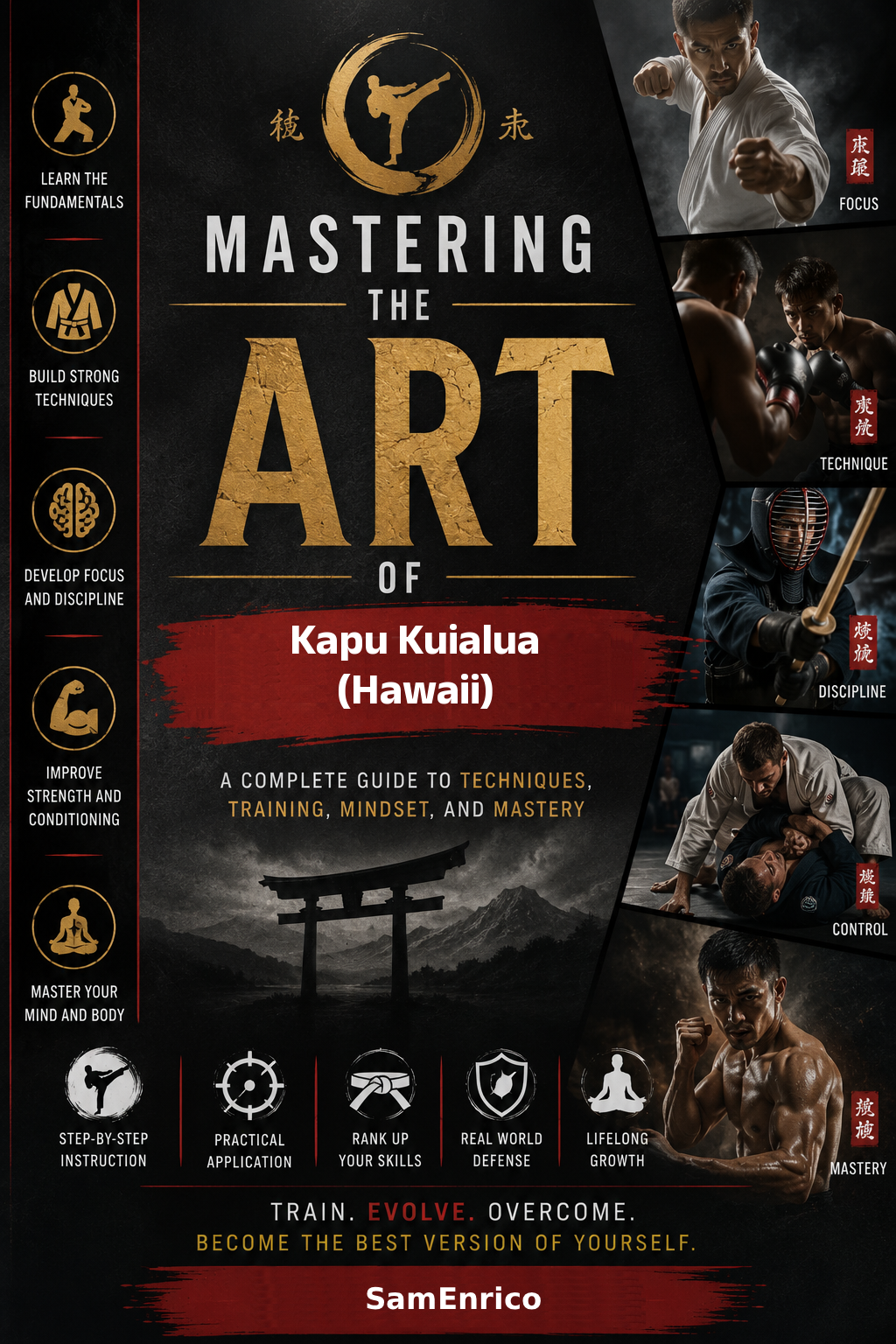 Mastering The Art of Kapu Kuialua (Hawaii)Beauregard Adele$11.99
 How to Produce Storage Hooks and RacksBeauregard Adele$11.99
 How to Produce Hair Steamers and Heat CapsBeauregard Adele$11.99
You may also like
 Hong Kong Handover 1997Dunn Johnnie$11.99
 Zumba For Postnatal Recovery CourseNeal Christian$11.99
 Zumba for BeginnersLadner Nikia$11.99
 YouTube Comment Mining GuideHumes Pandora$12.99
 Worry Box MeditationCarlin Rudy$11.99
 Workplace Stress MeditationNguyen Lynn$11.99
 Workplace Stress and Sleep RepairHawley Ivory$11.99
 Workplace Perfectionism CureDelaney Jeffry$11.99
 Workplace Injustice Anger GuideWallen Isabelle$11.99
 Work Addiction and Burnout LinkGreenwood Ester$11.99
 Women in Yoga and WellnessBeattie Galina$11.99
 Women in Stand Up ComedyChun Evangeline$11.99