
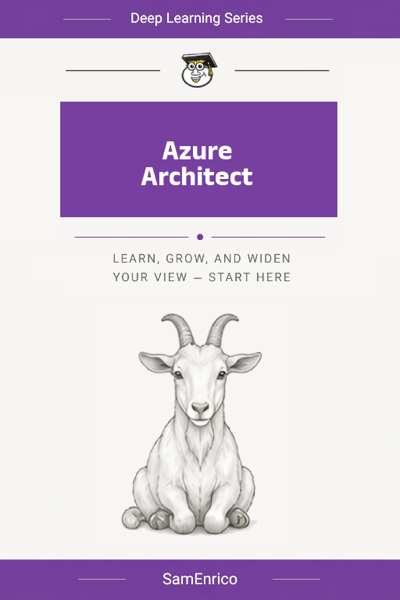
Non-FictionInformativeEducational
Azure Architect eBook
A Coursebook on Azure Architect
A Coursebook on Azure Architect
Formats
Free sample
Chapter 1: The Compass Before the Cloud...--–- The email arrived at 11:47 PM on a Friday. "Urgent: Our primary datacenter just lost cooling. All systems will be offline in 90 minutes. Please advise." The architect on call—let’s call her Priya—had spent the last six months designing a "highly available" architecture for a retail giant. She had chosen the right VM sizes, configured load balancers, and set up geo-redundant storage.
But as she stared at the alert, she realized something uncomfortable: she had never asked the business what "available" actually meant. Was 99.9% uptime sufficient, or did they need 99.99%? Could the authentication system survive a regional failure? And why was the backup strategy still using tapes from 2015?This moment—the gap between technical design and business survivability—is the reason this book exists. Before you write your first line of Bicep, before you provision your first resource group, before you even open the Azure Portal, you need something far more important than technical knowledge: you need a decision-making framework.
This chapter is that framework.Welcome to the first principle of Azure architecture: the cloud does not guarantee reliability; architects do. Microsoft provides the building blocks, but only you can assemble them into a system that survives a hurricane, a misconfigured firewall, or a developer who accidentally deletes a production database. This chapter introduces the Azure Well-Architected Framework—not as a compliance checklist to be audited once a year, but as a compass that guides every decision you will make in the subsequent 400 pages of this book.You will learn why the five pillars are constantly at war with each other, how to translate a vague business request like "make it fast" into measurable performance targets, and why the most expensive architecture is often the cheapest one in the long run. By the time you finish this chapter, you will have a repeatable process for making trade-offs, a language for negotiating with non-technical stakeholders, and a template for documenting your decisions so that the next architect doesn't curse your name at 2 AM.Let us begin with a story about a crashed database, a furious CEO, and the diagram that saved Christmas.The Parable of the Holiday Shopping Cart Three years ago, a mid-sized electronics retailer decided to move its e-commerce platform to Azure. The engineering team was talented but inexperienced in cloud architecture.
They designed what they thought was a robust system: virtual machines running the web tier, a managed SQL database for inventory, and a content delivery network for product images. Everything worked beautifully during load testing.Then came Black Friday.At 10:17 AM, the database CPU maxed out. By 10:22 AM, customers started seeing "503 Service Unavailable." By 10:45 AM, the CTO was on a conference call with Microsoft support. The root cause? The team had chosen a database tier optimized for cost, not throughput.
They had assumed that "the cloud scales automatically"—but auto-scaling only works if you configure it. The company lost $2.3 million in sales over four hours. The architect who designed the system was terminated the following week.The painful truth is that the architect was not incompetent. They understood virtual networks, storage accounts, and VM families. What they lacked was a decision framework—a structured way to answer questions like: "What happens if this database gets 10x the expected traffic?" and "Is it worth paying 40% more for a database tier that adds automatic read replicas?" The Azure Well-Architected Framework would have forced them to ask those questions before the crisis.The Five Pillars of Architectural Sanity The Azure Well-Architected Framework, maintained by Microsoft and updated quarterly based on real-world outages, consists of five pillars.
Think of them as the laws of physics for cloud architecture: you can violate them temporarily, but eventually you will pay a price.Pillar One: Reliability. This is the system's ability to recover from failures and continue functioning. It is measured in uptime percentages—99.9% ("three nines") allows 8.76 hours of downtime per year, while 99.99% ("four nines") allows only 52.56 minutes. Reliability is achieved through redundancy (multiple instances), replication (copies of data), and graceful degradation (when a component fails, the rest keeps working). The most reliable system is also the most expensive.
A multi-region active-active architecture might cost five times more than a single-region deployment.Pillar Two: Security. This is the protection of data and systems from unauthorized access. It includes identity management (who can do what), data encryption (at rest, in transit, and in use), network security (firewalls, private endpoints), and threat detection. Security often conflicts with Performance (encryption adds CPU overhead) and Cost (secure services are more expensive). The least secure system is also the cheapest—and the fastest way to lose your job.Pillar Three: Cost Optimization.
This is the practice of eliminating waste and paying only for what you use. It includes right-sizing resources (don't use a 16-core VM for a website that gets 100 visits per day), using reserved instances (prepay for a year to save up to 72%), and auto-scaling (turn off resources when not needed). Cost optimization conflicts with Reliability (more redundancy costs more) and Performance (faster services cost more). The cheapest system is also the least reliable—and sometimes that is the right choice for a development environment.Pillar Four: Performance Efficiency. This is the ability to scale resources to meet demand efficiently.
It includes choosing the right service for the job (a cache instead of a database for session state), using CDNs for static content, and designing for parallelism (many small requests instead of one giant request). Performance conflicts with Cost (faster services are more expensive) and sometimes Security (encryption adds latency).Pillar Five: Operational Excellence. This is the quality of your operations processes—deployment, monitoring, alerting, and incident response. It includes infrastructure as code (repeatable deployments), comprehensive logging, automated remediation, and post-incident reviews. Operational excellence is the pillar that most architects ignore until something breaks.
It has no direct cost but requires discipline. A system with perfect operational excellence can recover from failure in minutes; a system without it can stay broken for days even if the underlying infrastructure is fine.These five pillars are not a checklist to be completed. They are a set of competing priorities. Your job as an architect is not to maximize every pillar—that is impossible. Your job is to make conscious trade-offs and document them so that everyone understands why you chose reliability over cost, or security over performance.The Trade-Off Matrix: Your Most Important Tool Most architects make decisions intuitively: "I think we should use Premium SSD because it's faster." This is not architecture; it is guessing.
The professional architect uses a trade-off matrix—a simple table that forces explicit comparison.Consider a real decision: You are designing a database for a customer support portal. The team wants Azure SQL Database. You have three options:Option A: Basic tier, $15/month, 5 DTUs, no high availability.Option B: Standard tier, $150/month, 100 DTUs, zone-redundant high availability.Option C: Premium tier, $1,500/month, 500 DTUs, geo-redundant high availability with read replicas.Which do you choose? The correct answer is: it depends on the business requirement. If this is an internal tool used by 10 support agents, Option A is fine.
If this is the primary database for a public-facing banking app, Option C is non-negotiable. The trade-off matrix looks like…
This is the end of the free sample. Get the eBook to keep going. Buy now
About this book
Details
- Author
- Mcginnis Chin
- Publisher
- SamEnrico
- Language
- English
- Genre
- Non-Fiction, Informative, Educational
- Released
- 2026-05-08
- Pages (approx.)
- 157
- Available as
- eBook, Audiobook

Read better in the ZLOADR app
Your eBooks on your phone or tablet. Sign in with your SamEnrico account and start reading.
More by Mcginnis Chin
 Paralanguage Vocal Nonverbal Cues GuideMcginnis Chin$11.99
 Parenting Eating Disorder RecoveryMcginnis Chin$11.99
 Survey Data Aggregation with AIMcginnis Chin$11.99
 OCD And Tic Disorder OverlapMcginnis Chin$11.99
 The Silent Symphony: How a Deaf Composer Changed HollywoodMcginnis Chin$11.99
 Ash and Obsidian: The Volcanic Secrets of the Atlantic's Lost CivilizationsMcginnis Chin$11.99
 Understanding Campomelia Cumming TypeMcginnis Chin$17.99
 PhD Personal Statement Without PapersMcginnis Chin$12.99
 Zero Tuition German Master HandbookMcginnis Chin$12.99
 How to Start a Construction of Hospitals Business (Beginners Guide)Mcginnis Chin$11.99
You may also like
 Hong Kong Handover 1997Dunn Johnnie$11.99
 Zumba For Postnatal Recovery CourseNeal Christian$11.99
 Zumba for BeginnersLadner Nikia$11.99
 YouTube Comment Mining GuideHumes Pandora$12.99
 Worry Box MeditationCarlin Rudy$11.99
 Workplace Stress MeditationNguyen Lynn$11.99
 Workplace Stress and Sleep RepairHawley Ivory$11.99
 Workplace Perfectionism CureDelaney Jeffry$11.99
 Workplace Injustice Anger GuideWallen Isabelle$11.99
 Work Addiction and Burnout LinkGreenwood Ester$11.99
 Women in Yoga and WellnessBeattie Galina$11.99
 Women in Stand Up ComedyChun Evangeline$11.99