
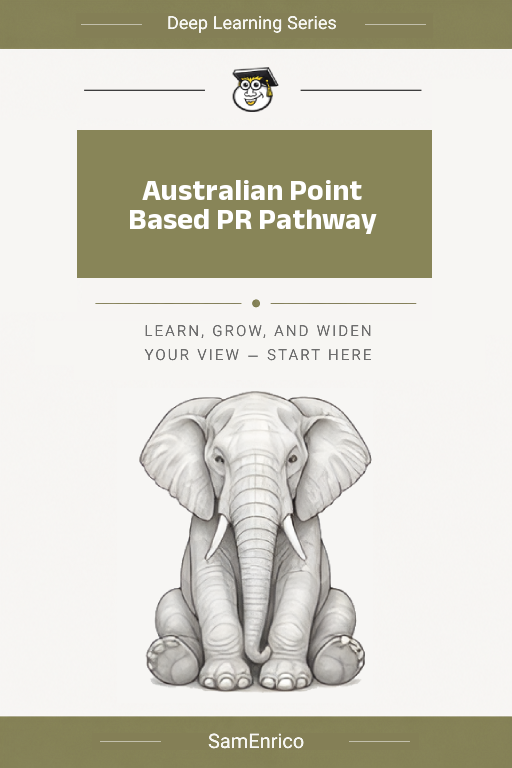
Australian Point Based PR Pathway eBook
Study in Australia for post study work visa and po
by Lawler Hanh
Study in Australia for post study work visa and potential permanent residency through skilled migration.
Formats
Free sample
Chapter 1: The Canberra Earthquake...--–- On the evening of May 12, 2026, Treasurer Jim Chalmers stood behind a polished wooden lectern in the press gallery of Parliament House, Canberra. Behind him, a large digital screen displayed a single headline in bold sans-serif font: "Migration Reset: Building a Smarter Australia." The room was packed with journalists, migration agents, university representatives, and policy analysts. Forty-eight hours earlier, the federal budget had been delivered. But the migration component—buried on page 327 of the budget papers—had only now been scheduled for public explanation. Chalmers adjusted his glasses, took a sip of water, and began to speak.
"Tonight, I am announcing the most significant overhaul of Australia's skilled migration points test in a generation." He paused to let the words land. "The old system rewarded time spent in Australia. The new system will reward potential to contribute to Australia." In boardrooms, student lounges, and Whats App groups across the world, thousands of prospective migrants realized in that moment that the rules had changed. The pathway they had been planning for was no longer the pathway that existed.This is not a book about abstract migration theory. This is a book about what happened on that night, what it means for you, and how you can navigate the new landscape.
Every year, hundreds of thousands of international students arrive in Australia with a dream: study hard, graduate, find work, and eventually become a permanent resident. But the gap between dreaming and achieving has always been bridged by knowledge, strategy, and meticulous planning. After May 12, 2026, that gap widened for some and narrowed for others—depending entirely on how well they understood the reset.I wrote this chapter first because the 2026 Migration Reset is not a minor adjustment. It is not a tinkering with point values. It is a fundamental rethinking of what Australia values in a future citizen.
The old system said: come here, study here, spend time here, and we will reward your patience. The new system says: show us your human capital—your English, your age, your qualifications, your earning potential—and we will reward your capability. This shift from a time-based to a capability-based system is the single most important fact you need to internalize before you choose a course, book an English test, or submit an Expression of Interest.This chapter will walk you through the timeline of how we got here, the core philosophy driving the change, the new 500-point scoring grid, the removal of "legacy" point categories, the introduction of income-based points, and the truth about the so-called "300-point barrier." By the end of this chapter, you will understand not just what changed, but why it changed—and, most importantly, how to position yourself for success under the new rules.The Timeline: From Grattan to Budget Night To understand where we are, you need to understand how we got here. The 2026 Migration Reset did not emerge from nowhere. It was the product of three years of policy debate, academic modelling, and political negotiation.
The dates matter because they affect which rules apply to you based on when you apply or when you submit your Expression of Interest.May 2024: The Grattan Institute Blueprint. The Grattan Institute, a respected public policy think tank, published its "Points Test Reform" blueprint. The report was blunt. It argued that the existing points system rewarded "low-value" indicators that did not predict long-term economic contribution. Regional study points, the report said, simply encouraged students to enrol in regional campuses before moving straight to Sydney or Melbourne after gaining PR.
NAATI credential points rewarded multilingualism that rarely translated into higher wages. Professional Year points were a substitute for actual work experience. The Grattan recommendation was radical: scrap the legacy categories, double down on English, age, and high-level qualifications, and introduce a new "human capital" grid.December 2024: The Department of Home Affairs Responds. Under pressure from the Grattan report and growing public concern about migration levels, the Department of Home Affairs released its "Migration Strategy." The document confirmed that a formal points test review was underway and would be implemented within two years. It signalled that English would become "more influential" and that "genuine work experience" would be prioritized over classroom-based programs.
Migration agents began advising clients to prepare for higher English standards.2025: The Quiet Year of Modelling. Throughout 2025, internal government modelling took place behind closed doors. The Department trialled a 500-point "Human Capital" grid, assessing the impact of higher weightings for age, English, and qualifications. The modelling reportedly showed that a 500-point system with a 300-point pass mark would produce roughly the same number of invitations as the old 135-point system with a 65-point pass mark—but with better differentiation at the top end. The government also modelled the impact of income-based points, testing thresholds at AUD 80,000, AUD 120,000, and AUD 150,000.
The final choice of the Specialist Skills Threshold at AUD 146,717 was not arbitrary. It was the figure that best predicted long-term earnings growth.May 12, 2026: Budget Night. Treasurer Chalmers stood before the press and confirmed funding and implementation of the Points Test Overhaul. The new system would apply to all Expressions of Interest lodged after July 1, 2026. Existing EOIs would be assessed under the old rules.
The government also confirmed the removal of regional study points, NAATI points, and Professional Year points. In their place: a 100-point category for Superior English, a 100-point category for optimal age, and new points for high-income job offers.Late 2026: Full Implementation. By November 2026, the new points test grid was fully operational. The first invitation rounds under the new system showed exactly what the modelling had predicted: younger applicants with Superior English and Master's degrees dominated the invitations, while older applicants with extensive experience but mediocre English struggled to reach the 300-point floor.If you applied for a visa before these changes, your application is assessed under the old rules. If you are planning to apply from now onward, or if you currently hold a 485 visa and intend to apply for PR after its expiry, you must understand the new grid.
There is no grandfathering for future applications.The Core Philosophy: Selecting for Long-Term Potential The 2026 reset is not just about changing numbers. It is about changing philosophy. To succeed under the new system, you need to understand what Australia is trying to achieve.Australia has an aging population. The ratio of working-age Australians to retirees has been declining for decades. The pandemic exacerbated this trend, as border closures temporarily halted migration while the domestic population continued to age.
The government's economic modelling shows that by 2030, Australia will need an additional 500,000 skilled workers just to maintain current service levels in healthcare, aged care, education, and technology.The old points system was designed for a different era. It assumed that anyone who spent enough time in Australia—studying, working, attending Professional Year courses—would eventually become a productive citizen. But data from the Australian Bureau of Statistics and the Department of Home Affairs told a different story. Migrants who gained PR through the old system had widely varying economic outcomes. Those with Superior English earned, on average, 40 percent more than those with minimum English.
Those who arrived before age 30 had, on average, 15 more years of workforce participation than those who arrived after…
This is the end of the free sample. Get the eBook to keep going. Buy now
About this book
Details
- Author
- Lawler Hanh
- Publisher
- SamEnrico
- Language
- English
- Genre
- Non-Fiction, Student's Shortcut
- Released
- 2026-06-01
- Pages (approx.)
- 156
- Available as
- eBook, Audiobook

Read better in the ZLOADR app
Your eBooks on your phone or tablet. Sign in with your SamEnrico account and start reading.
More by Lawler Hanh
 Speed Networking Event GuideLawler Hanh$11.99
 The Prevention Mindset ShiftLawler Hanh$11.99
 Raise Negotiation ScriptsLawler Hanh$11.99
 Loneliness Hostel ConnectionLawler Hanh$11.99
 Child Anxiety CalmLawler Hanh$11.99
 Away Message StrategyLawler Hanh$11.99
 Senior Fashion ConfidenceLawler Hanh$11.99
 Countdown Trance TechniqueLawler Hanh$11.99
 Antwerp Heist Lawyer ViewLawler Hanh$11.99
 Omar Sharif: The Arab Shakespearean Who Conquered HollywoodLawler Hanh$11.99
 The Day the Internet Almost Broke: The 2016 DDoS Attack That Shook the WorldLawler Hanh$11.99
 Blood, Sweat, and Synthetics: The Shadow Runners of the 1984 OlympicsLawler Hanh$11.99
You may also like
 Hong Kong Handover 1997Dunn Johnnie$11.99
 Zumba For Postnatal Recovery CourseNeal Christian$11.99
 Zumba for BeginnersLadner Nikia$11.99
 YouTube Comment Mining GuideHumes Pandora$12.99
 Worry Box MeditationCarlin Rudy$11.99
 Workplace Stress MeditationNguyen Lynn$11.99
 Workplace Stress and Sleep RepairHawley Ivory$11.99
 Workplace Perfectionism CureDelaney Jeffry$11.99
 Workplace Injustice Anger GuideWallen Isabelle$11.99
 Work Addiction and Burnout LinkGreenwood Ester$11.99
 Women in Yoga and WellnessBeattie Galina$11.99
 Women in Stand Up ComedyChun Evangeline$11.99