
Australian Export Green Marks eBook
Access Australian markets with Good Environmental
by Wendt Wes
Access Australian markets with Good Environmental Choice, Climate Active, and Australian Organic certification.
Formats
Free sample
Chapter 1: The Premium Mirage--–- In 2019, Margaret Chen, the export director of a third-generation Australian wine company based in the Barossa Valley, received an email that would change how she thought about the words "Product of Australia." She had just spent six months negotiating a exclusive distribution agreement with a major UK retailer—Waitrose, which operates over 300 stores across Britain. The contract was worth an estimated $4.2 million annually. The tasting had gone perfectly. The pricing had been agreed. The logistics had been mapped.
The only thing standing between Margaret and a signed contract was a single question from the Waitrose procurement team: "Can you provide your Climate Active carbon neutral certification for this product line?"Margaret did not know what Climate Active was. She had never heard of it. She had spent her career believing that "Australian wine" carried its own premium—that the sun-drenched imagery of South Australian vineyards, the clean green reputation of the country's food and fibre sector, and the trust built over decades of trade would be sufficient. She was wrong. Within two weeks, the contract went to a Chilean competitor.
The Chilean wine was not better. The price was not lower. But the Chilean exporter had a carbon neutral certification that Waitrose required as a non-negotiable entry condition.This book exists because of Margaret's email. And because of the seafood processor in Tasmania who lost a Japanese tender because they lacked GECA lifecycle data. And because of the beef producer in Queensland who was forced into discount commodity channels after failing to prove chemical-free status to a German buyer.
These are not isolated cautionary tales. They are the new normal.The era when "Australian Made" and "Product of Australia" were sufficient export differentiators is over.That statement will make some readers angry. It will make others defensive. A few will dismiss it as alarmist. But the data is unambiguous, the market trends are accelerating, and the consequences of ignoring this shift are measured in lost contracts, eroded margins, and closed doors.This chapter establishes the economic and market rationale for pursuing green certifications.
It does not assume you are already convinced. It does not preach about saving the planet—though that is a worthy goal. Instead, it speaks the language of export businesses: revenue, margin, market access, and competitive advantage. By the end of this chapter, you will understand precisely why the three certifications covered in this book—Good Environmental Choice Australia (GECA), Climate Active, and Australian Organic—have become the new passports to premium markets. You will also understand why pursuing only one might be sufficient for some doors, but stacking all three is becoming the gold standard for unassailable market positioning.The Collapse of the Geographic Premium For decades, Australian exporters enjoyed what economists call a "geographic premium." Buyers in China, Japan, South Korea, the European Union, and the United States were willing to pay more for products simply because they came from Australia.
The reasons were well-understood: Australia's biosecurity reputation, its clean air and water, its rigorous food safety standards, and the intangible trust associated with the kangaroo logo.That premium has been eroding for years. In 2024, a comprehensive analysis of export pricing data revealed that the price premium for "Australian Made" products had collapsed by 40 percent in the Chinese market compared to 2019 levels. In the European Union, the decline was 25 percent. In the United Kingdom, it was 30 percent.What replaced it? Not nothing.
Something new.Buyers are no longer asking "Where does this come from?" They are asking "What can you prove?" The shift is from geography to verification. From origin stories to third-party data. From trust-me marketing to show-me certification.Consider the following transformation in buyer requirements across major export markets:European Union: The EU's Green Claims Directive, expected to take full effect by 2026, will require any environmental marketing claim to be substantiated by verified third-party certification. Generic terms like "eco-friendly," "green," and "sustainable" will be prohibited without supporting evidence. Retailers such as Carrefour, Tesco, and Aldi have already begun requiring specific certifications—not just promises.United Kingdom: The fastest-growing market for carbon-labelled products in the world.
According to data from the Carbon Trust, products displaying verified carbon footprint information have grown at a compound annual rate of 34 percent since 2020. Waitrose, the retailer that rejected Margaret Chen's wine, now requires Climate Active certification for all imported wines. Marks & Spencer requires it for all private-label imported food products.China: Green imports command a price premium of 20 to 30 percent over conventional equivalents, according to 2024 trade data from the China Chamber of Commerce for Import and Export of Foodstuffs. However, Chinese buyers have become sophisticated. They no longer accept self-declared green claims.
They require certification from recognised bodies, and they have learned to distinguish between rigorous standards (like Australian Organic) and weaker alternatives.Japan: The Eco Mark, administered by the Japan Environment Association, has become nearly mandatory for retail shelf space in major chains like Aeon and Seven & i. Japanese buyers specifically seek out GECA certification because it aligns with the ISO 14024 standard that Japan's own Eco Mark follows. Without GECA, your product may not even receive a response to your inquiry.United States: While the US has resisted federal mandatory labelling laws, individual states are moving aggressively. California's Green Claims Act, effective 2025, imposes strict liability for unsubstantiated environmental claims. Major retailers including Walmart, Target, and Costco have preemptively adopted certification requirements for imported products to mitigate their own legal exposure.The message is consistent across every major market: the geographic premium is dead.
Long live the verification premium.Three Exporters Who Learned the Hard Way Before we dive into the data and the frameworks, let me introduce you to three Australian exporters who learned about the shift from geography to verification the expensive way. Their stories are anonymised at their request, but the details are real and the numbers are accurate. Each story illustrates a different certification gap—and each could have been avoided with the knowledge contained in this book.Case Study One: The Organic Wine Exporter Who Needed Carbon Margaret Chen's story, which opened this chapter, is the first case study. Her Barossa Valley winery had been family-owned for three generations. They had achieved Australian Organic certification for their premium red wine range.
They had invested in sustainable packaging. They had a compelling story about water conservation and biodiversity on their vineyards. They assumed this would be sufficient for the UK market.It was not. Waitrose's procurement team was polite but firm: organic certification addressed chemical inputs but did not address carbon emissions. The retailer had committed to achieving net zero across its supply chain by 2035, and it required every supplier to provide verified carbon data.
Climate Active certification was the specific standard they recognised for Australian products.Margaret explored obtaining Climate Active certification. The timeline was eight to twelve months. The cost, including carbon offsets, was estimated at 80,000to80,000 to 80,000to120,000 for her product line. The UK contract could not wait. The Chilean competitor, which had obtained carbon neutral certification two years earlier, signed the deal.The direct loss was $4.2 million in annual revenue.
The indirect loss was larger: the winery's distribution partner in the UK, who had introduced them to Waitrose, lost confidence…
This is the end of the free sample. Get the eBook to keep going. Buy now
About this book
Details
- Author
- Wendt Wes
- Publisher
- SamEnrico
- Language
- English
- Genre
- Non-Fiction, Business Brief
- Released
- 2026-05-29
- Pages (approx.)
- 158
- Available as
- eBook, Audiobook

Read better in the ZLOADR app
Your eBooks on your phone or tablet. Sign in with your SamEnrico account and start reading.
More by Wendt Wes
 Vocational Rehab for AddictsWendt Wes$11.99
 Thermostat Wars Anger GuideWendt Wes$11.99
 Affirmation Visualization Practice CourseWendt Wes$11.99
 CrossFit Beginner's Journey ManualWendt Wes$11.99
 SAFE Agreement GuideWendt Wes$12.99
 The Fear of Puppets GuideWendt Wes$11.99
 The Pooka’s Deception: Shapeshifting Trickster of the Celtic WildsWendt Wes$11.99
 Event Planning Services BusinessWendt Wes$11.99SAFE Agreement GuideWendt Wes$12.99
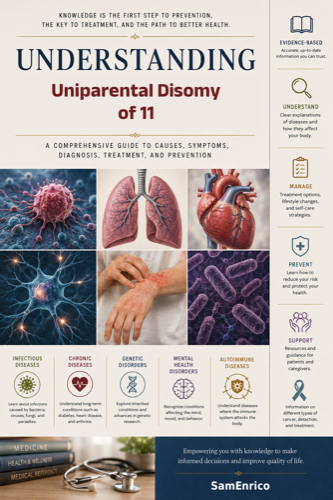 Understanding Uniparental Disomy of 11Wendt Wes$17.99
 How to Start a Academic Outreach Business (Beginners Guide)Wendt Wes$11.99
You may also like
 Hong Kong Handover 1997Dunn Johnnie$11.99
 Zumba For Postnatal Recovery CourseNeal Christian$11.99
 Zumba for BeginnersLadner Nikia$11.99
 YouTube Comment Mining GuideHumes Pandora$12.99
 Worry Box MeditationCarlin Rudy$11.99
 Workplace Stress MeditationNguyen Lynn$11.99
 Workplace Stress and Sleep RepairHawley Ivory$11.99
 Workplace Perfectionism CureDelaney Jeffry$11.99
 Workplace Injustice Anger GuideWallen Isabelle$11.99
 Work Addiction and Burnout LinkGreenwood Ester$11.99
 Women in Yoga and WellnessBeattie Galina$11.99
 Women in Stand Up ComedyChun Evangeline$11.99